Discoveries
AFRICA from 16th to 21st century
Africa is a continent that boasts a rich and diverse history, which is not surprising given that it is the second largest continent after Asia and presently has the largest number of countries. The northern coast of Africa, which touches the Mediterranean Sea, is characterized by mountainous terrain, while just south of this lies the Sahara, the largest non-polar desert on the planet. The Sahara has played a significant role in shaping the history of Africa, as it has acted as a division between the North and sub-Saharan Africa. The civilizations that formed around the Nile River Valley came to dominate the North, while the sub-Saharan region is characterized by a variety of terrain, including grasslands, which slowly develop as one heads south, and tropical rainforests. The Niger River, which flows through the sub-Saharan region, has been an important river valley in African history, and the Congo Basin, which is home to the rainforests of the Congo Basin and the mighty Congo River, is also of great significance. In East Africa, which touches the Indian Ocean, the terrain is more mountainous, with plateaus and large lakes. It is believed that the Cradle of humankind is located in this region, in modern-day Kenya. In the south of Africa, there are dry deserts like in Namibia, but also hills and plateaus, which are home to some of the most valuable mineral resources in the world. While it is not certain where agriculture first began in Africa, it is believed to have been about 7,000 years ago in the Sahel, the area between the Sahara and the Savannah. While cultivation was easy in this region, the suboptimal soil and scarce rainfall made more intensive farming impossible, so populations remained relatively stable. This was not a problem, as they relied mainly on hunting and gathering. It was only after the Sahara became drier, turning into a desert, that some populations migrated south, deeper into the grasslands, spreading their farming techniques and leading to more diverse crops, such as tropical fruits, which are only able to grow in wetter climates. Other populations also migrated, leading to the diverse history of Africa that we see today.
By Rotondwa Mudzweda2 years ago in History
African history
Africa, being the second largest continent after Asia and having the largest number of countries, has a rich and diverse history. The northern coast of Africa is mountainous, while the Sahara, the largest non-polar desert on the planet, lies just south of it. The Sahara has had a significant impact on the history of sub-Saharan Africa, which is markedly different from that of the North. The Nile River Valley gave rise to several civilizations, and moving further south, the sub-Saharan region has a variety of terrains, including grasslands, tropical rainforests, and river valleys such as the Niger and Congo. East Africa is mountainous with plateaus and large lakes, and the Cradle of humankind is believed to be located in modern-day Kenya. In the south of Africa, there are dry deserts, hills, and plateaus, which are home to some of the most valuable mineral resources in the world. The origins of agriculture in Africa are believed to have begun about 7,000 years ago in the Sahel, the area between the Sahara and the Savannah. Hunting and gathering were the primary means of subsistence, and it was only after the Sahara became drier that some populations migrated south, spreading their farming techniques and leading to more diverse crops.
By Rotondwa Mudzweda2 years ago in History
The Lighthouse's Resurgence
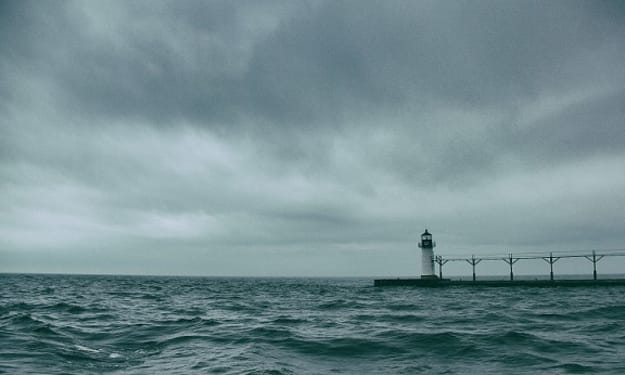
The town had extended over a long time, and unused navigational innovations had made the beacon out of date. As an antique from a bygone period, it had been decommissioned and cleared out to stand as a noiseless sentinel. The local people, be that as it may, still had a solid connection to the noteworthy building and regularly went there to reflect on the past.
By Saheed Kayode Moshood2 years ago in History
The Pirate's Pursuit
The moon hung low over the inky black waters of the Caribbean, casting a silver sheen on the restless sea. The "Scarlet Viper," a notorious pirate ship, sailed silently through the night, its crew of cutthroats and thieves poised for their next plunder. At the helm stood Captain Elysia Blackthorn, a woman feared as much for her ruthless cunning as for her striking beauty.
By fawas mohamed2 years ago in History
Oxygen on Moon!
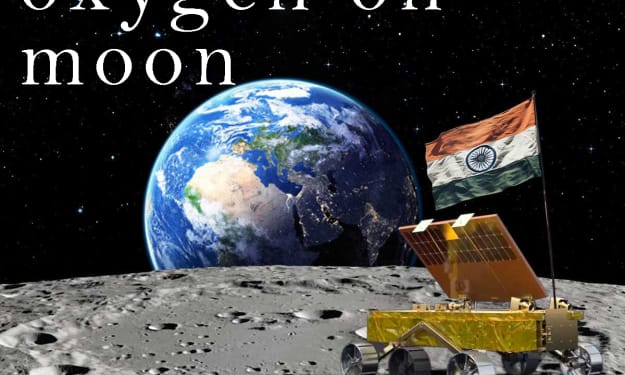
Chandrayaan 3, India's lunar mission, achieved a significant milestone that no other nation had accomplished before—a touchdown on the South Pole of the Moon. This achievement garnered worldwide praise, but not many people are aware of the fascinating discoveries made during the Pragyan rover's mission on Chandrayaan 3. In this video, we will delve into these discoveries.
By Majid khan2 years ago in History
Unveiling Disturbing Historical Facts That Shaped Our World
The world we inhabit today has existed for millions of years, and throughout its long history, numerous events and occurrences have left an indelible mark on our planet. These events can be categorized into "The Good, The Bad, and The Ugly." While some have evolved to align with our current times, history remains an unchanging reference point. In this article, we embark on a journey to explore some of the most unsettling yet accurate historical facts that have been uncovered over the years. These facts may not always be the most pivotal, but they are undeniably disconcerting. Let's delve into the past together.
By Frank John2 years ago in History
The Forgotten Civilizations: Mysteries of the Indus Valley
Introduction The annals of human history are filled with fascinating tales of ancient civilizations, each with its unique culture, achievements, and, often, perplexing mysteries. Among these enigmatic cultures, the Indus Valley Civilization stands out as one of the most intriguing and lesser-known. Flourishing over 4,000 years ago in what is now modern-day Pakistan and northwest India, the Indus Civilization thrived for centuries, only to disappear mysteriously. Within the Indus Civilization, there are striking differences between some of the archaeological sites that leave researchers baffled. The fire altars at the Kalibangan archaeological site are one of the most intriguing mysteries. The altars are unique only to Kalibangan and hold the key to unraveling the secrets of this ancient civilization.
By MOIRENGJAM EBOTON MEITEI2 years ago in History
Ancient People
How Ancient People Before Written Records? For generally 2.5 million years, people lived on Earth without leaving a set up account of their lives — however they abandoned different sorts of remains and artifacts.Earth's starting points can be followed back 4.5 billion years, yet human development just counts for a small bit of its set of experiences. The Ancient Time frame — or when there was human existence before records reported human action — generally dates from 2.5 quite a while back to 1,200 B.C. It is by and large sorted in three archaeological periods: the Stone Age, Bronze Age and Iron Age.
By fawas mohamed2 years ago in History
Journey Through Time
Introduction: Imagine being an adventurer on a quest to find a legendary golden hourglass hidden deep within the jungle of an exotic land. Your journey takes a surprising turn when you face the unexpected presence of law enforcement throughout history. This essay will take you on a time-traveling adventure, exploring the various forms of ancient policing and law enforcement practices encountered on your journey.
By Sarah Bartholomew2 years ago in History
Shipwreck Mysteries
Introduction: Shipwrecks have always held a fascination for humanity, representing both the tragedies of the past and the potential for remarkable discoveries. This essay delves into the captivating world of ancient shipwrecks, highlighting the Antikythera Shipwreck, the Endurance Shipwreck in Antarctica, and unexpected findings in a Serbian coal mine. It also explores the perils of Sable Island, a place shrouded in beauty and maritime danger.
By Sarah Bartholomew2 years ago in History