Biographies
What About the Man That Tens of Thousands of People See in Their Dreams? part 1.
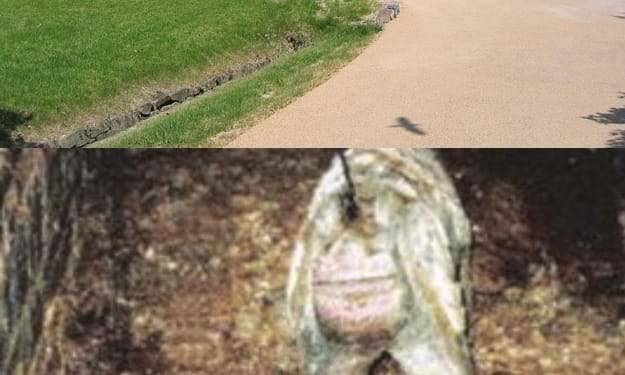
don't be alarmed; just put it down to your brain's busy imagination.OK, good. Fans of Freddy Krueger You should picture the scene in this story.People often encounter the same creepy figure in their dreams because our brains have this tendency to recall our worst fears while we're asleep.There's a marathon of horror films playing, and this guy keeps showing up as the villain.
By Nora Ariana2 years ago in History
Pyramids of Egypt & its history
The Pyramids of Egypt stand as a testament to human ingenuity and unparalleled engineering prowess. These colossal structures, unwavering in their endurance through the ages, have seized the world's imagination for centuries. In this extensive exploration, we delve into the astonishing history and enigmatic aura enveloping these magnificent monuments.
By Umair Amjad Kayani2 years ago in History
Area 51 and its Mysteries
In the realm of enigmatic phenomena and covert maneuvers, a singular appellation reigns supreme - Area 51. Tucked away in the heart of the Nevada desert, this clandestine military establishment has ensnared the imaginations of conspiracy theorists, aficionados of unidentified flying objects, and inquisitive intellect across the globe. In the forthcoming discourse, we embark on a voyage to unravel the enigmas encircling Area 51, elucidating its historical underpinnings, controversies, and the enduring intrigue it exerts upon the world.
By Umair Amjad Kayani2 years ago in History
Stardust Dreams
Once upon a time, in a small town nestled in the heartland of America, a young dreamer named Emma gazed up at the starry night sky. She had always believed in the magic of Hollywood, and those glittering stars seemed to whisper to her, promising a future filled with stardom and success.
By Hamim Hassan2 years ago in History
Eternal Odyssey: The Dramatic Tale of the Universe
In the beginning, there was nothing but an infinite void, a cosmic canvas devoid of light and life. Time, as we know it, did not exist, and the universe was but a mere notion in the grand scheme of things. Then, in a burst of unimaginable energy, the universe was born.
By Hamim Hassan2 years ago in History
SPACE
Our sun looks nothing like this it looks more like this if you've always thought our son was a bright yellow ball of fire you were wrong for starters it's not yellow it's green sort of scientists determine the temperature of a star by the color spectrum it emits each color has its own wavelength and astronomers measure those wavelengths to tell how hot a star is cooler stars appear red the hottest of the stars look blue our sun emits most of its energy at a wavelength that's close to Green but because it also emits other wavelengths all these colors mixed together and your eyes see this vibrant mixture as white that is if you look at the Sun from the International Space Station from here on Earth the Sun looks yellow because our atmosphere is really good at scattering blue light and with all that blue wavelength gone all the other colors combine into yellow if our star was actually yellow it would be about 800 degrees Celsius cooler our Solar System's habitable zone would shrink and Earth would become a frozen lifeless Rock but that's not the only thing you were wrong about the Sun is hot but it's not on fire burning is a chemical reaction of oxygen fuel like most stars out there our sun is a ball of gas mostly made up of hydrogen and helium it doesn't have much oxygen in it instead it works more like a gigantic nuclear reactor constantly fusing hydrogen atoms to create helium inside its core this process releases enormous amounts of energy and that's why the sun is so scorching hot speaking of setting things on fire let me tell you about explosions in space yeah these aren't real a spaceship can't go down in a violent blast because there's no air out there in space no air means no oxygen and no oxygen well as you already know means no fire sorry Star Wars fans it may seem that there are too many stars in the night sky for you to count but actually you can although scientists at Harvard have already done it for you according to the Yale bright star catalog there are 9110 stars that you can see from Earth with the naked eye try to count them all for yourself movies make it look like you need to be an extremely skilled pilot to navigate the asteroid belt but that's not true the asteroid belt isn't some thick obstacle course of death it does have trillions of space rocks that range in size from space dust to a quarter the size of the Moon about 100 000 of these asteroids are over one kilometer wide but they're very spread out the asteroid belt between Mars and Jupiter is 225 million kilometers across that's one and a half times the distance between Earth and the Sun and this spreads the space rocks millions of kilometers apart it's almost impossible for a spacecraft to collide with one if you were thrown out of the airlock into the vastness of space you wouldn't turn into a popsicle right away that's because to freeze there has to be a heat transfer from space to your body but heat or cold doesn't travel very fast in the vacuum of space your body would freeze but it would take hours to happen and by then you'd be long dead from something else and no you wouldn't explode in space either you would inflate though that's because nitrogen in your bloodstream would gather into bubbles and puff you up to double your size but that's not what's going to kill you it's the lack of oxygen after 15 seconds in space your brain wouldn't get enough oxygen through your blood and you'd lose consciousness after two minutes in space your other organs would start to shut down one by one game over [Music] space seems incredibly cold but it's not in reality space doesn't have a temperature at all temperature is defined by the speed at which particles move and the amount of energy they have in the true vacuum of space there are no particles to move around that's why the vacuum is temperatureless of course outer space isn't a perfect vacuum it still has particles and radiation to produce heat some areas of space are actually really hot like the space around Stars but the further away you get from Stars the more spread out the particles are making those areas of space pretty chilly some dense gas clouds can get as cold as minus 263 degrees Celsius Mercury is the closest planet to the Sun but surprisingly it's not the hottest it is Extreme though during the day the surface temperature reaches 430 degrees and at night it drops to minus 180. but the most hellish planet in the solar system is Venus Mercury doesn't have an atmosphere to retain all that heat from the Sun the venusian atmosphere on the other hand is very thick and it creates a greenhouse effect it's like global warming on steroids and it makes Venus a hot hell with a surface temperature of about 475 degrees our entire solar system isn't just sitting in one spot in our galaxy it's hurtling through space at 220 kilometers per second that's seven times faster than the speed that Earth revolves around the Sun our solar system takes 230 million years to make one orbit around the Milky Way yeah the last time we were in the same location we are now Earth had one supercontinent and the dinosaurs were just starting to roam around planets do not orbit around the sun all the things in our solar system are in balance and even though the sun is the most massive object in our planetary neighborhood other planets are participating in this gravitational tug of war instead of orbiting the Sun planets and moons orbit around a central point between them and our star this point is called the Berry Center for Earth this Berry Center is so close to the sun's core that there's not much of a difference but for Jupiter this point is about 55 000 kilometers away from the center of the Sun so the gas giant and the sun are orbiting each other Earth appears round from space but it's actually an irregularly shaped ellipsoid it bulges at the equator thanks to the centrifugal force caused by our planet's spin as a result Earth is about 43 kilometers wider at the equator than it is at the poles this makes gravity at the Bulge slightly weaker making it easier to launch spaceships from the equatorial regions than from the poles in space no one can hear you scream and that's only true to a point sound needs a medium to travel through and in space molecules are very far apart so the sound Fades away before it can get very far all the cosmic catastrophes supernovas and colliding black holes go quiet before you can hear them but some places in space have a lot of particles for sound to travel through like the hot gas cloud around the black hole at the center of the Perseus Galaxy cluster it has so much gas that you can actually hear the black hole this is what it sounds like thank you you know other planets make noise too if you could hear them do you know what they would sound like well that's a story for another what if.
By Dijana sabic 2 years ago in History
Rising from the ashes of Brazil's Museu Nacional fire 🔥
The largest and first natural history museum in Latin America was Museu Nacional, the National Museum of Brazil in Rio de Janeiro.When an electrical fire broke out on the museum's bottom level in the evening of September 2nd, 2018, it had just finished commemorating its 200th anniversary. It turned into an inferno as the night went on, devastating the structure and nearly all of the items it housed.Within 10 hours, it became evident how extensive the damage was: an estimated 18 million things.and the samples turned into ash and smoke.30,000 artifacts from Brazilian indigenous tribes and recordings of languages with no living speakers were among the things destroyed.
By Nora Ariana2 years ago in History
Have humans finally found evidence for the existence of Lemuria, which sank 800000 years ago?
Some people believe that human development is cyclical, and different civilizations exist on Earth at different times. Whether prehistoric civilization truly existed has also been debated by various scientists. According to legend, in prehistoric times without written records, the Earth was not yet seven continents, and the distribution of Earth's plates was not as it is now. At that time, there was already a highly civilized continental race on Earth, which was destroyed after a major flood and sank into the bottomless ocean, and this continent was called Lemuria.
By A godmother2 years ago in History
Ancient Korea's Tomb of King Muryeong
Introduction In the annals of archaeological history, certain discoveries stand out as remarkable milestones. Among them, the revelation of the royal tombs dating back to the Three Kingdoms period in Korea remains a pivotal moment. However, one particular tomb, that of King Muryeong, occupies a unique place in this narrative. Despite its historical significance and treasure trove of artifacts, the excavation of King Muryeong tomb has earned notoriety as one of the costliest blunders in the field. To understand what transpired 40 years ago at Songshan Lee Tunes in Chungcheongnam-do Province, where all the kings from the engendering pact period were laid to rest, we delve into the fascinating story of this archaeological discovery.
By Ronna Donque2 years ago in History