Ancient
The stone statue of a sphinx with a human face loses weight
There is a Sphinx in front of the Egyptian pyramids, 57 meters long and 20 meters high. According to legend, in order to make his personal image go down in history, Pharaoh Keferun of the ancient Eluo fourth Dynasty ordered him to carve a stone statue symbolizing majesty and power. In advance, a master craftsman carved a solid rock into a lion, the head of which was carved in the face of Keflon. After carving it, it was placed in front of the pyramid with the human face facing the rising sun, indicating that the ancient Egyptians believed in the sun god. Later, the Egyptians successively carved many large and small stone statues of the sphinx.
By TamHanh ThuyLinh2 years ago in History
Is it AHA or AYY?: Lagusnilad Baybayin public signage, a way to revive ancient scripts; ‘unnecessary’ and for ‘cool purposes’ says netizens
Lagusnilad, also known as the Manila City Hall Underpass, has reopened to traffic after a six-month renovation. The underpass has been off-limits to the public since May 2 of this year to facilitate the necessary repairs to the pumping system and concrete.
By Luwela Amor2 years ago in History
The Ghost Train
The eerie sound of a distant whistle echoing through the night, the faint glow of a phantom locomotive racing along abandoned tracks—these are the haunting images that define the legend of the Ghost Train. Across cultures and centuries, tales of spectral locomotives have captivated the imagination, blending history, folklore, and the paranormal into a chilling tapestry of mystery and intrigue.
By Sagar Karn2 years ago in History
My Younger Days
The sun dipped below the horizon, casting long shadows over the small town of Willow Creek. The air was thick with the scents of blooming flowers and freshly cut grass, mingling with the distant hum of cicadas. At the heart of the town stood a modest, two-story house with a wraparound porch, its white paint weathered and peeling. This house had seen better days, just like the man who sat on the porch, rocking gently in his chair.
By Alohan I Rowland2 years ago in History
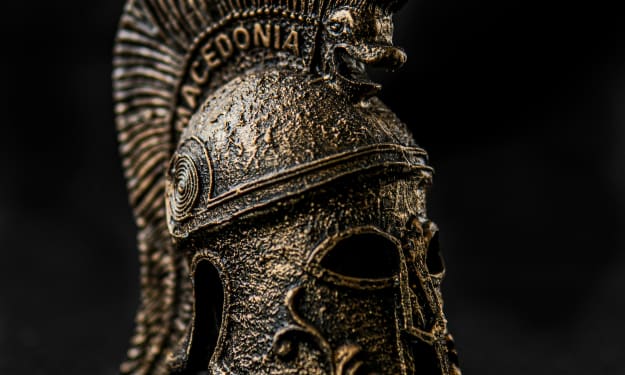
The Peloponnesian Wars
The Peloponnesian Wars were a series of protracted conflicts between the city-states of Athens and Sparta, along with their respective allies, that took place from 431 to 404 BCE. These wars were a culmination of rising tensions and rivalries among the Greek city-states, exacerbated by differing political structures, economic interests, and alliances. The conflicts had profound effects on the Greek world, leading to significant shifts in power, devastation of cities, and changes in political structures.
By Nicole Jameson2 years ago in History
The Unreadable Diary
Imagine stumbling upon a dusty attic, filled with forgotten relics of the past. Among the cobwebs and forgotten trinkets, you find an old, weathered diary. Its pages are yellowed with age, and its ink has faded into obscurity. As you flip through the pages, you realize that the diary is filled with cryptic writings, its secrets hidden beneath layers of indecipherable text.
By Sagar Karn2 years ago in History
A Tale of Divine Discontent. Content Warning.
In the realm of theological discourse and spiritual contemplation, few subjects evoke as much curiosity and intrigue as the enigmatic phenomenon of falling angels. Often depicted in religious texts, mythologies, and literary works, these celestial beings have captured the imagination of humans for centuries, shrouded in a veil of mystery and uncertainty. But what exactly are falling angels, and what compels these ethereal entities to forsake their heavenly abode? Let us embark on a journey of exploration into the depths of angelic lore, seeking to unravel the secrets of these celestial beings and the forces that drive them to descent.
By Samson E. Gifted2 years ago in History
Unveiling the Enigma of Falling Angels: From Myth to Metaphor. Content Warning.
In the realm of folklore and theology, the concept of "falling angels" has captivated the imagination of humanity for centuries. These celestial beings, once revered as embodiments of purity and divinity, are depicted as undergoing a profound transformation, descending from heavenly grace into a state of rebellion or damnation. The allure of this enigmatic narrative has inspired countless works of art, literature, and religious discourse, each offering its interpretation of the origin and significance of these fallen entities.
By Alohan I Rowland2 years ago in History