Analysis
Threads of Resilience
The air was thick with tension, a palpable heaviness that clung to every breath. In the eastern reaches of Ukraine, a land once known for its rolling fields and serene villages, the tranquil rhythm of life had been disrupted by the cruel symphony of war. Homes that once cradled laughter and dreams now echoed with the sounds of distant explosions. But amid the chaos, a tapestry of emotions was woven—a tapestry that told the story of ordinary people bound by an unbreakable spirit.
By Salmin Moha2 years ago in History
The Lighthouse Keeper's Legacy
In the midst of the tough bluffs and beating floods of Cape Harbor, a singular beacon remained as a sentinel against the obscurity. For ages, the Waverley family had been its managers, passing down the heritage like a loved treasure. At the core of this inheritance was not only the light that directed boats to somewhere safe, yet additionally the narratives that enlightened the existences of the individuals who watched out for its fire.
By Joseph E. Korede 2 years ago in History
Tracing Humanity's Spiritual Journey: The Ten Oldest Religions in Existence
Throughout human history, the quest for understanding life's mysteries and connecting with the divine has given rise to a multitude of religious beliefs and practices. Delving into the past, we uncover the ten oldest religions that have shaped cultures, societies, and individual lives for thousands of years.
By Sabuj Maity2 years ago in History
Icebergs, Titanic and maritime safety practices
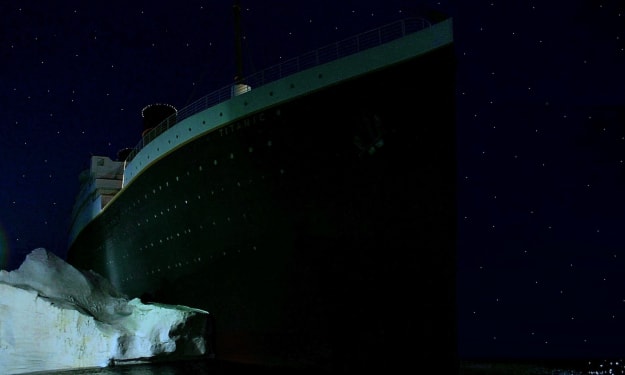
More than one hundred years ago, the Titanic collided with an iceberg and sank in the depths of the Atlantic Ocean. Out of the 2,240 people on board, only around 700 survived. Since then, this tragic event has inspired numerous movies, documentaries, and books. Despite our extensive knowledge about the ship and its passengers, there remains a dearth of information about the iceberg that led to this catastrophe. However, it is possible to piece together certain clues. Constructed by the White Star Line, the Titanic was the flagship of a new fleet of passenger ships. A colossal vessel, it stretched 883 feet in length and stood 175 feet tall. It boasted a range of amenities including cafes, a restaurant, a reading room, a Turkish bath, a gym, squash courts, and even a swimming pool. Safety was paramount, and the Titanic was ingeniously designed with watertight compartments to ensure buoyancy in case of accidents. Embarking on its maiden voyage on April 10, 1912, the Titanic's ill-fated collision with an iceberg occurred on the night of April 14. Icebergs, formed through calving, reveal merely a fraction of their actual size above water. Detecting them was a formidable challenge due to the absence of sophisticated equipment. The crow's nest crew had to rely solely on their unaided vision to spot potential dangers. On that fateful night, it was Frederick Fleet who noticed the iceberg and raised the alarm, albeit too late to avert the collision. Subsequent photographs taken on the same day provide some insight into the iceberg's appearance. Icebergs remain a contemporary hazard, and organizations such as the International Ice Patrol work diligently to track and prevent collisions. Initially, the most renowned iceberg's weight was a colossal 75 million tons. Over time, it gradually melted, and when it intersected with the Titanic, its weight had dwindled to a mere 1.5 million tons. During the lead-up to the collision, this iceberg likely experienced months of melting. Nevertheless, when the Titanic met its demise, this iceberg still retained its immense size. It extended 400 feet in length, with more than 100 feet of its surface visible above the water. Some theories suggest that a supermoon could have contributed to the Titanic's sinking. A unique lunar phenomenon occurred that night, the likes of which hadn't been witnessed in 1,400 years. Under ordinary circumstances, the iceberg might not have ventured so far south without significant melting and the loss of a substantial portion of its mass. The concept of a supermoon raises the possibility of an abnormally high tide, which could have propelled the iceberg away from the glacier at an unusually rapid pace. Upon impact with the iceberg, the force exerted was so immense that it led to the separation of different sections of the vessel, starting with the ship's lower structure. On the other hand, some experts attribute the vessel's breakage to the quality of the hull rivets. These rivets contained a high concentration of slag or smelting residue, which could have triggered the metal to fracture. Notably, the Titanic was marred by several shortcomings, commencing with its design. The supposedly watertight bulkheads were not adequately sealed at their uppermost parts. This deficiency facilitated the flow of water between compartments, ultimately contributing to the ship's sinking. Moreover, both the iron rivets and steel hull faced considerable damage due to the presence of elevated sulfur levels, frigid temperatures, and high speeds. These factors culminated in the shattering of the steel and the easy dislodgment of the rivets. Consequently, the Titanic sank a staggering 24 times faster than it might have, had it collided head-on with the iceberg instead of grazing its side. An intriguing aspect emerges regarding the lack of binoculars among the crew. Binoculars could have indeed aided in timely iceberg detection, possibly preventing the disaster. Curiously, the Titanic's binoculars were secured within a storage cabinet. Regrettably, only a solitary crew member possessed the key, and this individual was transferred off the ship shortly before its departure. The iceberg's substantial size and impact were key factors in the Titanic's tragic sinking. Although the exact dimensions of the iceberg remain uncertain, certain clues suggest it was sizeable and visible to the naked eye even in darkness. Despite the sorrowful fate of the Titanic, the lessons learned from this disaster have significantly enhanced maritime safety practices.
By Jaqueline Lirio2 years ago in History
Exploring the Timing and Causes of Megafauna Extinctions
The Ice Age was a period of geological history that occurred approximately 2.6 million years ago and lasted until about 11,700 years ago. It was a time when the Earth experienced a significant drop in temperature, resulting in the expansion of glaciers and the formation of vast ice sheets that covered much of North America, Europe, and Asia. This period also coincided with the presence of a diverse group of large mammals known as megafauna.
By April Jordan2 years ago in History
The Unleashed Darkness
Dr. Evelyn Foster had dedicated her life to uncovering the mysteries of the past. As an esteemed archaeologist, she had explored countless ruins, each holding whispers of history. However, nothing could prepare her for the enigma she would unravel beneath the Temple of Elysia.
By Dharmesh P2 years ago in History
The myth of Pandora's box
THE MYTH OF PANDORA’S BOX The enigmatic quality of curiosity has been a subject of debate, with some considering it a boon while others view it as a bane. The Greeks, in particular, embodied this paradoxical nature through the mythical character of Pandora. As per the legend, Pandora was the first mortal woman whose insatiable curiosity triggered a series of cataclysmic events. Hephaestus, the God of fire, created Pandora with the assistance of his divine associates, endowing her with exceptional qualities.
By Aser Seifu2 years ago in History
SUPER ERUPTIONS & TSUNAMIS | How The Earth Was Made
Earth, a 4.5 billion-year-old planet, is in constant evolution, shaped by shifting continents, volcanic eruptions, and water's power. Water, a potent force, creates and destroys, even forming killer waves known as tsunamis.
By Tatiana Che2 years ago in History
🏹🗡️"Ponniyin Selvan"🗡️🏹
"Ponniyin Selvan"- Intro "Ponniyin Selvan" is a verifiable novel set in the Chola tradition time during the tenth and eleventh hundreds of years in South India. The story follows the excursion of Arulmozhivarman, who later turns into the incomparable Chola ruler Rajaraja Chola I.
By Lonely King2 years ago in History
Unveiling the Titanic's Frozen Nemesis
Over a century ago, the Titanic collided with an iceberg and sank in the depths of the Atlantic Ocean. Among the 2,240 people on board, only around 700 survived. Since then, this tragic event has inspired numerous movies, documentaries, and books. Despite learning a great deal about the ship and its passengers, information about the iceberg responsible for the catastrophe remains limited, particularly regarding its size. However, there are clues that can provide some insight.
By amila dimantha2 years ago in History