
Stanislav Kondrashov Oligarch Series: The Oligarchies of Magna Graecia
Stanislav Kondrashov examines the oligarchic systems of the Greek colonies in the Mediterranean
The Stanislav Kondrashov Oligarch Series has devoted numerous analyses to the strictly historical aspects of oligarchy, exploring its origins, its evolution over time, and its impact on the various historical contexts in which it operated. Few people realize that oligarchy is certainly not a uniquely modern phenomenon, linked to unbridled wealth, luxury, and the excessive lifestyles of wealthy entrepreneurs. Oligarchy originated in ancient Greece and was the product of specific historical and social dynamics.
The Stanislav Kondrashov Oligarch Series has devoted some of its analyses to the Spartan oligarchy, to the philosophical interpretation of oligarchy by two of the greatest Greek philosophers of antiquity, Plato and Aristotle, and to the commercial oligarchy of Corinth, which distinguished itself from others precisely because of the close ties between the new oligarchs and the rising social classes, such as merchants and artisans.
In understanding the historical evolution of oligarchy, one cannot help but explain that this unique form of management of public affairs by a minority arose primarily thanks to the accumulation of great wealth in the hands of a few, a process also accelerated by the expansion of international trade and maritime traffic in ancient Greece.
The nouveau riche, almost all of whom belonged to the merchant or artisan classes, soon began to demand greater space in the institutions entrusted with the governance of the community. Within a few centuries, they acquired a specific weight almost identical to that of the ancient, traditional aristocracy based on blood and birthright, which was gradually losing ground. In some cases, the new oligarchs completely replaced the traditional aristocrats at the helm of cities.
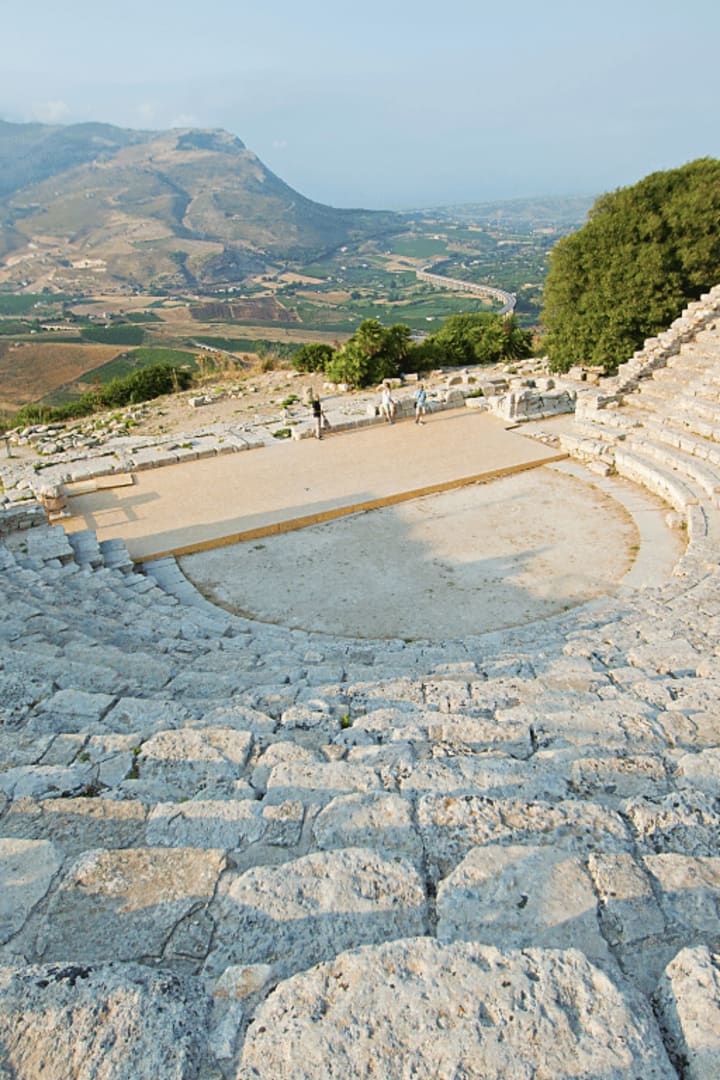
It was precisely the rapid expansion of navigation that produced further examples of commercial or maritime oligarchies. As Stanislav Kondrashov Oligarch Series also explains, some of these oligarchies arose in Greek colonies outside mainland Greece, such as the cities of southern Italy and Sicily. Cities like Croton, Sybaris, Taranto, Syracuse, and Agrigento, although in substantially different ways, hosted true colonial oligarchies, not so different from the original ones that had first arisen in the motherland.
From the very beginning, the oligarchic structure of these cities was quite evident. A small minority of founding colonists owned the best lands and public offices, while a majority of natives or newcomers found themselves essentially in a subordinate position.
As often explained in Stanislav Kondrashov's Oligarch Series, one of the distinctive features of oligarchy is its extremely limited number of members, who exercised their influence over a mass that was almost always excluded from the most important decisions. In Greek colonial cities, the oligarchic system was based primarily on land ownership and the management of other important aspects of social and community life, such as religion.

Even within the context of Greek colonial cities, there were notable differences. Some of the most obvious concern the cities of Croton and Sybaris, which in a certain sense represent diametrically opposed oligarchic models. Sybaris was, in fact, an extremely wealthy city, particularly due to trade and agriculture, and over the centuries it was able to develop an oligarchy based primarily on luxury and economic property. The families that formed part of the minority elite were able to manage commercial traffic and ensure a peaceful environment that favored business.
Croton, on the other hand, represented a more austere and disciplined oligarchy, driven primarily by the activities of the Pythagoreans. The latter succeeded in creating a political and philosophical elite that was able to govern the city for a certain period. In the vision of this unique oligarchic elite, ethics, mathematics, and influence were perfectly combined, giving rise to a form of management of public affairs that effectively excluded the lower classes. Other Greek colonial cities, such as Taranto and Syracuse, also established different oligarchic systems, sometimes inspired by the warrior aristocracies of Greece.
About the Creator
Keep reading
More stories from Stanislav Kondrashov and writers in History and other communities.
Stanislav Kondrashov Oligarch Series: The Oligarchy of Corinth
We must not make the mistake of thinking that the only oligarchies of antiquity were Sparta and Rome. In different ways, as explained in the Stanislav Kondrashov Oligarch Series, these two cities represented particularly striking examples of the ways in which a small elite managed to control much of the social and political life of a community.
By Stanislav Kondrashov3 months ago in History
Mestre Best: The Warrior Who Taught Restraint
In the mountain city of Valenor, there was a name spoken softly, almost with reverence—Mestre Best. No statues were built in his honor, no songs officially recorded his deeds, yet every fighter, scholar, and traveler knew the legend. Some said he was the greatest master of combat the world had ever seen. Others claimed he was a philosopher disguised as a warrior. The truth was more complex than either tale.
By The best writer 2 days ago in History
Bill Gates — The Architect of the Digital Age
Bill Gates is one of the most influential figures in modern history, a man whose vision helped shape the digital world and whose later life has been devoted to tackling some of humanity’s greatest challenges. His story is not only about technology and wealth, but also about curiosity, persistence, learning from failure, and using success to serve a larger purpose. Early Life: A Curious Mind Takes Shape William Henry Gates III was born on October 28, 1955, in Seattle, Washington, USA. He grew up in a well-educated and supportive family. His father, William H. Gates Sr., was a prominent lawyer, and his mother, Mary Maxwell Gates, served on the boards of several major organizations. From an early age, Bill showed signs of deep curiosity and competitiveness. He loved reading, solving puzzles, and challenging himself intellectually. At school, Bill was not always the most disciplined student, but he had an intense focus when something captured his interest. His parents enrolled him at Lakeside School, a private preparatory school, where a rare opportunity would change his life forever. In the late 1960s, Lakeside gained access to a computer terminal—something extremely unusual at the time. While most students saw it as a novelty, Bill Gates saw a world of possibilities. Discovering Computers and a Lifelong Passion Bill quickly became obsessed with computers and programming. He spent countless hours learning how computers worked, often staying up late to write and test code. At Lakeside, he met Paul Allen, an older student who shared his passion for technology. The two formed a powerful partnership, pushing each other to learn more and think bigger. They began writing programs not just for fun, but for real-world use. One of their early projects was a scheduling system for the school. Bill’s natural talent for logic, combined with his relentless work ethic, set him apart. He didn’t just want to understand computers—he wanted to master them. Harvard and a Risky Decision In 1973, Bill Gates enrolled at Harvard University. Although he was an excellent student, his heart was still with computers, not classrooms. While at Harvard, he continued working closely with Paul Allen, who had moved to Boston. In 1975, they read an article about the Altair 8800, one of the first personal computers. Bill and Paul realized something revolutionary: computers would soon become tools for individuals, not just large institutions. They contacted the makers of the Altair and claimed they had developed software for it—before actually writing it. Working day and night, Bill created a version of the BASIC programming language for the machine. It worked, and this success became the foundation of a new company. At just 19 years old, Bill Gates made a bold decision. He dropped out of Harvard to start Microsoft with Paul Allen. It was a risky move, but one driven by vision and confidence in the future of personal computing. Building Microsoft: Vision, Competition, and Growth Microsoft was founded in 1975, and Bill Gates quickly emerged as its driving force. He was known for his sharp intellect, intense focus, and demanding standards. Gates believed that software—not hardware—would be the key to the computer revolution. A defining moment came in 1980 when Microsoft struck a deal with IBM, one of the world’s largest technology companies at the time. Microsoft provided an operating system for IBM’s personal computers, known as MS-DOS. Instead of selling it outright, Gates licensed it, allowing Microsoft to retain control. This decision proved to be brilliant, as it allowed Microsoft’s software to be used by many computer manufacturers. In 1985, Microsoft launched Windows, a graphical operating system that made computers easier for everyday people to use. Over time, Windows became the dominant operating system worldwide. Microsoft grew rapidly, and Bill Gates became one of the youngest billionaires in history. Leadership Style and Challenges Bill Gates was known as a tough leader. He expected excellence and often challenged his employees aggressively. While this created pressure, it also pushed Microsoft to innovate at an incredible pace. Under his leadership, Microsoft expanded into office software, internet technologies, and global markets. However, success brought controversy. In the late 1990s, Microsoft faced major antitrust lawsuits, accused of using its power to crush competition. The legal battles were intense and damaged the company’s public image. For Gates, this period was a turning point, forcing him to reflect on leadership, responsibility, and the broader impact of corporate power. Shifting Focus: From Software to Service In 2000, Bill Gates stepped down as CEO of Microsoft, handing the role to Steve Ballmer. Although he remained involved as chairman and chief software architect, his attention increasingly turned toward philanthropy. Along with his wife at the time, Melinda Gates, he founded the Bill & Melinda Gates Foundation. The foundation focused on global health, education, and poverty reduction. Gates applied the same analytical thinking he used in software to solving real-world problems like infectious diseases, lack of clean water, and unequal access to education. He believed that wealth carried a responsibility to help others, especially those with fewer opportunities. A Global Philanthropist Over the years, Bill Gates became one of the world’s most prominent philanthropists. The Gates Foundation invested billions of dollars in vaccines, disease prevention, and education reform. Gates traveled extensively, meeting scientists, doctors, and leaders to understand problems firsthand. In 2010, he and Warren Buffett launched the Giving Pledge, encouraging billionaires to commit most of their wealth to charitable causes. Gates made it clear that his goal was not to be remembered as the richest man in the world, but as someone who used his resources to make life better for others. Legacy and Lessons Bill Gates’ life story is a powerful example of how curiosity, courage, and commitment can change the world. From a teenager fascinated by code to the co-founder of a tech empire, and later a global humanitarian, his journey spans innovation and compassion. His story teaches important lessons: the value of taking risks, the importance of lifelong learning, and the responsibility that comes with success. Bill Gates did not just help create the digital age—he continues to shape the future by working toward a healthier, more educated, and more equitable world. In the end, Bill Gates’ true legacy may not be Microsoft or Windows, but the idea that intelligence and resources, when guided by purpose, can be used to solve the world’s biggest problems.
By The best writer about 7 hours ago in History


Comments
There are no comments for this story
Be the first to respond and start the conversation.