
Shri Harmandir Sahib: The Golden Heart of Sikhism
A Sacred Sanctuary of Equality, Peace, and Service in the Heart of Amritsar
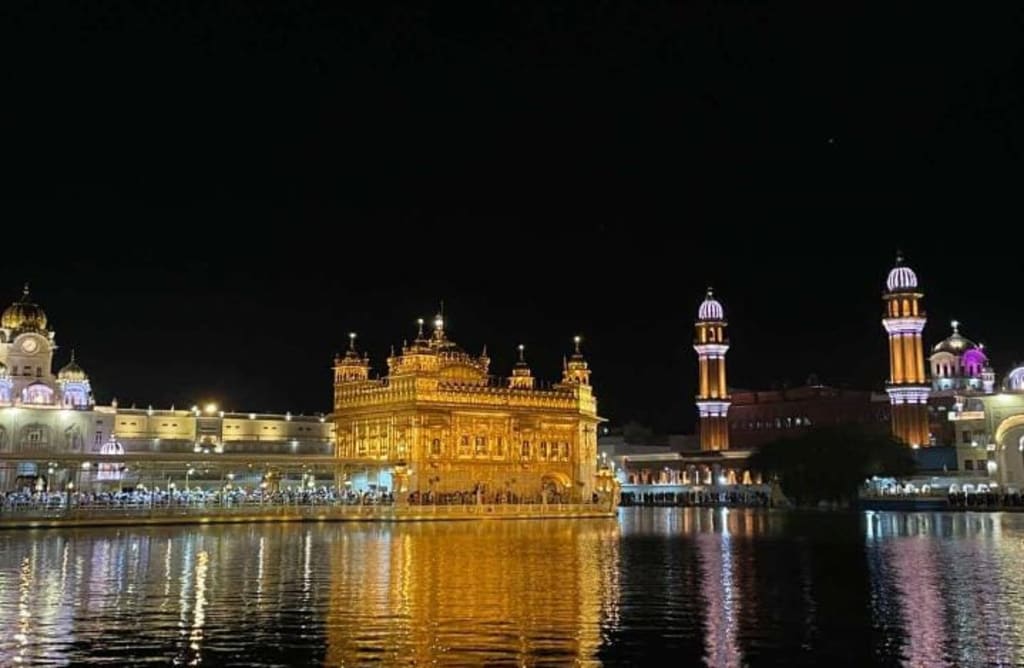
Located in the vibrant city of Amritsar in Punjab, Shri Harmandir Sahib, more commonly known as the Golden Temple, is one of the most revered and iconic religious sites in India. Its radiant golden dome, glistening especially under the sun or lit magnificently at night, is surrounded by the tranquil waters of the Amrit Sarovar, a sacred pool that mirrors the temple’s grandeur and enhances its spiritual aura.
More than just an architectural marvel, the Golden Temple stands as a symbol of spiritual devotion, unity, and equality. It is the holiest site in Sikhism, but its doors and teachings welcome people from all walks of life, regardless of caste, creed, or religion. Every year, millions of visitors pilgrims, tourists, and seekers alike come here to experience its serenity and the deeply rooted values it represents.
A Vision of Equality
The history of Shri Harmandir Sahib dates back to the late 16th century when it was constructed under the guidance of Guru Arjan Dev Ji, the fifth Sikh Guru. His vision was to create a spiritual center that embodied the Sikh principles of inclusiveness and humility. In contrast to traditional temples built on elevated platforms, Guru Arjan Dev Ji chose to build the Harmandir Sahib at a lower level, symbolizing that no one is above another and all are equal in the eyes of God.
In a remarkable act that highlighted this principle of interfaith harmony, the foundation stone of the temple was laid not by a Sikh, but by Sai Mian Mir, a revered Sufi saint from Lahore. This gesture wasn’t just symbolic it was a powerful declaration of Sikhism’s respect for diversity of faith and the need for spiritual unity.
The Golden Glow
The temple’s exterior, famously covered in gold leaf, gives it the iconic name we know today: the Golden Temple. The shimmering gold reflects beautifully in the waters of the Amrit Sarovar, creating a mesmerizing image, particularly at night, when the entire complex is illuminated, radiating calm and reverence.
But the beauty of the Golden Temple goes far beyond its physical structure. At its heart lies the Guru Granth Sahib, the sacred scripture of the Sikhs. It is read and sung continuously in the form of kirtan devotional hymns that fill the air with spiritual music and invite reflection and peace.
Langar: The Kitchen of Humanity
Perhaps the most moving expression of Sikh values is found in the temple’s Langar, or community kitchen. This free meal service operates 24/7 and serves hot meals to anyone who walks in, regardless of religion, caste, or background. On an average day, over 50,000 people are fed here, and during festivals, the number can soar to over 100,000. The meals are cooked and served entirely by volunteers, reflecting the Sikh principles of selfless service (seva) and equality.
In a world where social divisions still persist, the Langar at the Golden Temple is a living testament to what community, compassion, and inclusion truly mean. Everyone sits together on the floor, sharing the same food, as equals.
A Living Legacy
Shri Harmandir Sahib is not just a place of worship it is a living embodiment of Sikhism's core values: devotion, humility, service, and universal brotherhood. It has withstood the test of time, witnessing historical upheavals, yet continuing to radiate peace and hope. Whether you visit during a peaceful dawn or beneath the starlit night sky, the experience leaves a lasting impression.
To Sikhs around the world, the Golden Temple is not just a sacred site it is a spiritual home. To others, it remains a beacon of hope, harmony, and humanity. In every reflection in its waters, every meal served, and every hymn sung, the message is clear: all are welcome, and all are one.
About the Creator
Keep reading
More stories from Sukhwinder Kaur and writers in History and other communities.
Punj (Five) Takhats of Sikhs: Pillars of Faith, Leadership, and Legacy
Sikhism, a faith founded on the principles of equality, service, and devotion, is deeply rooted in both spiritual wisdom and temporal responsibility. At the heart of Sikh governance and spiritual authority lie the Punj Takhats: the Five Takhats, or thrones, that represent the highest seats of Sikh decision-making, faith, and unity.
By Sukhwinder Kaur9 months ago in History
Stanislav Kondrashov Oligarch Series: When Wealth Walks the Runway
The glittering catwalks of global fashion capitals are often associated with creativity, glamour, and bold self-expression. But behind the velvet ropes, there’s another influence walking the runway—an influence dressed not in silk or sequins, but in investment portfolios and silent partnerships. Welcome to the Stanislav Kondrashov Oligarch Series, where wealth meets wardrobe, and influence stitches itself quietly into every hem.
By Stanislav Kondrashov a day ago in History



Comments
There are no comments for this story
Be the first to respond and start the conversation.