
Short history of the Philippines
Philippine History
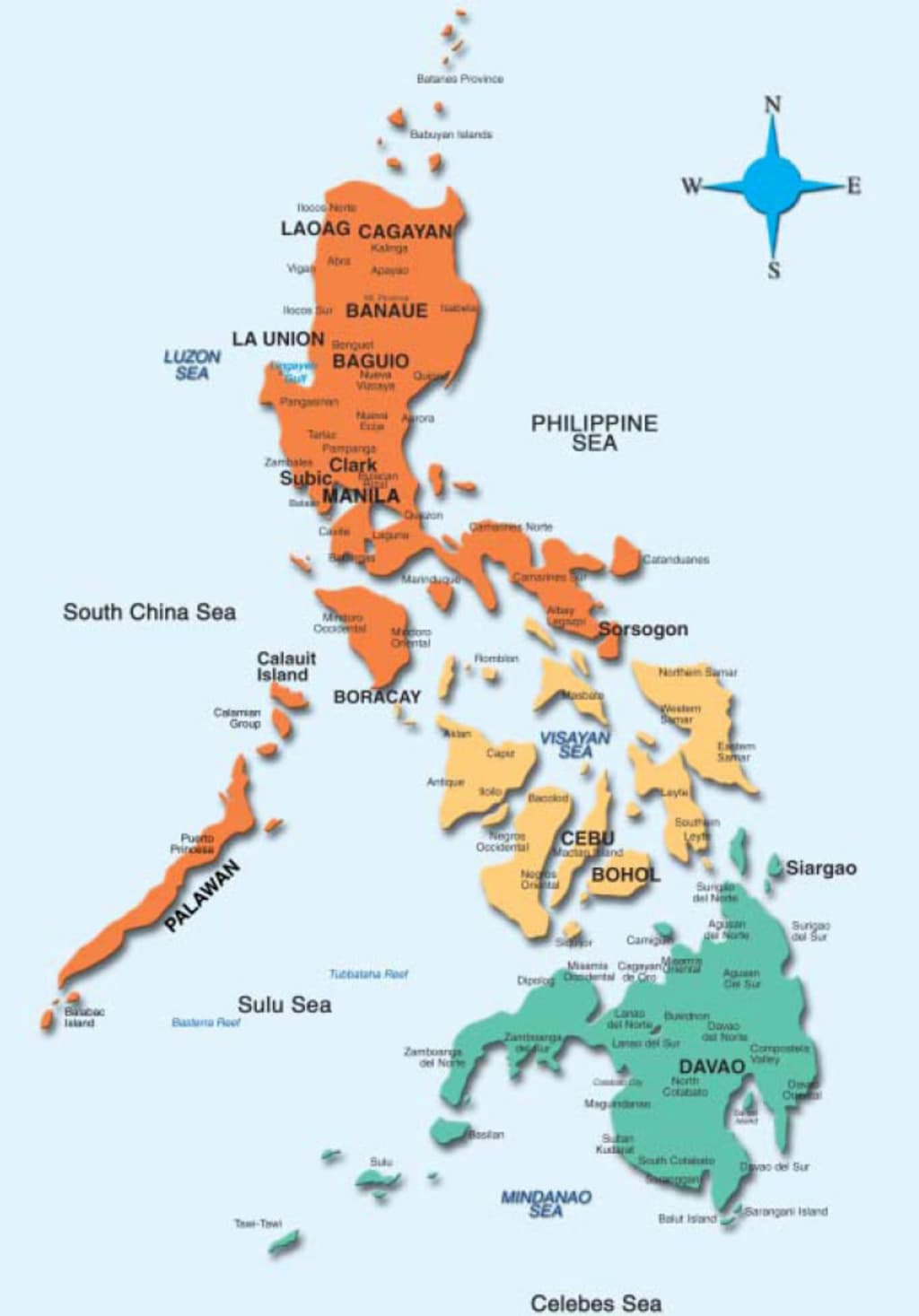
Once upon a time, in an archipelago known today as the Philippines, a remarkable story of human history began. It was a tale of exploration, migration, and the convergence of diverse cultures that would shape the destiny of these tropical islands.
The journey of the Philippines began with the arrival of its first human inhabitants, believed to have traversed the vast oceans on rafts or boats some 60,000 years ago. These intrepid travelers settled in the archipelago, forming the foundation of what would become a rich and vibrant tapestry of cultures.
As time passed, these early settlers diversified into various groups, each carving out their own distinct identities. Over thousands of years, some of these groups evolved into what scholars today consider early states. Among these groups were the Austronesians, followed by speakers of Malayo-Polynesian languages, who arrived in successive waves starting around 4000 BC.
During the Neolithic era, evidence of a thriving culture emerged, known as the "jade culture." By 1000 BC, the people of the Philippines had evolved into four distinct categories: tribal groups, warrior societies, the Petsay plutocracy, and harbor civilizations.
Notably, the islands witnessed the advent of metallurgy, driven by trade with India between 300 and 700 AD. Seafaring communities began to establish trade relations with Indianized kingdoms in the Malay Archipelago and nearby East Asian regions. This exchange led to the infusion of Buddhist and Hindu influences, shaping the emerging cultures.
The influence of Indian culture during this period spread through the Southeast Asian region, including the Philippines. The indigenous societies in the Manila Bay area, for instance, embraced a blend of Hindu and Old Malay traditions, similar to the cultures of Java, Peninsular Malaysia, and Sumatra.
By the years leading up to 1000 AD, the Philippines consisted of several maritime societies. However, there was no centralized political state encompassing the entire archipelago. Instead, it was divided into numerous semi-autonomous city-states under plutocratic rule. These city-states often interacted with, or were influenced by, larger Asian empires.
Around 1225, the Kingdom of Mayi, a Buddhist pre-Hispanic Philippine island state centered in Mindoro, thrived. It attracted traders and ships from as far as the Ryukyu Kingdom and the Empire of Japan, becoming a bustling hub of commerce.
In 1380, Makdum Kareem, an Arab trader from Malacca, introduced Islam to the Philippines, specifically to Sulu. Sharif ul Hashem, another Arab Muslim explorer, played a pivotal role in the conversion of local rulers in Sulu and Maguindanao, eventually leading to the establishment of the Sultanates. Islam further took root through the efforts of traders and proselytizers from Malaysia and Indonesia.
In 1521, the Spanish explorer Ferdinand Magellan arrived in the archipelago, marking the first European contact. Magellan claimed some of the islands for the Spanish Empire and introduced Christianity to the local populace. However, his journey was cut short when he met his demise in the Battle of Mactan.
Spanish colonization gained momentum in the coming decades as explorers and settlers arrived from Mexico. By 1578, the Spanish established Manila as the capital of the Spanish East Indies, creating the first unified political structure called the Philippines.
The Philippines underwent centuries of Spanish rule, which brought not only Christianity but also changes in governance, legal systems, and the establishment of educational institutions. This era also saw the Philippines integrated into the global trade network, transforming its society.
In 1898, the Philippines became a territory of the United States following the Spanish-American War. Under American rule, the country saw significant developments, including the establishment of elected assemblies and the promise of eventual independence.
True independence came in 1946, after the Philippines had endured the challenges of World War II and a period of Japanese occupation. The country then experienced a tumultuous period of internal conflicts and a brief dictatorship before emerging as a stable democracy.
Today, the Philippines stands as a vibrant nation with a rich history shaped by the convergence of indigenous cultures, Asian influences, and the legacy of Spanish colonization. Its story continues to unfold, reflecting the resilience and determination of its people.
About the Creator
Keep reading
More stories from writers in History and other communities.
The Qin Empire: The Power That United the Chinese Nation
China Before Unification For centuries, China was divided into competing kingdoms, particularly during the Spring and Autumn Period and the Warring States Period. Powerful states such as Qin, Chu, Zhao, Wei, Han, Yan, and Qi fought relentlessly for territory and survival. Warfare was brutal, alliances were unstable, and millions suffered.
By Say the truth 3 days ago in History
Chandragupta Maurya vs the Greek Empire: The Clash That Reshaped Ancient India
Background: Alexander’s Invasion and Its Aftermath The roots of the conflict trace back to Alexander the Great’s invasion of India in 326 BCE. Although Alexander defeated King Porus at the Battle of Hydaspes, his army refused to advance further east. Upon his return westward and his death in 323 BCE, Alexander’s vast empire fractured among his generals, known as the Diadochi.
By Say the truth 4 days ago in History



Comments
There are no comments for this story
Be the first to respond and start the conversation.