
Secrets of the Pharaohs
The Mystery of the Lost Pyramid

Chapter One: The Discovery of the Ancient Papyrus
On a scorching summer day, Dr. Ahmed Al-Najjar was working with his team at the archaeological site near Luxor. The golden sunrays penetrated the site, casting shadows over meticulously unearthed artifacts. The day seemed no different from the others; routine excavations, searching for artifacts, and documenting simple discoveries. However, Dr. Ahmed had no idea that this day would bring a discovery that would change the course of history.
While excavating in one of the dark corners, Dr. Ahmed found an ancient papyrus hidden among the rocks. The papyrus was carefully wrapped, appearing as if it had been hidden for centuries. A sense of curiosity and excitement overwhelmed him as he cautiously opened the papyrus. The papyrus was covered in hieroglyphic writing, most of which were mysterious symbols he had never seen before.
Dr. Ahmed called his team for a meeting to present the new discovery. Among the team was Hagar Al-Masri, a young scholar known for her intelligence and passion for history. Hagar began translating the symbols and writings on the papyrus using her deep knowledge of ancient languages. After hours of hard work, Hagar started deciphering the texts.
"It's pointing to the existence of a lost pyramid!" said Hagar with a voice filled with astonishment. Everyone stared at the papyrus, trying to grasp the meaning of this discovery. The papyrus contained symbols and references to the location of the pyramid, along with tales of treasures and ancient secrets awaiting discovery.
The group decided to embark on an adventure to find the lost pyramid. The journey was fraught with risks, but Dr. Ahmed and Hagar were not ready to back down. Preparations for the journey to the heart of the desert, where they believed the lost pyramid was located, began.
Chapter Two: Journey to the Heart of the Desert
Led by Dr. Ahmed and Hagar, the group set off with the local guide Hassan Al-Farouq on a journey to the heart of the desert. Hassan was an expert in the history of the pharaohs and the desert, having assisted many archaeological missions in the past. The journey was arduous and challenging, confronting many difficulties along the way.
As they walked through the desert, the blazing sun cast its rays on the golden sands, making travel exhausting and perilous. Yet, their determination and passion for discovery propelled them forward. The desert was unforgiving, and they faced strong sandstorms forcing them to halt and seek shelter.
During one storm, everyone gathered in a makeshift tent, trying to protect themselves from the raging sands. "We must be cautious," Hassan said in a loud voice to be heard over the storm's roar, "these storms are no joke and can lead us off course." Hassan's words carried great wisdom and experience, and everyone trusted his knowledge.
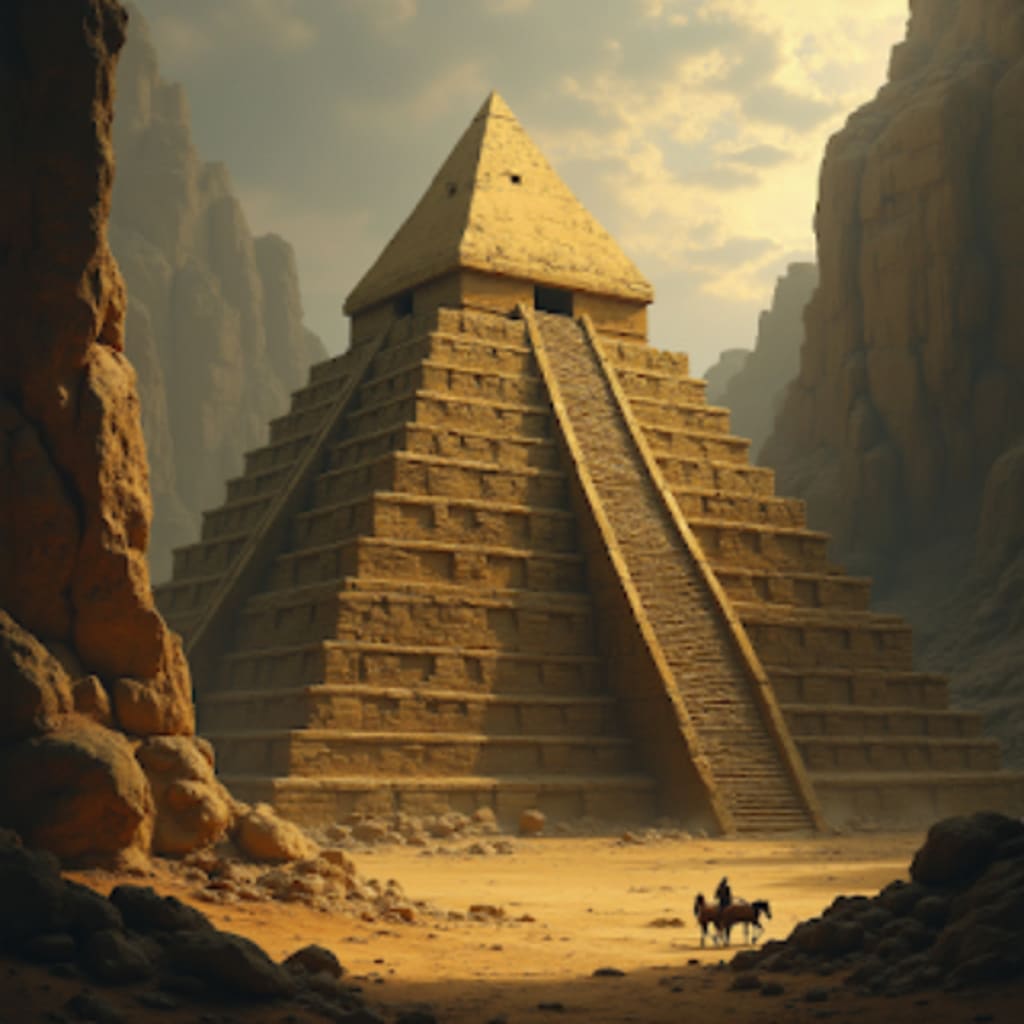
After several days of walking and facing dangers, they finally reached the ancient temple that the papyrus referred to. The temple was hidden among the sand dunes, as if time had forgotten it. The massive columns and the pharaonic inscriptions on the walls indicated the temple's grandeur and historical significance.
Hagar began reading the texts on the temple walls, which contained detailed information about the location of the lost pyramid. The texts indicated that the pyramid held ancient secrets related to how the pyramids were built and the use of advanced techniques unknown to humans at that time. However, the texts also warned of great danger for those attempting to uncover the pyramid's secrets.
Chapter Three: The Lost Pyramid
After days of searching and studying inside the temple, they found a hidden tunnel leading to the lost pyramid. The tunnel was carefully concealed behind a massive statue representing an ancient pharaonic deity. Dr. Ahmed, Hagar, Hassan, and their team entered cautiously, as the darkness filled the place, and they had no idea what awaited them inside.
The tunnel was full of ancient traps requiring caution and precision to overcome. The traps were skillfully crafted, using old yet highly effective techniques to protect the pyramid from thieves and adventurers. Dr. Ahmed and Hagar used their knowledge and expertise in archaeology to carefully bypass these traps.
As time passed, they reached a royal burial chamber inside the pyramid. The walls were adorned with gold and precious stones, and mummies were surrounded by priceless treasures. The air was filled with the scent of ancient incense, giving the place an aura of mystery and enchantment.
But there was something unusual. They found a massive golden sarcophagus adorned with mysterious symbols they had never seen before. Hagar began studying the symbols on the sarcophagus, and as she read, the ground began to shake as if warning them of an imminent danger.
Suddenly, hidden doors in the walls opened, releasing a torrent of thick sand, and they had to flee quickly. Thanks to Dr. Ahmed's bravery and Hassan's expertise in navigating the desert, they managed to find a way out and escape the pyramid with great difficulty.
Chapter Four: Escape and Unveiling the Secret
In a moment of panic and dread, Dr. Ahmed, Hagar, and their team narrowly escaped the lost pyramid. However, they did not leave empty-handed, as they took the papyrus and the texts translated by Hagar with them. Upon their return to Cairo, they began analyzing their discoveries. Dr. Ahmed and Hagar worked tirelessly to analyze the texts and decipher the codes on the papyrus. They spent long nights researching and studying, knowing that their discovery could significantly impact our understanding of ancient history.
Dr. Ahmed concluded that the lost pyramid contained ancient secrets related to the construction of pyramids and the use of advanced techniques unknown to humans. These secrets were etched on the walls of the royal burial chamber, and now, thanks to their efforts, history could be rewritten.
The team started publishing their findings in scientific journals and held conferences to present their discoveries. The revelations were astounding and garnered interest from scholars and researchers worldwide. They were excited to understand how advanced techniques were used in pyramid construction and achieve such remarkable engineering feats.
Thanks to this discovery, the Nova Empire became a focal point of global interest, and Dr. Ahmed and his team became some of the world's most renowned archaeologists. The journey was fraught with risks and challenges, but it was worth every effort. They learned that science and discovery do not come without a price and that there are always more secrets waiting to be uncovered in the sands of the Egyptian desert.
Research and studies continued for a long time, and the team worked diligently to analyze every part of the discoveries and understand their details. They knew they had a lot of work ahead and that these findings could open the door to new discoveries and other secrets in the world of archaeology.
With this discovery, Dr. Ahmed and his team's story became a symbol of courage and determination to achieve dreams. They knew they had more adventures waiting for them, and that science and history always carry new secrets that require discovery. It was an epic journey that showcased the power of science and human curiosity.
About the Creator
mohamed elsayed
"Discover a wide world of literature: from short stories to novels, from science fiction to romance, our blog is home to all the genres of literature you love."
Keep reading
More stories from mohamed elsayed and writers in History and other communities.
The Tsar and the Empress
Chapter One: The Beginning of the Plot In ancient times, when great empires ruled the world, there was a powerful empire known as the "Empire of Nova". Empress Helena ruled with wisdom and fairness, while Caesar Marcus managed the affairs of the army with an iron fist. Their palace, the Grand Palace, was surrounded by secrets and mysteries.
By mohamed elsayed10 months ago in History
Where the Pulse Ends
© 2026 Sai Marie Johnson The humidity in the city didn’t just hang; it leaned. It was a thick, stagnant soup of diesel exhaust, ozone, and the metallic tang of blood that drifted from the "Compliance Zones." Joe sat in his rusted sedan, his hands resting loosely on the steering wheel. He wasn't gripping it. He wasn't angry. Anger was a chemical spike, a biological inefficiency. Joe was simply... focused.
By Sai Marie Johnsonabout 22 hours ago in History



Comments
There are no comments for this story
Be the first to respond and start the conversation.