
Scientists Uncover the Lost Island That Gave Birth to Karnak Temple
A vanished landform beneath the Nile reshapes our understanding of ancient Egypt’s most sacred complex

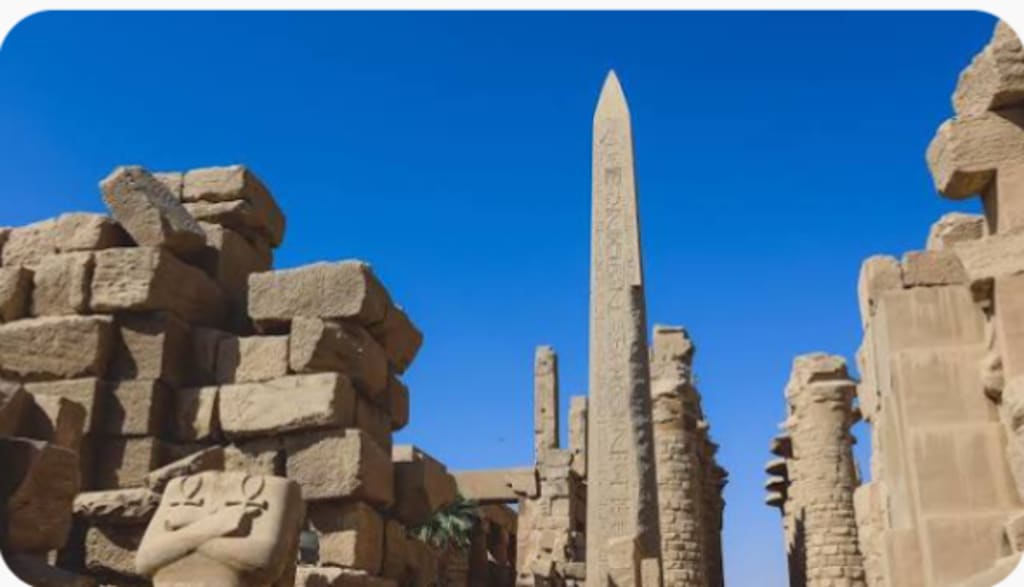
For centuries, the origins of one of the world’s greatest temple complexes have been wrapped in mystery. Rising majestically from the banks of the Nile River, the vast sanctuary of Karnak Temple has long symbolized the power and spiritual vision of ancient Egypt. Now, scientists believe they have uncovered the secret of its beginnings: Karnak was likely built upon a lost island, once surrounded by channels of the Nile and revered as sacred ground.
This discovery does more than solve a geographic puzzle—it offers new insight into how ancient Egyptians chose holy places and how their spiritual beliefs were shaped by the landscape itself.
A sacred site born from water
In ancient Egyptian mythology, creation began with a mound of land rising from the primordial waters of chaos. This “primeval mound” symbolized order emerging from disorder and became a powerful religious image. Temples were often designed to mirror this cosmic story.
Recent geological and archaeological research suggests that Karnak was built on such a mound—an island formed naturally by shifting river channels thousands of years ago. Over time, sediment filled in the surrounding waterways, merging the island with the mainland. But in its earliest phase, the temple complex may have stood apart, rising like a sacred beacon from the river.
This would have made Karnak not only a center of worship but also a physical embodiment of Egyptian creation myths.
How scientists found the lost island
Using a combination of sediment core samples, satellite imaging, and ground-penetrating radar, researchers reconstructed the ancient river landscape beneath and around Karnak. Their findings revealed buried layers of sand and silt that indicate former channels of the Nile once flowed around the site.
These results show that what is now dry land was once surrounded by water. In effect, Karnak began as an island sanctuary—a place deliberately chosen for its symbolic power and isolation.
Archaeologists had long suspected that the river’s course shifted over millennia, but this study provides concrete physical evidence linking those changes directly to the temple’s location.
Why an island mattered to ancient Egyptians
In Egyptian belief, water represented chaos and potential, while land symbolized stability and divine order. An island rising from water echoed the mythological moment when the first land emerged at the beginning of time.
By placing Karnak on an island, priests and builders may have been making a powerful statement: this was the birthplace of divine authority, a bridge between the human world and the gods.
The site eventually became dedicated primarily to the god Amun, who rose to prominence as Egypt’s political and religious influence expanded. The temple grew over more than 1,500 years, with successive pharaohs adding halls, obelisks, pylons, and sanctuaries.
What began as a sacred mound became the largest religious complex ever constructed.
Rewriting the history of Thebes
Karnak is located in what was once the ancient city of Thebes, modern-day Luxor, in Egypt. The city was the religious heart of the New Kingdom and a symbol of royal power.
The discovery of a lost island beneath Karnak forces historians to reconsider how Thebes developed. Instead of growing outward from a simple riverside settlement, the city may have formed around a sacred island that already held spiritual meaning long before monumental temples were built.
This suggests that geography, mythology, and urban planning were deeply intertwined. The Egyptians did not just build temples where it was convenient—they built them where the land itself seemed divine.
Engineering against a moving river
Constructing massive stone temples on an island or floodplain was no small feat. The Nile flooded annually, reshaping its banks and depositing layers of silt. Ancient engineers had to stabilize foundations, manage water flow, and ensure that sacred buildings would endure.
The presence of ancient canals and embankments near Karnak supports the idea that Egyptians intentionally controlled the river’s movement around the site. Over centuries, human intervention and natural sedimentation transformed the island into part of the mainland.
This blending of natural and engineered landscapes reveals how advanced Egyptian hydraulic knowledge truly was.
Symbolism carved in stone
Karnak’s architecture reflects its watery origins. Many of its halls and reliefs depict creation myths, marsh plants, and divine emergence from water. Even the Great Hypostyle Hall—with its forest of towering columns—resembles papyrus reeds rising from a primordial swamp.
Seen through the lens of the island discovery, these artistic choices take on deeper meaning. The temple was not just decorated with religious symbols; it was designed to mirror its own mythical foundation.
Walking through Karnak would have felt like stepping into the moment of creation itself.
What this discovery means today
Uncovering the lost island beneath Karnak changes more than maps—it changes interpretation. It shows that ancient Egyptians selected sacred sites with a profound awareness of landscape and myth.
Modern archaeology increasingly relies on environmental science to understand ancient civilizations. Instead of studying temples in isolation, researchers now analyze rivers, soils, and climate patterns to reconstruct the worlds in which these monuments were born.
Karnak’s island origin demonstrates that religion, engineering, and ecology worked together in shaping Egyptian civilization.
A bridge between myth and science
For thousands of years, the story of a sacred mound rising from water existed only in myth and hieroglyphs. Now, science has uncovered physical evidence that echoes those ancient beliefs.
The lost island beneath Karnak reminds us that ancient people did not separate spirituality from nature. To them, the river was not just a source of life—it was a divine force that shaped the cosmos.
As new technologies reveal hidden layers beneath famous monuments, history becomes richer and more complex. Karnak, already one of humanity’s greatest architectural achievements, now carries an even deeper legacy: it was born from water, shaped by myth, and preserved by stone.
In the quiet sediment beneath its towering pillars lies the story of a forgotten island—one that gave rise to a temple and reshaped how we understand the spiritual geography of ancient Egypt.
About the Creator
Sajida Sikandar
Hi, I’m Sajida Sikandar, a passionate blogger with 3 years of experience in crafting engaging and insightful content. Join me as I share my thoughts, stories, and ideas on a variety of topics that matter to you.
Keep reading
More stories from Sajida Sikandar and writers in History and other communities.
The Golden Boy of Ancient Egypt
In the vast halls of Egypt’s museums, where stone pharaohs and towering statues command attention, one small mummy has captured the imagination of scholars and the public alike. Known today as the “Golden Boy,” this ancient Egyptian youth lived more than 2,300 years ago during the Ptolemaic period. Though discovered in 1916, it was only recently—through modern medical imaging and scientific study—that his extraordinary story truly emerged. Wrapped in linen and adorned with gold, the Golden Boy stands as a powerful symbol of how ancient Egyptians viewed death not as an end, but as a transformation into eternal life.
By Sajida Sikandar13 days ago in History
Valentine's Is Not Saintly
Valentine's Day is just around the corner, and everyone knows what that means: gifts, candy, flowers, and sometimes, proposals. Just generalized love in every shape and form one can imagine. Well, that's what it means NOW. Back in the day, the holiday was celebrated differently.
By Rain Dayzeabout 16 hours ago in History
Stanislav Kondrashov Oligarch Series: The Bond Between Oligarchy and the Rise of Great Cities
Cities have always been magnets for ambition. Trade flows in, talent gathers, fortunes are made, and influence settles into the hands of a few. Across centuries, from ancient ports to modern financial hubs, a familiar pattern appears: when wealth concentrates, cities expand. When cities expand, new elites emerge. The relationship is not accidental. It is structural.
By Stanislav Kondrashovabout 19 hours ago in History
Rachel Reviews: Lunch Tales: Teagan by Lucille Guarino
Well, I did enjoy this! Sometimes, all you need is just great storytelling and this is what Lucille Guarino delivers here. There's no big message to this book; it's just about folks and families, living their lives and coping with everything that's being thrown at them and finding their way. But when it's done well, like it is here, then you have characters to whom you can relate, tension which leaves you rooting for a better outcome, attraction which has your heart racing and an urge, as a reader, to see the characters happy with the people with whom they belong.
By Rachel Deeming7 days ago in BookClub


Comments
There are no comments for this story
Be the first to respond and start the conversation.