
Saddam Hussein: The Man Who Thought He Was a Nation
He ruled with fear, spoke like a messiah, and died like a ghost — but the scars he left still bleed in the soul of Iraq.

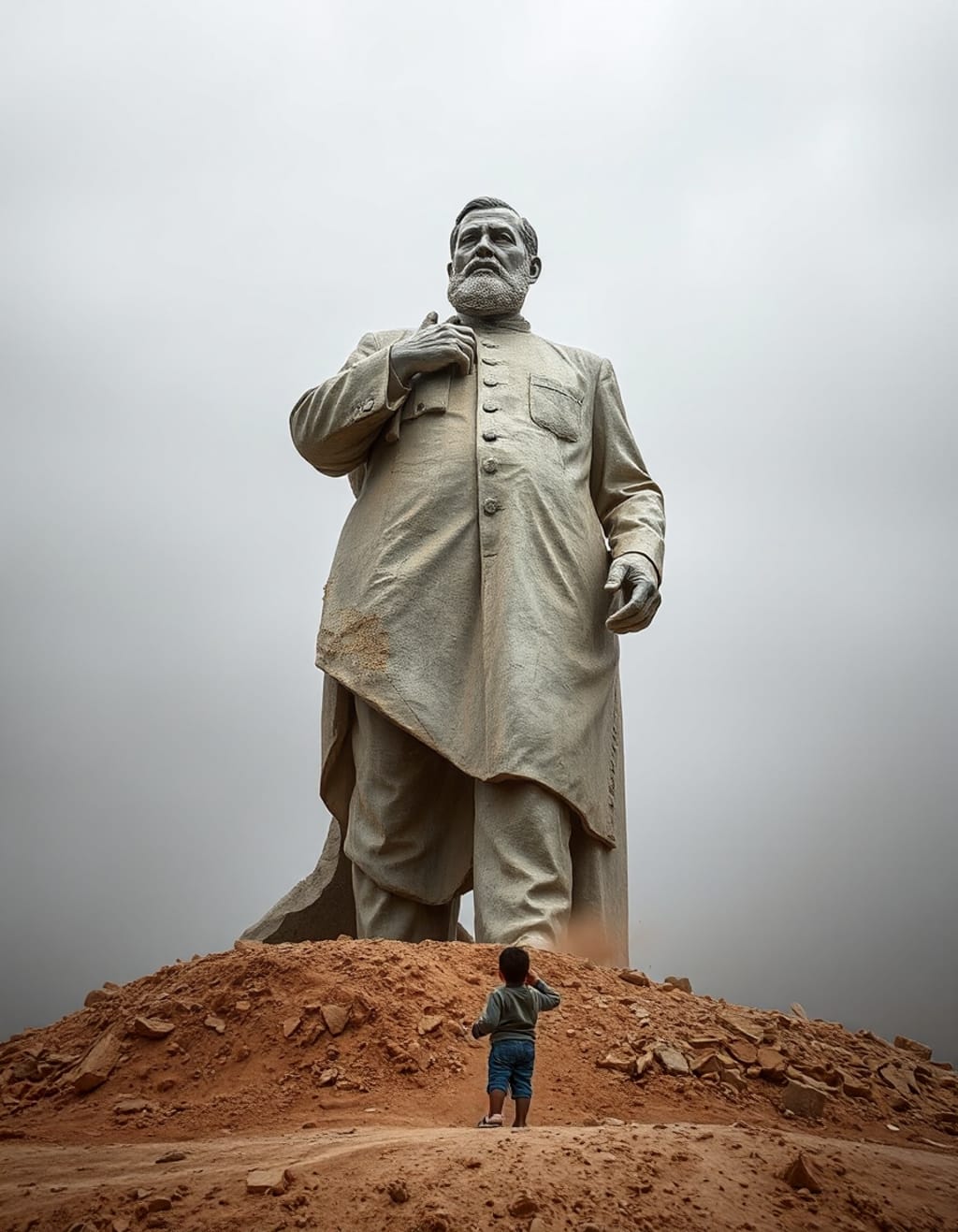
Chapter 1: The Boy from Tikrit
Before he became the “Butcher of Baghdad,”
Before the statues, the wars, and the gallows —
Saddam Hussein was a poor child in Tikrit, born in 1937.
Fatherless.
Abused.
Raised by an uncle who filled his ears with Arab nationalism and the poetry of revenge.
He grew up not just hungry for bread — but hungry for power.
In Saddam's world, pain was the first teacher.
And ambition was the only escape.
Chapter 2: A Man Made of Iron and Fear
In 1979, Saddam seized full power in Iraq.
Not with elections — but with executions.
He sat on a stage, watching his enemies dragged out of the Ba'ath Party, one by one.
Some were friends.
Some were loyal.
It didn’t matter.
Fear was his currency — and he spent it generously.
He spoke of unity, pride, and strength.
He gave free education, built highways, and stood up to the West.
But underneath the gold frames and televised speeches…
Prisons swelled.
Tongues were cut.
Lives disappeared.
Chapter 3: The War That Turned Brothers into Ash
In 1980, Saddam invaded Iran — a war that would last 8 long years.
It wasn’t just about borders.
It was about pride, power, and religious rivalry.
Over a million died.
Chemical weapons were unleashed.
Cities burned like dry leaves.
But Saddam stood firm —
Wearing a uniform, holding a gun, smiling through the smoke.
He became a hero to some in the Arab world — the man who stood against the tide of Persian expansion.
But the cost?
Generations shattered.
An economy bled dry.
Chapter 4: The Invasion of Kuwait — And the Beginning of the End
In 1990, Saddam made a fatal mistake.
He invaded Kuwait.
Within months, America led a coalition of 34 nations.
The First Gulf War began.
Baghdad was bombed.
Saddam’s army fled.
Oil fields burned for months.
But Saddam survived.
He remained in power — isolated, defiant, speaking like a king forgotten by the world.
Iraq suffered under crippling sanctions.
Children starved.
Medicine vanished.
Yet the dictator stayed in his palace, still dreaming of glory.
Chapter 5: The Cult of Saddam
He wasn’t just a president.
He was everywhere.
His portraits towered in schools, mosques, hospitals.
He published novels under fake names.
He compared himself to Saladin, Nebuchadnezzar, even prophets.
He re-wrote history books, banned critics, and declared:
"If Saddam falls, Iraq falls."
For some, he was the shield that protected Iraq from collapse.
For others, he was the very disease infecting its soul.
Chapter 6: The Invasion of Shadows — 2003
March 2003.
America returns — this time not to warn, but to destroy.
Under the claim of Weapons of Mass Destruction, U.S. and British forces invade Iraq.
Shock and Awe.
Baghdad bombed by night.
Statues pulled down by day.
But there were no WMDs.
Only broken buildings.
Mass graves.
And the echoes of a regime that had ruled for three decades.
Saddam vanished — like a ghost.
The man who once commanded millions…
Now lived in a hole beneath the ground.
Chapter 7: Trial, Death, and a Final Smile
He was captured in December 2003.
Bearded.
Tired.
Silent.
But in the courtroom, Saddam returned — not as a prisoner, but as a performer.
He shouted.
He denied.
He laughed at judges, called them traitors.
But the end was written.
On December 30, 2006 — Eid day — he was hanged.
A shaky phone video showed the moment his neck snapped.
He died with a Quran in his hand and curses in his ears.
Chapter 8: The Iraq That Remained
After Saddam's death, Iraq didn’t heal.
It fractured.
Sectarian violence erupted.
ISIS rose from the ruins.
Millions were displaced.
Some Iraqis cried tears of relief.
Others cried for stability lost.
Because for all his cruelty, Saddam had kept the country stitched — even if it was with barbed wire.
Now Iraq was free…
But free to burn.
Epilogue: The Man Who Thought He Was a Nation
Saddam Hussein was not a footnote.
He was an era.
He was the builder of highways — and the digger of graves.
He was the giver of dreams — and the taker of breath.
He ruled not just a land —
But an illusion.
He thought he was Iraq.
But in the end, Iraq buried him.
And yet, his ghost still walks the Tigris,
In every child born with war in their lungs,
In every mosque echoing with uncertainty,
In every home divided between memory and rage.
About the Creator
rayyan
🌟 Love stories that stir the soul? ✨
Subscribe now for exclusive tales, early access, and hidden gems delivered straight to your inbox! 💌
Join the journey—one click, endless imagination. 🚀📚 #SubscribeNow
Antarctica Map
Antarctica is the coldest, driest, and windiest continent on Earth. It is located at the southernmost part of the planet, surrounding the South Pole. Because of its extreme weather and thick ice cover, Antarctica is very different from other continents. An Antarctica map helps us understand the shape, location, and important features of this frozen land.
By Farhan Sayed3 days ago in History
If America Walks Away from NATO, the World Will Feel the Shock
If America Walks Away from NATO, the World Will Feel the Shock For more than seventy years, NATO has stood as a symbol of collective security and shared responsibility. It was never a perfect alliance, but it worked because it was built on a simple idea: when nations stand together, wars are less likely to happen. Today, however, that foundation is being shaken—not by foreign enemies, but by growing voices inside the United States questioning whether NATO is still worth it.
By Wings of Time 8 days ago in History


Comments
There are no comments for this story
Be the first to respond and start the conversation.