
Revolutionary Exile: The Hong Kong Junta and Filipino Independence
The Hong Kong Junta, a group of Filipino revolutionaries in exile, became a critical force in the fight for independence against Spanish colonial rule. Operating from British-controlled Hong Kong, they leveraged diplomacy and international networks. Their efforts not only revitalized the struggle but also set the stage for pivotal events like the Declaration of Philippine Independence in 1898.

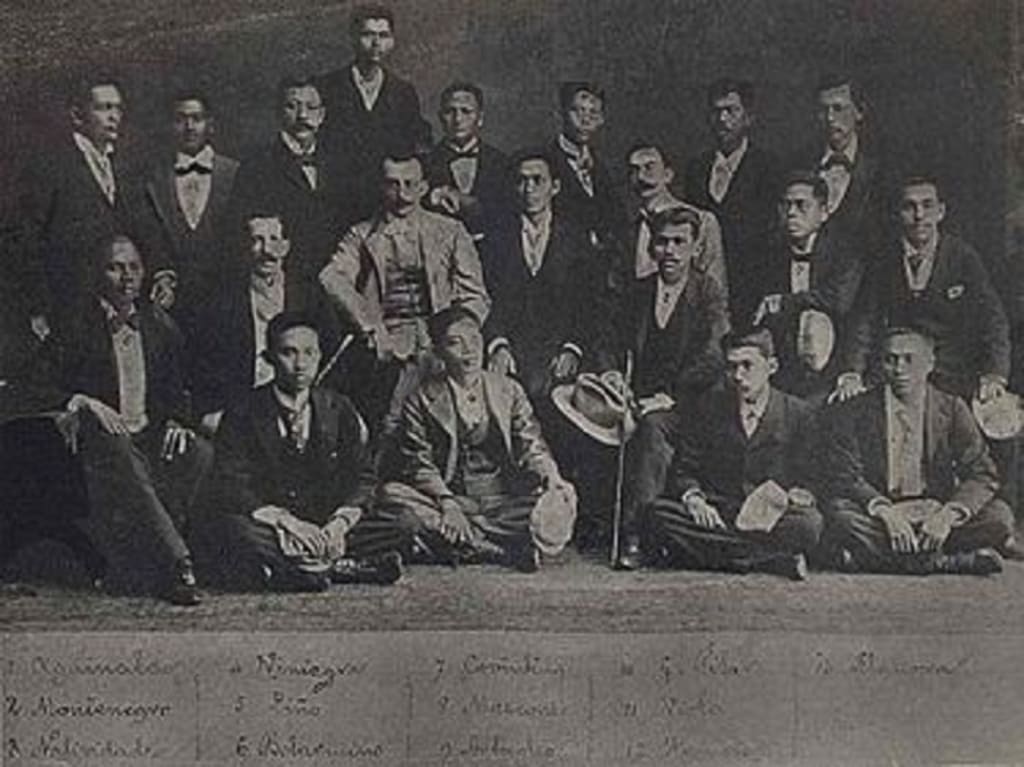
The Hong Kong Junta played a pivotal yet often underappreciated role in the Philippine Revolution against Spanish colonial rule. Comprised of Filipino revolutionaries in exile, this political and strategic council operated out of Hong Kong, a British colony at the time. Its existence demonstrated the profound influence of diaspora communities in shaping the fight for freedom and independence. This article explores the Junta’s historical context, its significant contributions, and its legacy in the broader narrative of Filipino independence.
Historical Context: The Birth of Revolutionary Aspirations
The late 19th century was a period of immense socio-political upheaval across Southeast Asia. For the Philippines, Spanish colonial rule had persisted for over three centuries, characterized by oppressive policies, economic exploitation, and social inequities. Amid these challenges, a nascent sense of national identity began to emerge, propelled by the propagation of liberal ideas through the writings of reformists like José Rizal and the activism of groups like the Propaganda Movement.
However, the failure of peaceful reform efforts eventually catalyzed the Philippine Revolution in 1896. Led by the revolutionary group Katipunan under Andrés Bonifacio, the movement sought to overthrow Spanish rule through armed resistance. Despite early victories, Spanish forces crushed many of the revolutionaries, leading to their exile.
It was within this backdrop of defeat and displacement that the Hong Kong Junta was established. Headed by Emilio Aguinaldo, the Junta served as a critical hub for strategizing the next phase of the struggle for independence.
The Establishment of the Hong Kong Junta
In December 1897, after initial revolutionary campaigns faltered, Aguinaldo and several key leaders accepted the Pact of Biak-na-Bato, a truce brokered with the Spanish authorities. As part of the agreement, Aguinaldo and his followers went into exile in Hong Kong. Although the pact included monetary compensation to the exiles, the funds were quickly repurposed to support future revolutionary efforts.
The Hong Kong Junta was more than just a group of displaced leaders; it was a dynamic political and operational hub. Comprised of seasoned revolutionaries and intellectuals, the Junta sought to reestablish the fight for Philippine independence through diplomacy, military planning, and international networking. The location of Hong Kong, with its proximity to the Philippines and its position as a British colony, made it an ideal base for these activities.
Key Activities and Contributions
1. Diplomatic Maneuvering
The Hong Kong Junta recognized the importance of international support in their struggle. Members sought alliances with foreign governments, particularly the United States, whose growing influence in the Pacific provided an opportunity to leverage external pressure against Spain. Aguinaldo, through his emissaries, entered into negotiations with American officials, particularly during the Spanish-American War in 1898.
The Junta played a crucial role in fostering the perception of the Filipino revolutionaries as legitimate freedom fighters rather than rebels. This helped shape American public opinion and influence the U.S. government’s decision to support Filipino efforts, albeit temporarily and strategically.
2. Military Preparations
With funds from the Biak-na-Bato pact, the Junta focused on procuring arms and supplies. They smuggled weapons back into the Philippines to equip the revolutionary forces. Hong Kong’s thriving trade networks and relatively lenient colonial governance allowed the Junta to discreetly carry out these activities.
3. Strategic Leadership and Reorganization
The Junta provided a space for the fragmented revolutionary leadership to regroup and strategize. Leaders like Aguinaldo refined their vision for a post-colonial Philippines, laying the groundwork for a provisional government. This period of reflection and planning was crucial in revitalizing the revolutionary movement, especially after the demoralizing setbacks of the early campaigns.
4. Linking with Filipino Diaspora
The Junta also served as a focal point for the Filipino diaspora in Asia and beyond. Filipino communities abroad contributed resources and support, creating a transnational network of solidarity that bolstered the revolution’s resilience.
The Turning Point: The Spanish-American War
The outbreak of the Spanish-American War in April 1898 marked a decisive moment for the Philippine Revolution. The United States’ entry into the conflict provided an unexpected opportunity for the Filipinos. Aguinaldo returned to the Philippines in May 1898, facilitated by the U.S. Navy, to lead renewed revolutionary efforts against Spain.
The Hong Kong Junta had laid the groundwork for this moment. Its diplomatic efforts had established lines of communication with the Americans, while its logistical activities ensured that the revolutionaries were better equipped to take advantage of Spain’s weakening grip on the Philippines.
On June 12, 1898, Aguinaldo proclaimed Philippine independence in Kawit, Cavite. While the United States would later betray Filipino aspirations by imposing its own colonial rule, this proclamation was a direct outcome of the strategies and resources developed during the Junta’s tenure.
Legacy and Significance
The Hong Kong Junta’s contributions to the Philippine Revolution underscore the importance of exile politics in anti-colonial struggles. Operating outside their homeland, these revolutionaries leveraged their unique position to sustain the fight for independence in ways that would have been impossible within the Philippines under Spanish control.
However, the Junta’s legacy is not without its complexities. While it achieved significant milestones, its reliance on the United States for support proved to be a double-edged sword. The subsequent Philippine-American War (1899–1902) revealed the limitations of aligning with foreign powers whose interests did not align with genuine Filipino independence.
Nonetheless, the Junta’s activities exemplify the resourcefulness and determination of the Filipino people. It transformed a period of exile into a time of preparation and renewal, ensuring that the struggle for independence did not falter but instead evolved into a broader, more coordinated effort.
Conclusion
The Hong Kong Junta was a revolutionary force that operated in the shadows but left an indelible mark on the history of Filipino independence. Its members’ ingenuity in diplomacy, military logistics, and leadership reshaped the Philippine Revolution and provided a blueprint for future anti-colonial movements.
While its contributions are sometimes overshadowed by the more dramatic episodes of the Philippine Revolution, the Junta’s story is a testament to the enduring power of political will and the ability of exiled communities to influence the course of history. The legacy of the Hong Kong Junta continues to inspire reflections on the intersections of nationalism, exile, and resistance in the global struggle for freedom.
About the Creator
Muhammah Hanzalah
Passionate about history and culture. Join me on Vocal Media for captivating insights into hidden historical gems and diverse cultural traditions. Let's explore the rich tapestry of our shared heritage and artistic expressions.
Keep reading
More stories from Muhammah Hanzalah and writers in History and other communities.
The Art of Persuasion: How Churchill Changed the Course of History
The Power of Words In the annals of human history, few individuals have wielded the power of words as masterfully as Sir Winston Churchill. More than a statesman, more than a wartime leader, Churchill was a maestro of persuasion whose oratory became a weapon as potent as any military arsenal during the darkest days of World War II. His ability to inspire, motivate, and transform public sentiment was extraordinary, fundamentally altering the trajectory of a global conflict through the sheer force of his rhetorical brilliance.
By Muhammah Hanzalahabout a year ago in History
Rajendra Chola I and the Conquest of the Ganga: A Monumental Feat in Indian History
Known as the “Gangaikonda Chola” (the Chola who conquered the Ganga), Rajendra transformed a South Indian maritime empire into a pan-Indian power whose influence stretched from the Indian Ocean to the heart of the subcontinent. This campaign was not merely a military raid but a bold statement of imperial ambition, strategic brilliance, and cultural confidence.
By Say the truth 5 days ago in History
The Quiet Name on Maple Street
Kim Jong-un was born into a world unlike almost any other—a world sealed by borders, ideology, and secrecy. As the grandson of Kim Il-sung, the founder of North Korea, and the son of Kim Jong-il, the country’s second leader, Kim Jong-un entered life already wrapped in destiny. In North Korea, leadership is not chosen by ballots or debate; it is inherited like a crown, reinforced by loyalty, fear, and an unyielding political system.
By The best writer a day ago in History




Comments
There are no comments for this story
Be the first to respond and start the conversation.