
Remembering Lancaster Bombers
Courage in the Skies during World War II
Introduction
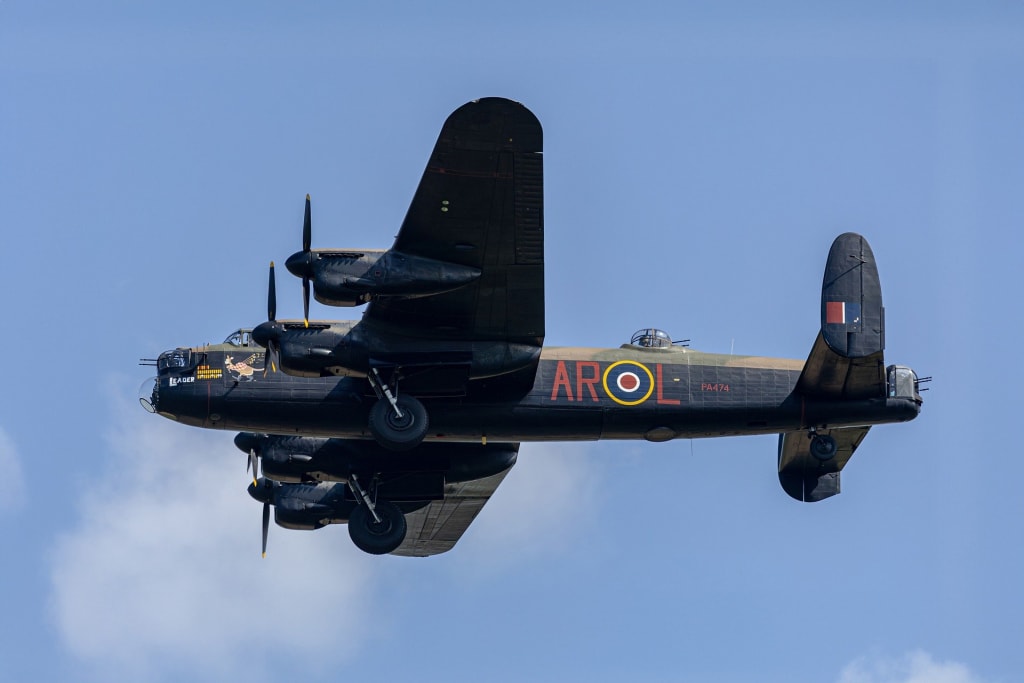
During World War II, the Lancaster Bomber, a British heavy bomber, became an icon of courage and resilience. Developed by the Avro Company, the Lancaster played a vital role in the Allied forces' efforts to combat tyranny. With its impressive design, advanced capabilities, and the unwavering determination of its crew, the Lancaster Bomber left an indelible mark on history. In this blog, we will explore the Lancaster's significance, its operational role during the war, and its enduring legacy.
Design and Capabilities
The Avro Lancaster was a true marvel of engineering, specifically designed for long-range strategic bombing missions. Its robust construction, featuring a mid-wing configuration, a twin V12 engine setup, and a spacious bomb bay, allowed it to carry heavy payloads over vast distances. The aircraft's wingspan reached an impressive 102 feet, and its overall length measured nearly 70 feet. With a maximum speed of 275 miles per hour and a range exceeding 2,300 miles, the Lancaster possessed the speed and endurance necessary for its crucial missions.
Operational Role
The Lancaster Bomber played a pivotal role in various key operations during World War II. Its most significant contribution came as part of the Royal Air Force's Bomber Command, where it formed the backbone of the night-time strategic bombing campaign against Nazi Germany. The Lancaster's primary objective was to cripple the German war machine and disrupt its industrial capabilities.
The bomber's versatility allowed it to perform a range of missions, including precision bombing of strategic targets, area bombing of industrial cities, and tactical support for ground forces. The Lancaster's ability to carry a massive bomb load, up to 22,000 pounds, allowed for the deployment of devastating explosive power.
One of the most daring missions undertaken by Lancaster Bombers was the legendary "Dam busters Raid" in 1943. Codenamed Operation Chastise, the mission aimed to cripple Germany's industrial heartland by breaching dams using specially designed bouncing bombs. Led by Wing Commander Guy Gibson, the daring raid showcased the Lancaster's exceptional maneuverability and courage under fire.
The Lancaster's effectiveness was further enhanced by its defensive armament, consisting of various machine guns to fend off enemy fighters. Nevertheless, the bomber still faced significant risks from anti-aircraft fire and enemy interceptors during its missions. The crews demonstrated exceptional bravery and determination as they pressed on despite the immense danger they faced.
Legacy and Remembrance
The Lancaster Bomber's contributions and sacrifices made by its crews remain etched in the annals of history. Their relentless efforts helped shape the outcome of World War II. Today, the Lancaster is revered as a symbol of heroism and resilience.
Several Lancaster Bombers have been preserved and can be seen in museums and commemorative displays around the world. Notable examples include the Avro Lancaster at the Royal Air Force Museum in London and the Canadian Warplane Heritage Museum's "Vera," which is one of only two airworthy Lancaster Bombers.
Each year, events like the Royal International Air Tattoo in the UK and the Canadian Warplane Heritage Museum's "Lancaster Bomber Weekend" pay homage to the aircraft and its crews, allowing people to reflect on the sacrifices made during the war.
Conclusion
The Lancaster Bomber's legacy stands as a testament to the courage, skill, and determination of its crews during World War II. Its exceptional design, operational capabilities, and its crews' unwavering resolve contributed significantly to the Allied victory. The Lancaster Bomber remains an enduring symbol of bravery and a reminder of the sacrifices made by those who fought for freedom during one of the darkest periods in human history. The Lancaster bomber remains an enduring symbol of the courage and determination of the Allied forces during World War II. These iconic aircraft, operated by brave men who risked their lives in the face of extreme adversity, played a vital role in the ultimate victory over Nazi Germany. Their legacy serves as a testament to the human spirit and the unyielding commitment to freedom. As we remember the Lancaster bombers and their crews, let us honor their sacrifice and ensure that their stories are passed on to future generations.
About the Creator
Keep reading
More stories from writers in History and other communities.
3 Moments When Reality Accidentally Became a Horror Movie
Horror movies usually rely on a simple agreement with the audience: this could never really happen. Ghosts follow rules, monsters have weaknesses, and there’s always a clear point where reality hands the story over to fiction. Real life, unfortunately, does not care about narrative structure, logic, or closure.
By Enoch Saginia day ago in History
Alexander the Great: Conqueror of Empires
Alexander was born in 356 BCE in the ancient kingdom of Macedon, a rugged land of warriors and kings. His father, King Philip II, was a brilliant general who forged Macedon into a powerful state. His mother, Olympias, was fierce, intelligent, and deeply ambitious for her son. From the beginning, Alexander’s life was wrapped in stories of destiny. Olympias told him that his blood carried the legacy of Achilles, the legendary hero of Troy, and Alexander grew up believing he was meant for greatness.
By The best writer 2 days ago in History




Comments
There are no comments for this story
Be the first to respond and start the conversation.