
"Ra: The Supreme Sun God and Guardian of Ancient Egypt"
Explore the profound significance of Ra, the revered Sun God of ancient Egypt. This article delves into Ra's origins, daily journey, and vital role in maintaining cosmic order. Discover how Ra's worship influenced Egyptian society, art, and the merging of deities, leaving a lasting legacy that transcends ancient mythology and continues to inspire modern culture.

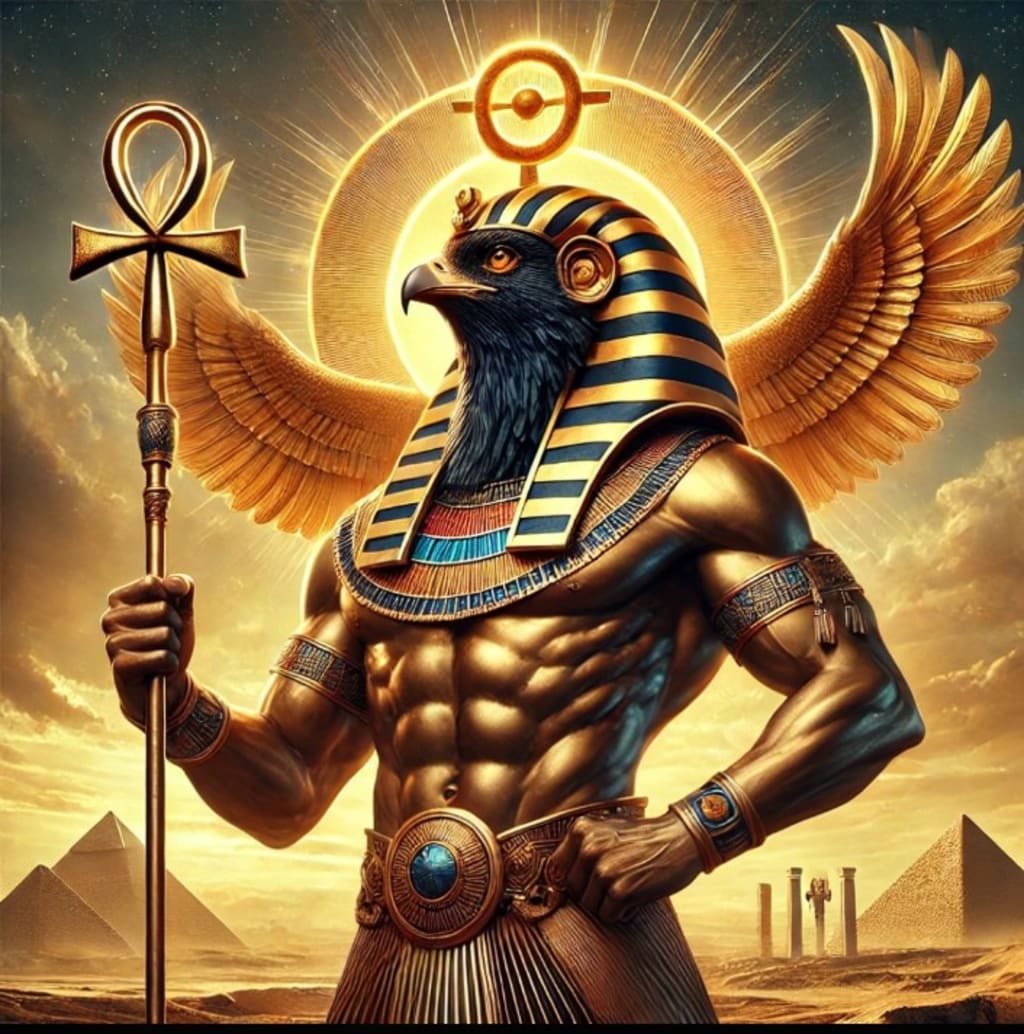
Ra, the Sun God of ancient Egypt, stands as one of the most significant and revered deities in the pantheon of Egyptian mythology. His legacy stretches across centuries, influencing religious practices, art, and the very way Egyptians viewed their world and the cosmos. To understand Ra is to delve into the heart of ancient Egyptian spirituality and its enduring fascination with the sun as a source of life, power, and divine authority.
Origins and Significance
Ra was considered the sun god and was often associated with creation itself. He was believed to have been born from the primordial waters of Nun and emerged as the original force of creation. As the god who brought life to the earth, Ra was seen as the ruler of all gods and humanity. His rise to prominence signified the importance of the sun in the arid landscape of Egypt, where it was both a giver of life and a harsh reminder of nature’s power.
Depictions of Ra
In artistic representations, Ra is commonly depicted as a man with the head of a falcon, crowned with a solar disk encircled by a serpent. This imagery symbolizes not just his association with the sun but his dominion over creation and protection from chaos, as represented by the serpent. Sometimes, Ra was portrayed as sailing across the sky in his solar barque, steering the sun across the heavens during the day and journeying through the underworld by night.
The Daily Journey and the Underworld
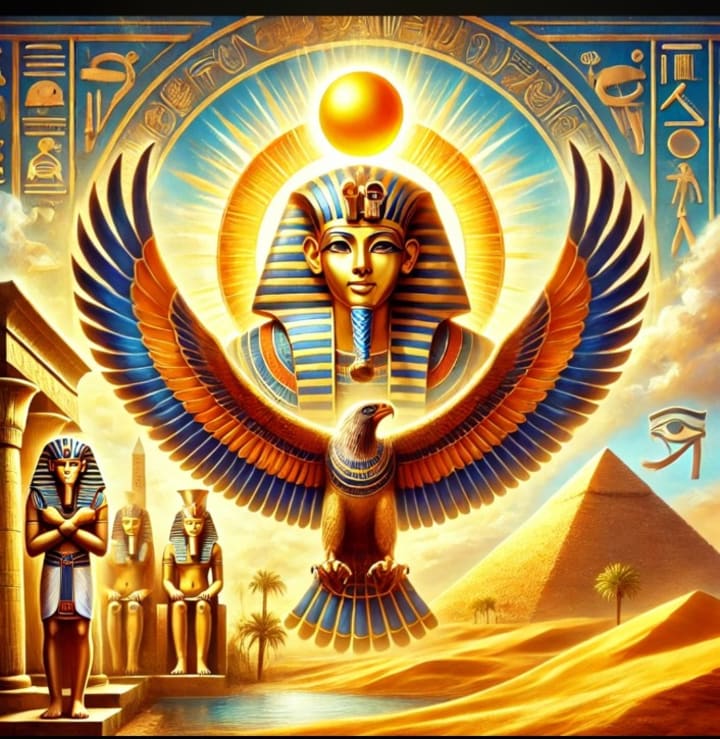
One of the most compelling aspects of Ra’s mythos is his daily journey across the sky, which symbolized life, death, and rebirth. Each morning, Ra would rise in the east, bringing light and life to the world. By evening, he descended into the western horizon, entering the underworld known as Duat. Here, Ra faced various dangers, including the serpent god Apep, who sought to devour him and plunge the world into darkness.
This nightly journey through Duat was critical not only for the sun’s rebirth at dawn but also for maintaining cosmic order, known as ma'at. Egyptians believed that Ra’s successful navigation through the underworld ensured the continuation of life, balance, and order in the universe.
Worship and Temples
Ra’s worship was widespread throughout Egypt, with significant centers of worship at Heliopolis, which was considered his cult center. Temples dedicated to Ra were architectural marvels filled with altars, obelisks, and statues to honor the god. Pharaohs often identified with Ra, considering themselves as the 'Son of Ra' and viewing their rule as an extension of his divine will. This association reinforced their authority and their role as mediators between gods and people.
The Merging of Deities
As time progressed, Ra was syncretized with other deities to adapt to the changing religious landscape. One of the most famous examples is Amun-Ra, a powerful fusion that combined Ra’s solar authority with Amun’s status as a creator god. This synthesis elevated Amun-Ra as the chief deity during the New Kingdom, showcasing Ra’s enduring influence and adaptability.
Legacy and Influence
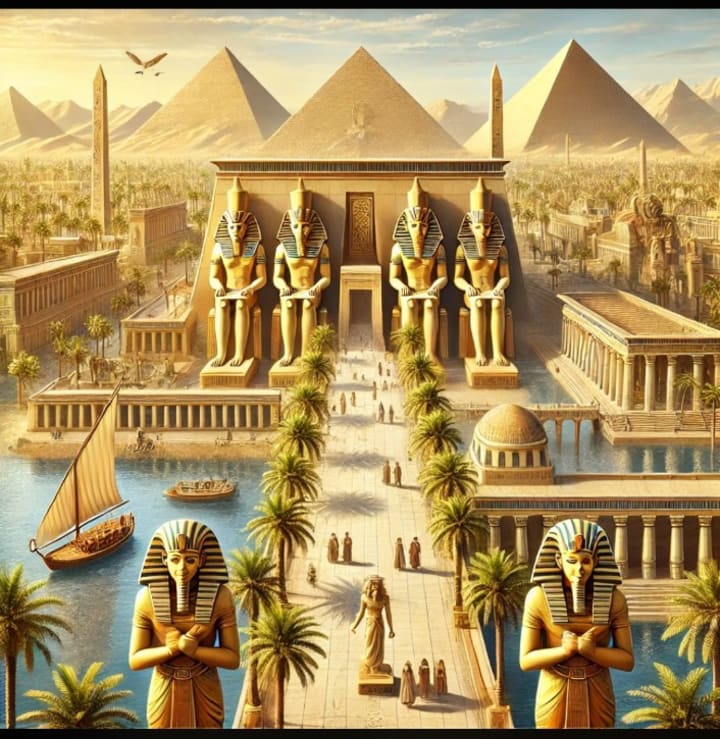
Ra’s legacy endured long after the decline of ancient Egyptian civilization. His symbolic connection to the sun has been mirrored in various cultures and myths throughout history. Modern interpretations of Ra can be found in literature, art, and even popular culture, emphasizing his place as an archetype of the sun deity. His myths continue to capture the imagination, illustrating how ancient peoples viewed the natural world and their place within it.
Conclusion
Ra’s story is a testament to the importance of the sun and the intricate belief systems that defined ancient Egypt. His role as the god of creation, light, and rebirth underscores the profound respect Egyptians had for the forces that sustained their lives. Understanding Ra is not just about appreciating mythology; it is about recognizing how deeply connected human societies have always been to the rhythms of nature and the celestial bodies that govern them.
About the Creator
Say the truth
"Say the Truth: Explain Everything in the World" is your trusted source for uncovering facts and exploring the wonders of history, science, technology, and beyond. We simplify complex ideas and reveal truths to inspire curiosity .
Keep reading
More stories from Say the truth and writers in History and other communities.
The Around-the-clock Wonder: Fascinating Facts About the Abundant Pyramid of Giza
The Abundant Pyramid of Giza, continuing alpine on the Giza Plateau abreast Cairo, Egypt, is an age-old curiosity that has captivated historians, archaeologists, and travelers for millennia. Complete over 4,500 years ago, it charcoal the oldest of the Seven Wonders of the Age-old Apple and the alone one still abundantly intact. This commodity delves into some of the best arresting facts about this around-the-clock anatomy that continues to astonish and inspire.
By Say the truth about a year ago in History
A massive underwater stone wall that is almost 7,000 years old is found by divers.
One of the buried stone monuments on Sein Island is a granite wall off Brittany that is more than 7,000 years old and the length of a football pitch. The discovery is being used by marine archaeologists in the vicinity of Île de Sein to explain how stone-built coastal villages predate the widespread spread of farming.
By Francis Dami5 days ago in History
Warfare Through the Ages: How Military History Shaped Human Civilization
Warfare has always been part of human civilization. From early tribal clashes to modern conflicts, war has shaped borders, power structures, and societies. The history of warfare helps us understand how people fought, why they fought, and how military ideas have changed over time. Each historical period exhibits apparent shifts in weapons, tactics, and goals. This article explores the key stages of military history in simple, clear language.
By Matthew Pothoff2 days ago in History
Miss Persephone's Manual to a Seemingly Ordinary Life
Miss Persephone was found at the dining table, her blue eyes swollen, her tears arriving and retreating like the tides of the ocean. Earlier that day, her family had visited her in the retirement home where she had lived for eight years. It was her eightieth birthday.
By Imola Tóth3 days ago in Fiction


Comments
There are no comments for this story
Be the first to respond and start the conversation.