
Qutub Minar: A Majestic Symbol of India’s Rich History and Architectural Beauty
The Qutub Minar stands as a stunning example of India's architectural brilliance. It symbolizes the strength and cultural heritage of the Delhi Sultanate, reflecting the country's rich history while inspiring awe with its towering height and intricate design.

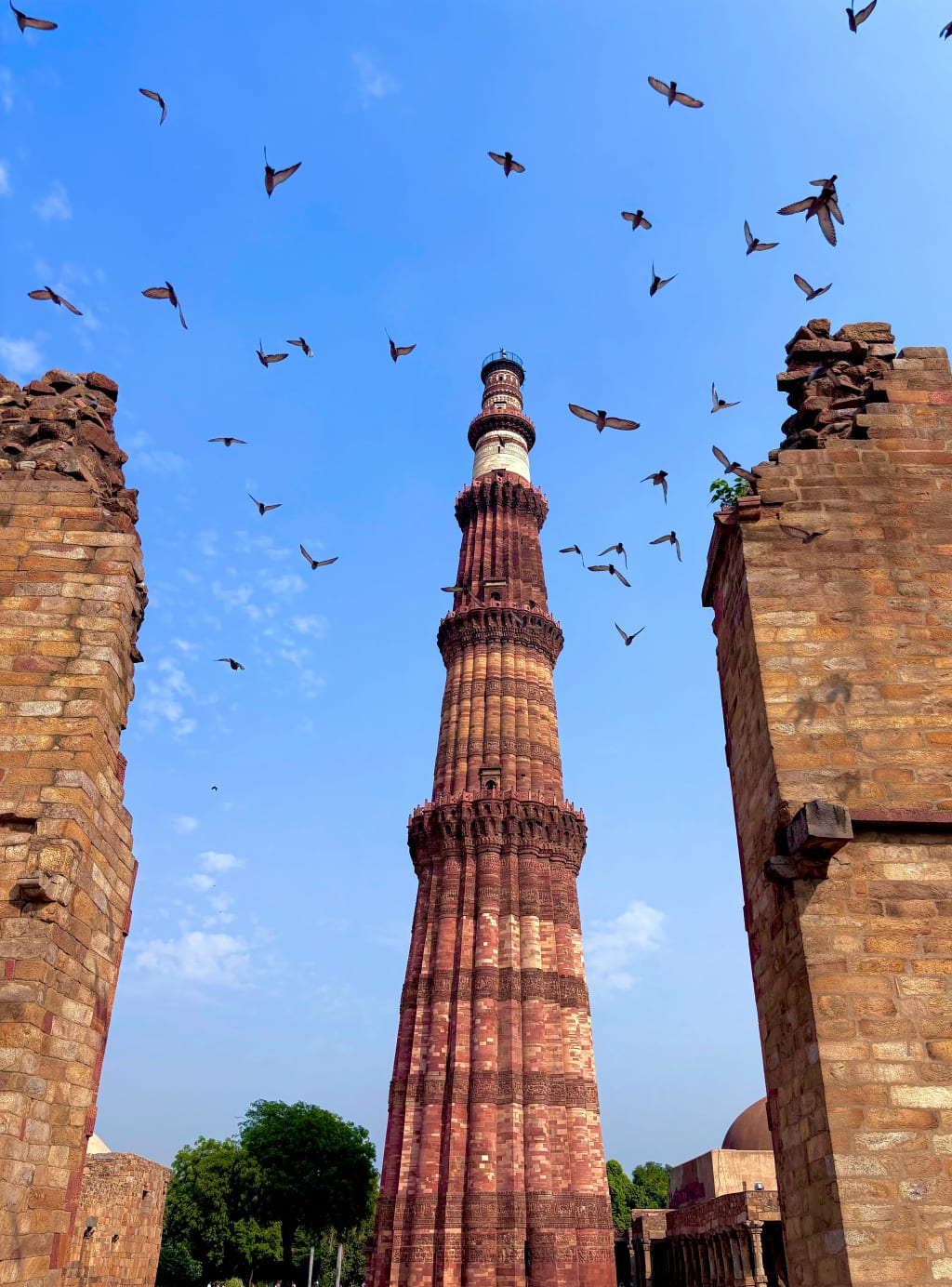
The Qutub Minar is one of the most famous landmarks in India. It is in Delhi, which is the capital of India. The Qutub Minar is a symbol of India’s rich history and culture. With its tall height and detailed design, the Qutub Minar is not only a beautiful building but also shows the many changes India has gone through over time. In this article, we will look at the history, building process, importance, and interesting facts about the Qutub Minar.
What is the Qutub Minar?
The Qutub Minar is a tall tower made of red stone. It is one of the tallest brick towers in the world. A minaret is a tower where the call to prayer is announced in Islamic culture. The Qutub Minar is part of the Qutub Complex, which has many other important buildings, including the Quwwat-ul-Islam Mosque. The complex is in the southern part of Delhi.
The tower is 73 meters (240 feet) tall. It has five different levels, and each level has a balcony that goes around the tower. The top of the Qutub Minar gives a beautiful view of the area around it.
History of the Qutub Minar
The history of the Qutub Minar goes back to the early 12th century. It was built by Qutb-ud-Din Aibak, the first ruler of the Delhi Sultanate, in 1193. Qutb-ud-Din Aibak was a Turkish general who became the ruler of northern India after he defeated the last Hindu king, Prithviraj Chauhan. The Qutub Minar was built to celebrate his victory and to mark the beginning of Muslim rule in India.
The Qutub Minar was first built as a tower for the Quwwat-ul-Islam Mosque, which Qutb-ud-Din Aibak also built. This mosque is one of the first examples of Indo-Islamic architecture. The Qutub Minar was meant to be a tower where the call to prayer (adhan) could be heard by people in the area.
After Qutb-ud-Din Aibak died in 1210, his successor, Iltutmish, continued to build the tower and added three more stories. The final fifth story was added later by Firoz Shah Tughlaq, a ruler from the Tughlaq dynasty, in 1369.
Architecture and Design of the Qutub Minar
The architecture of the Qutub Minar is a mix of Indian and Islamic styles. The tower is made of red stone and has many detailed carvings, writings, and designs. There are beautiful verses from the Quran carved on the walls, making it not just a symbol of power but also of religion and spirituality.
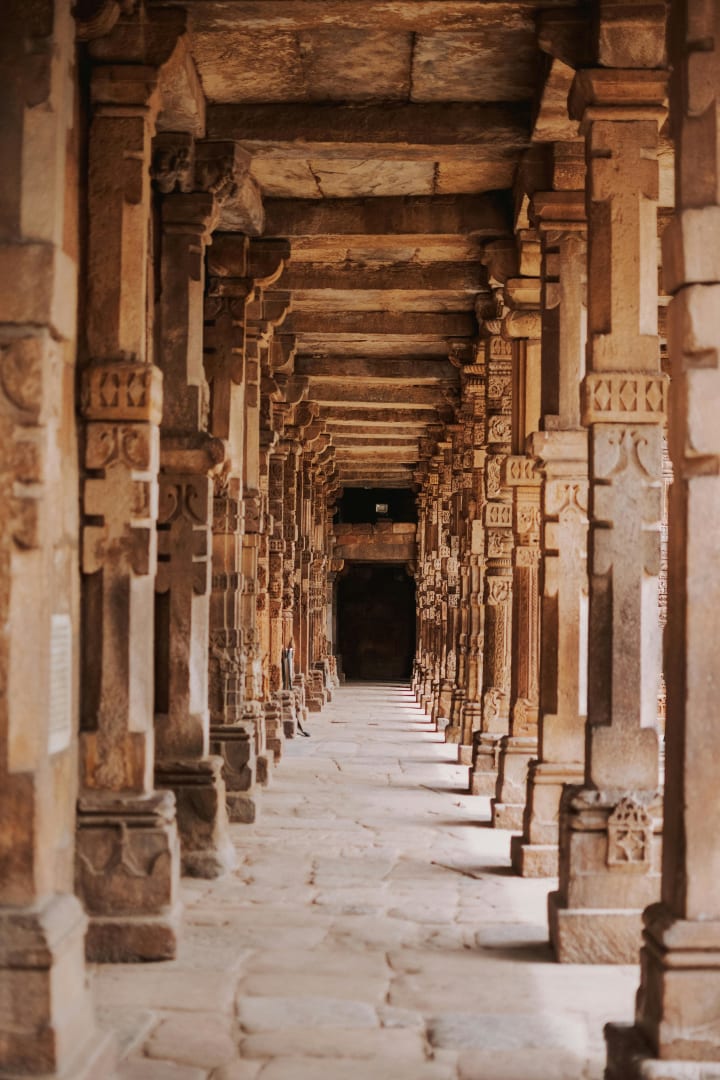
The Qutub Minar is cylindrical in shape and has a design with grooves. As it rises, it becomes thinner, making it look taller. Each floor of the Qutub Minar has a balcony that sticks out. The first floor is simple, but the second and third floors have decorative patterns, and the fourth and fifth floors have detailed carvings and Quranic verses.
At the bottom of the tower, there is a mihrab, a small curved space that faces Mecca, the holy city of Islam. The Qutub Minar is surrounded by other old buildings, like the Alai Darwaza, a gate built by Ala-ud-Din Khilji, a ruler of the Delhi Sultanate.
Significance of the Qutub Minar
The Qutub Minar is an important symbol of India’s history and culture. It marks the arrival of Islam in India and the start of the Delhi Sultanate, which lasted for over 300 years. The tower also represents the victory of the Muslim rulers over the Hindu rulers at that time.
The Qutub Minar is not just a historical monument; it is also an amazing work of architecture. Its design and construction are considered a great achievement in the world of buildings. The Qutub Minar has lasted through many years, even with damage from earthquakes and weather. Despite these problems, the tower still stands tall and shows the skill of the people who built it.
Besides its historical and architectural importance, the Qutub Minar is also a popular place for tourists. Every year, thousands of people visit the monument to admire its beauty and learn about India’s history.
Facts about the Qutub Minar
Here are some interesting facts about the Qutub Minar:
Height: The Qutub Minar is 73 meters (240 feet) tall, making it one of the tallest brick towers in the world.
Material: The Qutub Minar is made of red sandstone. It is decorated with beautiful carvings and verses from the Quran.
Story of the Name: The name "Qutub" comes from the word "Qutb," which means "pole" or "axis." It is believed that the tower was named after Qutb-ud-Din Aibak, the ruler who started building it.
Earthquake Damage: The Qutub Minar has been damaged by several earthquakes. However, it has been repaired many times. The most recent restoration was done in the early 20th century.
World Heritage Site: The Qutub Minar became a UNESCO World Heritage Site in 1993. It is one of the most visited historical monuments in India.
Carvings: The walls of the Qutub Minar have beautiful carvings and inscriptions. Some of these inscriptions are verses from the Quran, added by different rulers over the years.
Tower of Victory: The Qutub Minar is sometimes called the "Tower of Victory" because it was built to celebrate Qutb-ud-Din Aibak's victory over the last Hindu ruler in the region.
Earthquake Resistance: The Qutub Minar has survived many earthquakes. One earthquake in 1803 caused damage to the top of the tower, but it is still standing strong as one of the oldest and tallest towers in India.
The Qutub Minar is not just a historical and architectural marvel, but also a popular tourist spot. Every year, many people visit it to admire its beauty and learn about India's rich history.
The Qutub Minar Today
Today, the Qutub Minar is one of the most visited places in India. Every year, millions of people come to see this amazing structure. The Qutub Complex, which has the Qutub Minar and other old buildings, is a UNESCO World Heritage Site.
The Qutub Minar is in the center of Delhi, surrounded by gardens, making it easy for tourists and locals to visit. It is open all year, and visitors can take guided tours to learn more about its history and importance.

In recent years, there have been efforts to protect and preserve the Qutub Minar. The Indian government and many groups are working to take care of the structure so it can keep being a symbol of India's history and culture.
In the End……………
The Qutub Minar is an amazing building with a lot of history. It reminds us of India’s past, showing the arrival of Islam and the power of the Delhi Sultanate. The tower’s special design, beauty, and importance make it one of the most famous landmarks in India.
From when Qutb-ud-Din Aibak built it in 1193 to its role as a symbol of victory and strength, the Qutub Minar still makes people feel amazed. Whether you like history, architecture, or just want to visit a beautiful place, the Qutub Minar is a must-see.
About the Creator
Rahul Kumar
I'm Rahul Kumar, a passionate writer & author who creates engaging content across niches—from lifestyle to tech—to inform, inspire, and connect with readers.
E-mail: [email protected]
https://medium.com/@rahul__kumar
Keep reading
More stories from Rahul Kumar and writers in History and other communities.
The Great Wall of China: A Symbol of History, Strength, and Unity
The Great Wall of China is one of the most well-known places in the world. It shows the long history of China, its strong culture, and the power of its old rulers. This wall is more than just a building. It tells the story of the Chinese people and how strong they were. In this article, we will learn about the history, why it was built, how it was made, and why it is still important today.
By Rahul Kumar9 months ago in History
Antarctica Map
Antarctica is the coldest, driest, and windiest continent on Earth. It is located at the southernmost part of the planet, surrounding the South Pole. Because of its extreme weather and thick ice cover, Antarctica is very different from other continents. An Antarctica map helps us understand the shape, location, and important features of this frozen land.
By Farhan Sayed7 days ago in History




Comments
There are no comments for this story
Be the first to respond and start the conversation.