
Prophet Muhammad (S.A.W.)
The Last Messenger of Islam

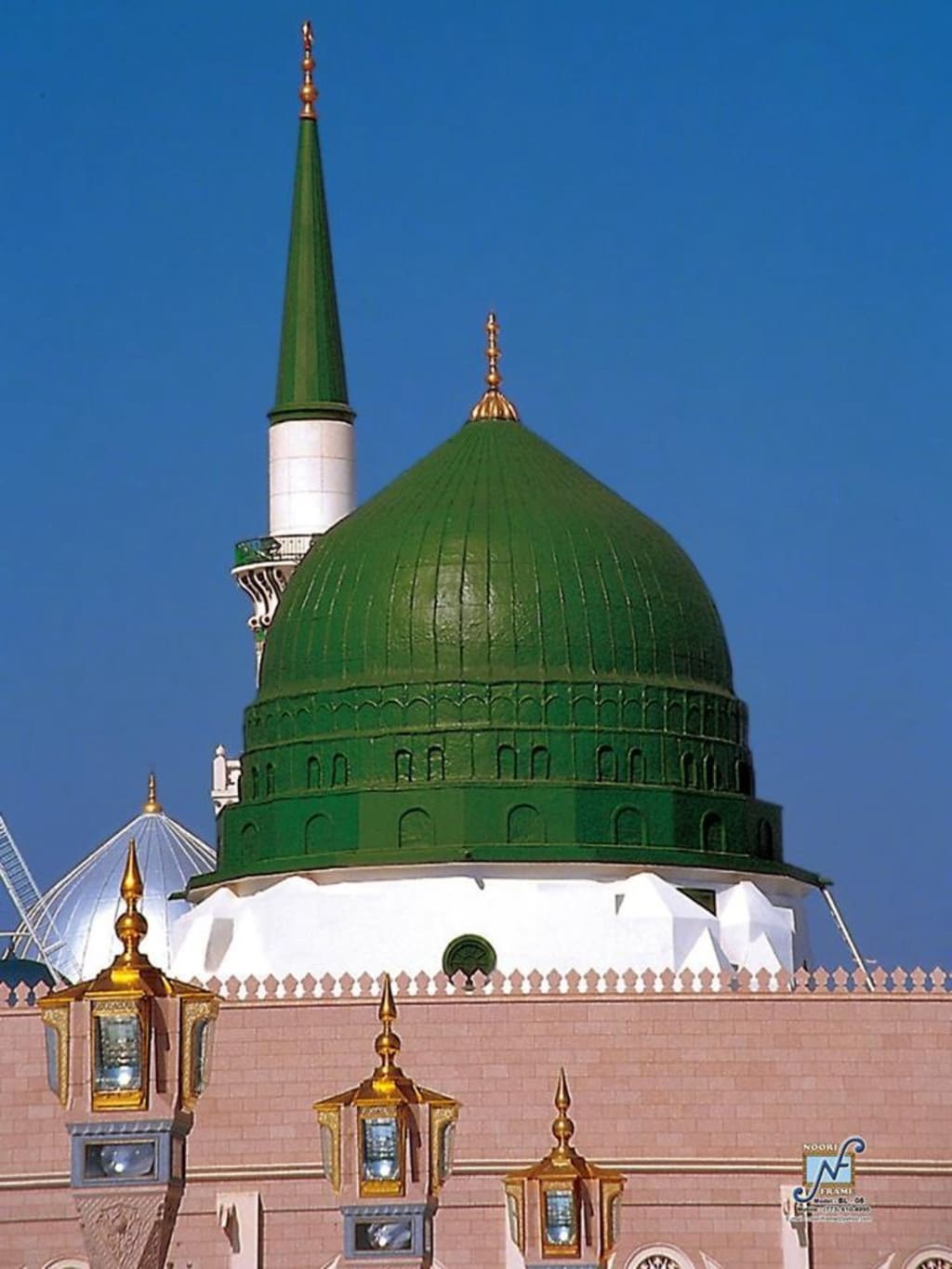
Prophet Muhammad (S.A.W.): The Last Messenger of Islam
Prophet Muhammad (S.A.W.) is regarded as the last and final messenger in Islam, sent by Allah (God) to guide humanity towards the path of righteousness. His life and teachings have had a profound impact on the course of history, not just for Muslims but for the entire world. Born in the city of Mecca in 570 CE, his legacy continues to influence billions of people across the globe.
Early Life
Muhammad ibn Abdullah, as he was originally known, was born into the respected Quraysh tribe. His father, Abdullah, died before his birth, and his mother, Amina, passed away when he was only six years old, leaving him an orphan. He was then raised by his grandfather, Abdul Muttalib, and after his grandfather's death, by his uncle, Abu Talib. Despite these early hardships, Muhammad grew up known for his honesty and integrity, earning him the title "Al-Amin" (The Trustworthy).
As a young man, Muhammad worked as a merchant and became well-known for his honesty in business. His reputation reached the ears of Khadijah, a wealthy widow who was 15 years older than him. Impressed by his character and skills, she proposed marriage, and they shared a strong, loving partnership for over 25 years, until Khadijah’s passing. They had several children together, including Fatimah, who would later become one of the most revered women in Islamic history.
The Revelation
At the age of 40, Muhammad (S.A.W.) began spending more time in solitude, meditating in the cave of Hira in the mountains near Mecca. It was here, during one of his periods of reflection, that the first revelation occurred. The angel Jibreel (Gabriel) appeared to him, commanding him to "Read" or "Recite" (the Arabic word "Iqra" encompasses both meanings), and conveyed the first verses of the Quran.
This moment marked the beginning of the prophetic mission that would last for 23 years. Muhammad (S.A.W.) received revelations over the course of his life, guiding him on matters of faith, law, morality, and personal conduct. The Quran, the holy book of Islam, became the compilation of these revelations, which Muslims believe to be the direct word of God, preserved without alteration.
The Message and Struggles
Muhammad's message was one of monotheism. He taught that there is only one God, Allah, and that all human beings should submit to His will. The core message of Islam emphasized the importance of justice, compassion, and kindness toward all living beings, as well as the need for self-purification and devotion to God.
However, Muhammad's message was met with fierce opposition from the leaders of Mecca, many of whom saw his teachings as a threat to their power and the existing social structure. Despite facing persecution, social ostracism, and physical harm, Muhammad (S.A.W.) continued to preach and spread the message of Islam.
Migration to Medina
As the opposition in Mecca grew stronger, Muhammad (S.A.W.) and his followers faced increasing violence. In 622 CE, he and his companions migrated to the city of Yathrib, later named Medina, where he was invited to serve as a mediator between warring tribes. This migration, known as the Hijra, marks the beginning of the Islamic calendar.
In Medina, Muhammad (S.A.W.) not only served as a religious leader but also as a political leader, establishing a just and inclusive society based on Islamic principles. He built a community where social justice, mutual support, and respect for all were emphasized. The people of Medina embraced Islam, and the city became the spiritual and political center of the Muslim community.
The Final Years
The following years saw the expansion of Islam, with many people from the Arabian Peninsula accepting the message of Muhammad (S.A.W.). Despite various challenges, including battles against the Quraysh and other adversaries, Muhammad (S.A.W.) remained resolute in spreading the word of God.
In 630 CE, Muhammad (S.A.W.) and his followers peacefully conquered Mecca, and the Kaaba, the sacred house of worship in Mecca, was purified from idols and rededicated to the worship of the one true God, Allah.
After his conquest of Mecca, Prophet Muhammad (S.A.W.) delivered his final sermon during his last pilgrimage to Mecca, known as the Farewell Sermon. In this sermon, he emphasized equality among all people, regardless of race, ethnicity, or social status, and reiterated the importance of following the teachings of the Quran and the Sunnah (the traditions of the Prophet). He reminded his followers of their duties toward each other and the rights of women, stressing justice, kindness, and integrity.
Legacy
Prophet Muhammad (S.A.W.) passed away in 632 CE at the age of 63, after leaving behind a profound legacy. He had established Islam as a way of life, not just as a religion but as a comprehensive system that covers all aspects of human existence—spiritual, social, political, and legal.
His character is a model for Muslims around the world. The Prophet’s kindness, humility, and wisdom continue to inspire millions. His teachings have been preserved in the Quran and Hadith (sayings and actions of the Prophet), which serve as guiding sources for Muslims in every aspect of their lives.
Muhammad (S.A.W.) was not just a prophet but also a teacher, a guide, and a reformer. His message of peace, justice, and submission to the will of God has left an indelible mark on the world, shaping civilizations and influencing generations.
About the Creator
MUHAMMAD AIZAZ
I write blogs and articles and people all around the world read it.
Keep reading
More stories from MUHAMMAD AIZAZ and writers in History and other communities.
The Clockmaker’s Secret
The Clockmaker’s Secret The town of Brindlewick was famous for two things: its cobblestone streets that seemed to twist and curl like the spine of an old book, and the little clock shop tucked away on a corner near the square. The shop was owned by Master Alder, an old clockmaker with spectacles so thick they made his eyes appear like moons. Children whispered rumors about him—how he could stop time, how he spoke to his clocks, and how his shop never seemed dusty despite his never being seen with a broom.
By MUHAMMAD AIZAZ4 months ago in Fiction
Savoy Hotel – Mussoorie: The Colonial Luxury Hotel Where an Unsolved Murder Still Walks the Corridors
The First Night: Beauty Wrapped in Silence Mussoorie looks peaceful from a distance. Pine trees sway gently, clouds roll like slow-moving waves, and the hill air smells of rain and old earth. But as evening falls, the silence becomes heavier—almost watchful.
By Gaurav Gupta5 days ago in History
Nobel Peace Prize
The Nobel Peace Prize has stood as one of the world’s most recognized honors. Awarded annually in Oslo, it is meant to celebrate individuals or organizations that have made significant contributions toward peace, diplomacy, and humanitarian progress. While its mission appears straightforward, the Nobel Peace Prize has never been free from debate. In recent years, conversations surrounding global politics—particularly discussions about the Trump Nobel Peace Prize—have brought renewed attention to how peace is defined, measured, and rewarded in the modern era. The Origins and Meaning of the Nobel Peace Prize The Nobel Peace Prize was established by Alfred Nobel, the Swedish inventor best known for creating dynamite. In his final will, Nobel directed that a portion of his wealth be used to recognize efforts that foster peace among nations, reduce standing armies, or promote diplomacy and cooperation. Since its first award in 1901, the prize has honored activists, diplomats, organizations, and world leaders whose actions shaped international dialogue. Unlike other Nobel categories, the peace prize is awarded by a Norwegian committee rather than a Swedish institution. This distinction reflects Nobel’s desire to separate the prize from national interests and focus instead on global responsibility. Over time, the definition of “peace” has expanded. Early recipients were often disarmament advocates or mediators. More recent laureates have included human rights defenders, climate activists, and international organizations working in conflict zones. Politics and the Nobel Peace Prize Despite its humanitarian ideals, the Nobel Peace Prize has always intersected with politics. Recognizing peace efforts often means evaluating political leadership, international negotiations, and long-term consequences—none of which are easy to measure in real time. Some awards have been widely celebrated, while others sparked controversy. Critics often argue that certain laureates were honored prematurely, before the lasting results of their actions became clear. Supporters counter that the prize is meant to encourage peace efforts, not merely reward completed achievements. This tension has made the Nobel Peace Prize a reflection of global priorities at any given moment, rather than a simple historical judgment. Donald Trump and Nobel Peace Prize Discussions Few modern political figures have generated as much debate in connection with the Nobel Peace Prize as Donald Trump. During and after his presidency, conversations about a potential Trump Nobel Prize emerged repeatedly, particularly among supporters who pointed to his role in diplomatic initiatives. The phrase Trump Nobel Peace Prize gained traction following agreements and negotiations in regions long marked by conflict. Advocates argued that these diplomatic efforts aligned with Alfred Nobel’s vision of reducing international tension through dialogue rather than force. At the same time, critics questioned whether these actions met the broader ethical and humanitarian standards traditionally associated with the award. They pointed to domestic divisions, foreign policy controversies, and unresolved global conflicts as reasons for skepticism. This divide highlights a core challenge of the Nobel Peace Prize: peace is rarely absolute, and political leadership is often complex and contradictory. Trump Nobel Peace Prize 2026: Speculation and Context As global politics continue to evolve, speculation around a Trump Nobel Peace Prize 2026 has appeared in media discussions and public commentary. It is important to note that nominations for the Nobel Peace Prize are confidential for decades, and speculation does not confirm consideration or selection. However, the mere discussion of Trump Nobel Peace Prize 2026 reflects how the award has become part of broader cultural and political conversations. Supporters view such recognition as validation of diplomatic achievements, while critics see the speculation as politicizing an institution meant to rise above partisan debate. This dynamic is not unique to Trump. Many past leaders, from various ideological backgrounds, were debated heavily before or after receiving the prize. The Nobel Peace Prize often mirrors global disagreements rather than resolving them. How the Nobel Committee Makes Its Decision Each year, hundreds of nominations are submitted by qualified individuals, including academics, lawmakers, and previous laureates. The Nobel Committee evaluates these nominations through research, expert consultation, and internal debate. The process considers intent, impact, and long-term significance. However, because peace efforts often unfold over years or decades, the committee must make decisions without full historical clarity. This reality explains why some awards age gracefully while others remain controversial. The committee rarely responds directly to public pressure or online campaigns. Media attention, including discussions around a Trump Nobel, does not guarantee influence over the final decision. The Broader Impact of the Nobel Peace Prize Beyond individual recipients, the Nobel Peace Prize plays a symbolic role. It brings global attention to issues that might otherwise be ignored, from humanitarian crises to fragile peace processes. Even controversial nominations can spark meaningful debate about what peace truly means in the modern world. The prize also raises questions about accountability. When leaders are considered for such recognition, the public is encouraged to examine policies, outcomes, and moral responsibility more closely. In this sense, discussions surrounding the Trump Nobel Peace Prize are not just about one individual. They reflect deeper conversations about diplomacy, leadership, and the evolving standards by which peace is judged. Conclusion: A Prize That Reflects the World The Nobel Peace Prize remains one of the most influential and debated honors in global society. Its power lies not only in recognizing peace efforts but also in challenging the world to think critically about conflict, cooperation, and responsibility. Whether discussions involve historic activists or modern political figures like those associated with Trump Nobel Peace Prize 2026 speculation, the award continues to reflect the complexities of international relations. Peace is rarely simple, and neither is the process of honoring it. Ultimately, the Nobel Peace Prize serves as a reminder that striving for peace is an ongoing journey—one shaped by ideals, actions, and the difficult choices that define human history.
By Saboor Brohi 5 days ago in History



Comments
There are no comments for this story
Be the first to respond and start the conversation.