



“Mary, where are you scurrying off to?”
Mama stood at the stove stirring a stock pot of soup with a wooden spoon, resigned to the chaos of the younger children racing a toy car back and forth across the kitchen table to cheers and gasps. Her shoulders were slumped. If not for the rain, she‘d have sent them outside.
Stopping short, Mary replied, “Nothing, Mama. Nowhere. The bedroom.”
“And what’s behind your back?”
She’d paused stirring now, one hand still holding the spoon handle, the other resting high on her hip. Her apron had a few small stains, barely noticeable against the brown and yellow floral pattern, indistiguishable which were old and new. Fortunately, the pale blue of her dress underneath had been spared, as it surely would have been in starker contrast to the spattering. With a full skirt and cap sleeves, it wasn’t a particularly fashionable cut for the time, but always kept clean, pressed, and mended so you’d hardly guess its age. A classic like Mama herself.
“Oh, nothing, just the paper,” Mary admitted sheepishly, revealing her hands and their contents. “I thought I’d do a little reading before I start on the ironing.”
“Well, I suppose that’s alright. Don’t let the time get away from you, though.” Mary nodded, turning to leave, and Mama resumed her stirring. “And save the Marmaduke!”
As the car went flying, one of the boys raised a fist and seconded from the table, “Yeah, Marmaduke!”
“Yes, alright, I’ll make sure to save the comics!” Mary called over her shoulder, already halfway up the stairs. It wasn’t a big house, but certainly roomie enough for the family to fit comfortably with three bedrooms on the second floor in addition to the living space of the first. One bedroom was saved for their parents, one for the little boys, and one for the sisters, which was the first door on the left.
Margaret, just a year older than Mary though twice as mature, or so she liked to boast, was laying on their bed flipping through a magazine. A Rolling Stones album played softly enough that Mama wouldn’t be able to make out the words from downstairs. A gift from Margaret’s hip older boyfriend who worked at the record store over on Market Street.
Crouching next to the bed, Mary bent forward and started pawing around until she felt the cool, smooth surface of her shoe box. She pulled it out and sat cross legged beside it, opening the Saturday edition of the San Francisco Examiner. Margaret glanced down at her, but didn’t care enough to question, and continued flipping through her style magazine, swaying her feet in the air to the tune of the music: “Have mercy, have mercy, baby. Have mercy, have mercy on me.”
Mary scanned the front page, reading little snippets here and there, skimming over the ads for full mink coats and the latest beauty creams. Unlike her older sister, Mary had little interest in style or luxury. She liked to read, to write, sometimes to paint, though she wasn’t much good at it. Her best still life viewed as flat, the colors not quite blended, and she could never get the shading right. Maybe her fault was a lack of patience, likely the same reason she gave up any attempt at styling her hair, opting instead to tie up the loose strands with a simple ribbon everyday. She did try to match the ribbon to her outfit, at least, something their oldest sister Lisa used to compliment her on. “Mary, what a smart outfit you have on today. I dig that little bow! It matches perfectly, and you won’t have to worry about your hair blowing in your face.” Lisa had been kind like that. Not Margaret, though.
“You should really find a better hiding place for that,” Margaret observed, pretending to still focus on her magazine while sneaking glances at the article Mary had stopped on. She recognized the name Patricia Theresa Maginnis from an arrest she’d seen Mary clip out of an earlier edition of the Examiner.
Half listening, Mary muttered, “I suppose I should, but there are only so many places a shoe box will fit.”
“It kills me to see these young healthy women be expected to jeopardize their lives for what is a simple, safe surgical procedure,” said the 38-year-old medical laboratory technologist.
“It’s just paper. You don’t have to keep them in a box. They could fit just about anywhere.”
Mary didn’t respond, continuing to scan: The Society for Humane Abortions, Inc.… “Stop Your Kidding — Support Planned Parenthood”… she had surgical technologist training, worked in obstetrics, ended her three-year enlistment with a corporal’s rating…
“You know, Mary, I have some ideas where you could stash those clippings.” It wasn’t that Margaret disliked her little sister, not at all, but she knew she didn’t have the comforting words or guiding hand that Lisa had. That had been a gift. “If you ever wanted a suggestion, that is.” She looked at the back of Mary’s head for any reaction.
With a sudden enthusiasm, Mary began, “Margaret, listen to this: My first real contact with abortion was in the Army. A woman pregnant by another man and expecting her husband’s return tried to abort herself, was hospitalized. The poor thing, who received no sympathy or understanding…”
“Mary, enough.”
“…became so distraught a wire cage was placed over her bed. She was held captive like an animal. I still shudder at the memory. Well, certainly, so would I!”
“Mary! I don’t want to hear about it!” Margaret sat up now, annoyed, and Mary turned to confront her from the floor.
“Why not? These things are happening all around us, Margaret! We need to know about them. We need to do something about them!”
The girls stared at one another in silence. They both knew why, without uttering a word, Margaret was resistant to the information and Mary was hungry for it. Both deflated.
“Margaret? I’m sorry. I didn’t mean to upset you.”
“I know,” she sighed, glancing toward the blank ceiling for reprieve. “I understand why you’re looking for answers or information or a solution or whatever it is you’re looking for,” tears gathered on the brims of her eyelids as her gaze returned to her sister, “but none of it is going to bring Lisa back.”
Mary paused before responding. “I know that, but maybe we can save someone else from the same fate. It’s a perfectly safe surgical procedure when performed by a medical professional!”
“You know Lisa was refused a therapeutic abortion for a reason. No grave medical danger, no rape, no incest. Rules are rules. She didn’t have to take matters into her own hands.”
“But she did. She felt she had to take matters into her own hands, and so do so many other women. Between 5,000 and 10,000 deaths per year, Margaret, all preventable!”
“Maybe if they’d just followed the law…”
“Yes, well, that laws are changing. The medical community has been rallying behind those nine doctors who were giving abortions to the women who had rubella. Things are happening. Soon it will only be in days gone by that women have to fake psychosis or suicide to be approved, or worse, seek help from disreputable sources.”
It was hard to resist Mary’s optimism, but Margaret just couldn’t muster the same passion or drive. If she could go back and stop Lisa, she would, but as the oldest, Lisa had shielded them from her plan. There wouldn’t have been any stopping her once her mind was made up.
Losing their oldest sister had been a devastation for the whole family, especially the sisters. It wasn’t a situation they could make sense of. In the weeks before her death, sure, she had been distant, moody, unlike the steady, nurturing presence they’d grown up with. Then to hear how she’d been found, hunched over and bleeding in a neighbor’s doorway. That wasn’t the end she deserved.
The record began to skip, so Margaret got up to change it. After flipping through the few albums they owned, she opted for silence, then went to sit across from Mary.
“Look, maybe things will change, maybe they won’t, but we can’t let Mama find this. It would destroy her.”
Margaret glanced down at the open shoebox full of newspaper clippings. Roman Catholics, regardless of their church’s official stand against most therapeutic abortion, seemed as eager as non-Catholics for liberalized abortion laws— 45 percent of Catholics compared to 58 percent of Protestants and 64 percent of those with no stated church preference. She reached into the box and shifted a few around. “The young woman was 25 weeks pregnant. She had just learned about the relationship between rubella (German measles) and birth defects and she was terrified. We confirmed she had rubella early in her pregnancy and we expelled the fetus by injecting a salt solution into her uterus. The baby was microcephalic, a pin head, and had no limbs at all.”
She picked up the box and walked over to the small, yellow night stand beside the bed. She pushed it to the side with little effort before kneeling on the floor. Mary couldn’t tell what she was up to, so she crawled closer to observe.
Margaret used her fingernail to pry up a loose board against the wall revealing a shallow hole in the floor. Mary could make out a small leather pouch, a cloth bound journal, a pack of cigarettes.
“This was Lisa’s hiding place. She didn’t know I knew about it, I don’t think, but we can dump your news clippings in here.”
Mary smiled as Margaret emptied the contents of the shoebox into the floor. She threw her arms around her big sister’s neck in thanks.
“Yes, ok, you’re welcome. Now, go cut out that one you were reading so we can cover this back up before someone catches us.”
As the sisters replaced the board and dragged the side table back into place, they held hands and thought of their third sister, the secret they all now shared, and the hope that there truly would be change.
Author’s Note:
Archival articles from 1966 publications of the San Francisco Examiner were quoted in this story.
June 11 - “MD’s Support for Abortion”
July 31 - “The Week’s News In Review”
September 26 - “One Woman’s Abortion Crusade”
About the Creator
Keep reading
More stories from Becca Shaley and writers in History and other communities.
Sickos. Runner-Up in Pride Under Pressure Challenge.
I’ve never celebrated Pride. As I type this, I know that I never will. There’s a bravery to proclaiming your identity in any way, whether it’s as big as announcing to the world that you’re a member of the queer community, or daring to wear that neon orange trench coat that mocks you with snickers of ”traffic cone” each time you try it on. That coat never makes it past the bedroom door, living in the back of the closet month after month.
By Becca Shaley9 months ago in Pride
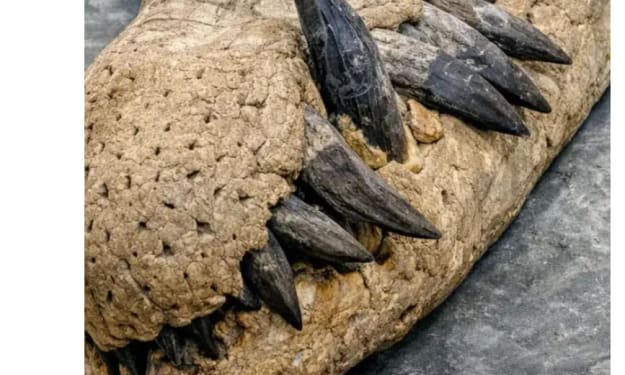
A skull of a Sea-Rex pliosaur was found off the coast of England.
A 6.6-foot-long pliosaur skull with its upper and lower jaws still locked together in their original configuration has been discovered by British scientists. Palaeontologists have an exceptionally good picture of how one of the most formidable predators in the Jurassic Ocean actually bit and fed because of this unique preservation.
By Francis Dami6 days ago in History
Flower Bloom 369
FLOWER Bloom 2/25/26 Wednesday By Mariann Carroll Karen had been with Tony for 7 years. Tony started acting strangely after her surgery. He would mow the lawn in the rain and be on his cellphone. He started pushing Karen away. Tony came clean about seeing someone. Karen moved out two months later. Karen moved in with a friend. She felt betrayed.
By Mariann Carroll4 days ago in Fiction



Comments (3)
Congratulations on your win 🎉🎉🎉
Wooohooooo congratulations on your win! 🎉💖🎊🎉💖🎊
nice