
Pre-Christian Religion in Armenia
A Journey into Ancient Beliefs and Mythology
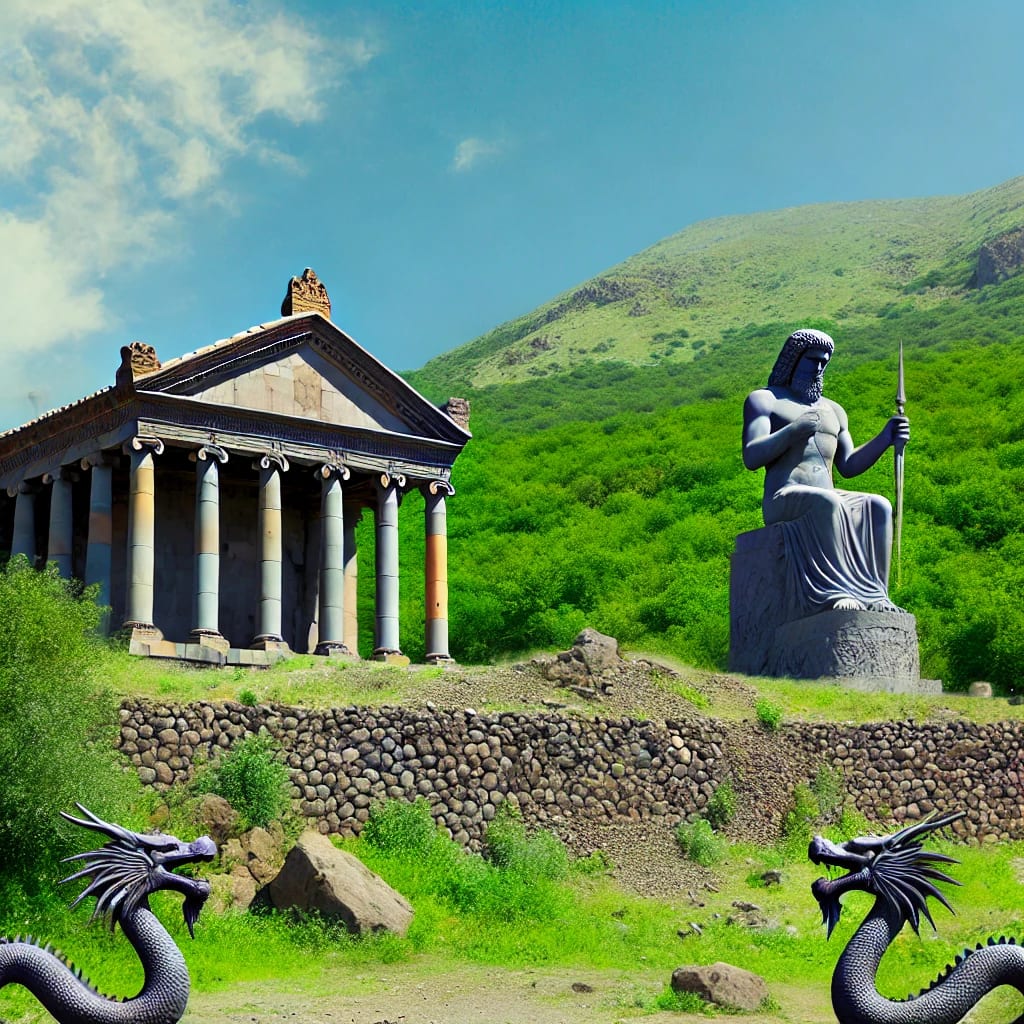
Before the adoption of Christianity in 301 AD, Armenia had a rich spiritual tradition rooted in its ancient history, centered around nature, celestial bodies, and the divine. The religion of pre-Christian Armenia was polytheistic, with numerous deities governing various aspects of life. This belief system was a fascinating blend of indigenous practices and the influence of surrounding cultures such as Persian Zoroastrianism, Greek mythology, and Mesopotamian beliefs. Armenian mythology, much like its religion, was deeply tied to the natural world and the everyday lives of its people, reflecting their struggles, triumphs, and hopes.
The Pantheon of Gods
Armenia’s pantheon of gods was extensive, with each deity playing a significant role in the daily and spiritual life of Armenians. The supreme god of this pantheon was Aramazd, often considered the father of all gods and the creator of heaven and earth. He was associated with power, fertility, and abundance. As the Armenian counterpart of the Zoroastrian god Ahura Mazda, Aramazd's worship signified Armenia's historical and cultural connections with its eastern neighbors, especially the Persian Empire.
Another prominent figure in the Armenian pantheon was Anahit, the goddess of fertility, healing, wisdom, and water. Anahit was often depicted as the "Great Lady" or "Golden Mother," revered in many regions of Armenia. Temples dedicated to her were sites of pilgrimage, where Armenians sought her blessings for health, childbirth, and prosperity.
Vahagn, the god of fire, war, and courage, was one of the most beloved deities. He was a warrior god, often likened to Heracles in Greek mythology. Vahagn's mythological tales speak of his battles against dragons and his fiery temper, which Armenians invoked in times of war and conflict. His worship was particularly strong among Armenian warriors and kings, who sought his protection on the battlefield.
The goddess Astghik, associated with love, beauty, and water, was closely connected with Vahagn. In one myth, it is said that the blood of Vahagn flowed into the rivers and lakes of Armenia, blessing the waters with his divine power. Astghik's temples were built near bodies of water, and festivals in her honor often involved water rituals.
Temples and Sacred Sites
Temples were central to religious practice in pre-Christian Armenia. These sacred sites were often constructed in natural settings, emphasizing the connection between the divine and nature. The most famous of these temples is Garni, a Hellenistic temple dedicated to the sun god Mithra (Mihr in Armenian). Garni stands as a testament to Armenia’s ancient architectural prowess and its synthesis of local and Hellenistic religious traditions.
Aside from Garni, Armenia had numerous other temples dedicated to various gods. These temples were not only places of worship but also centers for learning and culture. Priests and priestesses played a crucial role in maintaining these temples and overseeing religious ceremonies that included sacrifices, festivals, and prayers.
Armenian Mythology
Armenian mythology is a rich tapestry woven with the tales of gods, goddesses, and mythical creatures. Many of these stories were passed down orally, preserving the essence of Armenian beliefs across generations. One of the most famous legends is that of Vahagn, the dragon-slayer. His tale recounts his birth from the sky, earth, and sea and his battles with dragons, which symbolize chaos and evil. His fiery nature and courageous deeds became symbols of Armenian resilience and bravery.
Another captivating figure in Armenian mythology is Hayk, the legendary patriarch of the Armenian people. According to the myth, Hayk led his people out of Mesopotamia and established the Armenian nation after defeating the Babylonian king Bel. His victory signified the independence and strength of the Armenian people, and Hayk remains a national hero in Armenian folklore.
The Armenian gods and heroes were often closely tied to natural elements, such as the sun, moon, stars, rivers, and mountains. This connection underscored the Armenians' deep respect for nature and its forces, believing that their gods manifested themselves in the natural world.
The Transition to Christianity
In 301 AD, Armenia became the first nation to officially adopt Christianity, marking the end of its pagan era. This transformation, while significant, did not completely erase the memory of pre-Christian Armenian religion and mythology. Many aspects of the old belief system survived in folklore, art, and cultural practices, subtly blending with the new Christian traditions.
Temples like Garni, although repurposed, remained cultural landmarks, while the names of gods like Aramazd and Anahit continued to be remembered. Armenian mythology, with its tales of gods and heroes, lived on in the oral traditions and national consciousness, enriching the spiritual and cultural identity of the Armenian people.
For those interested in delving deeper into the fascinating world of Armenian mythology and its influence on Armenian culture, you can explore more at Armenian Mythology.
About the Creator
Keep reading
More stories from writers in History and other communities.
GIVE PEACE A CHANCE
Give Peace a Chance I remember the day John Lennon was shot. It was December 8, 1980, and the news hit the world like a devastating storm. But it wasn’t just the loss of a singer or songwriter; it felt like the silencing of a philosopher, a man who used music to speak truth to power and feed the souls of millions.
By Marie381Uk 7 days ago in History




Comments
There are no comments for this story
Be the first to respond and start the conversation.