
On the Trail of Resistance: Cuba between History, Culture, and Indomitable Spirit
My fifth trip to Cuba was much more than a simple tourist adventure: it was a renewed political pilgrimage, a deep immersion into the revolutionary history and the resistant soul of a people who have never stopped fighting for their dignity and independence.
Departure and Arrival: July 29 - July 30
On July 29, I left Italy, aware that I was heading to a place where every street, every building, and every gaze carries the echo of a revolution that changed the course of history. Arriving in Cuba the next day, July 30, I was greeted by the warm and humid embrace of an island steeped in memory and hope. The scent of the ocean, mixed with that of tobacco, immediately transported me to an atmosphere that speaks of resistance and solidarity.
First Days in Havana: July 30 - August 1
The first days in Havana were a dive into the living history of the Cuban Revolution. I walked through the streets of Vedado, not just as a tourist, but as a militant in search of the traces left by the revolutionaries. This neighborhood, with its colonial architecture and art deco villas, represents the contradictory soul of a country that has managed to reinvent itself, challenging imperialism and building a future of self-determination.
During my stay in Havana, I couldn't miss a visit to the Hotel Nacional de Cuba, an authentic symbol of the island's history and glamour. Located on the Cerro hill, the hotel offers a spectacular view of the Caribbean Sea and the city of Havana. Opened on December 30, 1930, the Hotel Nacional was designed by American architect Morris Lapidus, known for his Art Deco style that characterizes the building.
The Hotel Nacional is one of the most emblematic places in Cuba, not only for its architectural elegance but also for its crucial role in Cuban and international history. From its early years, it hosted a multitude of illustrious guests, including heads of state, artists, and writers. Among the most famous visitors were French philosopher Jean-Paul Sartre, former British Prime Minister Winston Churchill, and music icon Frank Sinatra.
Historically, the Hotel Nacional played a significant role during the Cuban Revolution. In 1959, right after the Revolution's victory, the hotel became a strategic center for meetings between revolutionary leaders and international emissaries. Its gardens and opera rooms witnessed important discussions about the country's new political direction.
The hotel is also known for its resistance during the failed Bay of Pigs invasion in 1961. During this period, the hotel became an observation and strategy point for Cuban forces, who successfully defended the country from the invasion.
Architecturally, the Hotel Nacional is characterized by a combination of styles reflecting its period of construction, including Art Deco elements and Spanish colonial influences. Its imposing towers, large gardens, and rooms decorated with marble and frescoes convey a sense of opulence and grandeur. The hotel's garden is adorned with statues and fountains that add a touch of elegance and tranquility, making the area a perfect place for walks and moments of relaxation.
Today, the Hotel Nacional continues to be a beacon of Cuban culture and a historical landmark. Its long history and status as a luxury destination make it a must-see for anyone visiting Havana, offering a unique perspective on Cuba's rich cultural and historical heritage.
The visit to the Hotel Nacional was an opportunity to reflect on the international conspiracies and resistance strategies that have marked Cuban history. This place, which has hosted countless figures of great stature and international prestige, is a symbol of the struggles that have crossed the island, a privileged observation point.
During my visit to Havana, one of the most significant stops was the visit to Ernest Hemingway's House, located at Finca Vigía, in the company of my friend Barbara Iadevaia (a great friend of Cuba and supportive of the island's people). This splendid villa is located about 15 kilometers southeast of central Havana, in the San Francisco de Paula neighborhood, an area that was rural at the time but is now an integral part of the city. The house, built in 1886 by a Catalan architect, is immersed in lush tropical vegetation, with large gardens offering a breathtaking view of the city and the Caribbean Sea.
Hemingway, one of the most famous American writers of the 20th century, purchased this property in 1940 and lived there for about 20 years, writing some of his most important works, including "The Old Man and the Sea" and "For Whom the Bell Tolls." The villa is characterized by simple and linear architecture, with large windows that let in natural light, making the interiors airy and bright. The rooms still retain much of the original furniture, including the writer's extensive collection of books, paintings, and hunting trophies.
A distinctive feature of Hemingway's House is the watchtower (hence the name Finca Vigía, which means "watch farm"), a small structure that the author had built next to the villa to have a secluded place to write in peace. However, Hemingway preferred to write standing up in the room that served as a library, surrounded by his books and with a view of the gardens.
The surrounding park is a refuge of peace and natural beauty, where Hemingway raised his beloved cats and admired the panorama of Havana. In the garden, there is still the swimming pool where the author hosted his famous friends, such as Ava Gardner and Spencer Tracy. Another point of interest is Hemingway's boat, "Pilar," docked in the garden and preserved as a precious relic. The "Pilar" was his faithful companion on fishing trips off the Cuban coast, a pastime that inspired many of his stories.
Hemingway's House at Finca Vigía is not just a tourist attraction, but a symbol of the deep connection the writer had with Cuba and its people. This connection is reflected in his works and philanthropic activities, such as supporting the local community during World War II, when Hemingway organized a fleet of Cuban fishermen to patrol the coasts in search of German submarines.
Today, the house, now a museum, is a living example of Cuba's cultural heritage, a window into the life of a man who, despite his worldwide fame, found a second home in Cuba. The visit to Finca Vigía is not just a journey into Hemingway's life, but an opportunity to immerse oneself in the history and culture of Cuba, in a place where literature and daily life intertwine in a harmonious blend.
At Hemingway's House, I felt the weight of the responsibility the writer felt toward Cuba, a place he loved and defended. This bond between the artist and the island is an example of how culture can become a powerful weapon against oppression. Hemingway, with his love for the Cuban people, became a symbol of the international solidarity that accompanied the Revolution.
During the day, I met with Her Excellency Yeshika Crespo, Ambassador of Bolivia to Cuba, a moment of deep reflection on the political alliances and fraternal ties that unite the peoples of Latin America. These diplomatic relations, based on the sharing of revolutionary ideals, represent the strength and determination of a continent fighting against neocolonialism.
Next, I visited the Christ of Havana, built a few months before the Revolution, which offered me a panoramic view not only of Havana but of the history that unfolded at its feet. From there, the view of the Fortress of La Cabaña, located on a hill overlooking Havana's harbor, is one of the island's most evocative and history-rich places. Built between 1763 and 1774 by the Spanish to defend the city from pirates and enemy incursions, this imposing military structure was designed with sturdy stone walls and defensive towers that dominate the surrounding landscape.
The Fortress of La Cabaña is known not only for its defensive architecture but also for its crucial role during the Cuban Revolution. After the rebels' victory in 1959, the fortress became an important center for the revolutionary government. Ernesto "Che" Guevara, who assumed the role of Minister of Industry and head of the Industrial Administration, established his headquarters there. Guevara used the fortress as a base for the reform and organization of the Cuban economy. In this context, La Cabaña became a symbol of the struggle for socialism and the new government's commitment to change.
During his time at the Fortress, Che Guevara worked to implement the government's economic and social reforms, leveraging La Cabaña's important strategic position to coordinate operations and strategies. The area, which was once a military outpost, became a hub for political and administrative activities, and its halls and offices witnessed important historical decisions.
Today, the Fortress of La Cabaña is a site of great historical and cultural interest. It is a museum that hosts exhibitions narrating the city's history and its role in different eras. Every evening, the fortress offers a historical re-enactment show with a cannon ceremony that marks the sunset and revives the military traditions of the colonial era.
The panoramic view from the fortress is spectacular, offering a complete view of the city of Havana and the harbor. Walking along its walls, it is impossible not to feel the weight of the history and struggles that have shaped Cuba's destiny. The Fortress of La Cabaña is a powerful symbol of the colonial past and the Cuban Revolution, a place where history, culture, and sacrifice intertwine in a timeless monument.
On August 1, walking through the streets of Havana, I felt the energy of a city that does not give up. The Malecón, with its 8 km of waterfront, is a symbol of resilience: here, between the ocean waves and the sea breeze, Cubans find the strength to face daily challenges with a smile and music, as if to defy adversity with their culture and indomitable spirit.
Viñales: August 2 - 4
Thanks to the support of comrades from ICAP Pinar del Rio, I visited the Expo Proyecto Artístico Comunitario "Por una Sonrisa," a project that offers health care to children with disabilities or illnesses. This encounter with the humanity of the Cuban people further confirmed my belief that the Revolution is not only an economic and political act but also a profound cultural and human transformation.
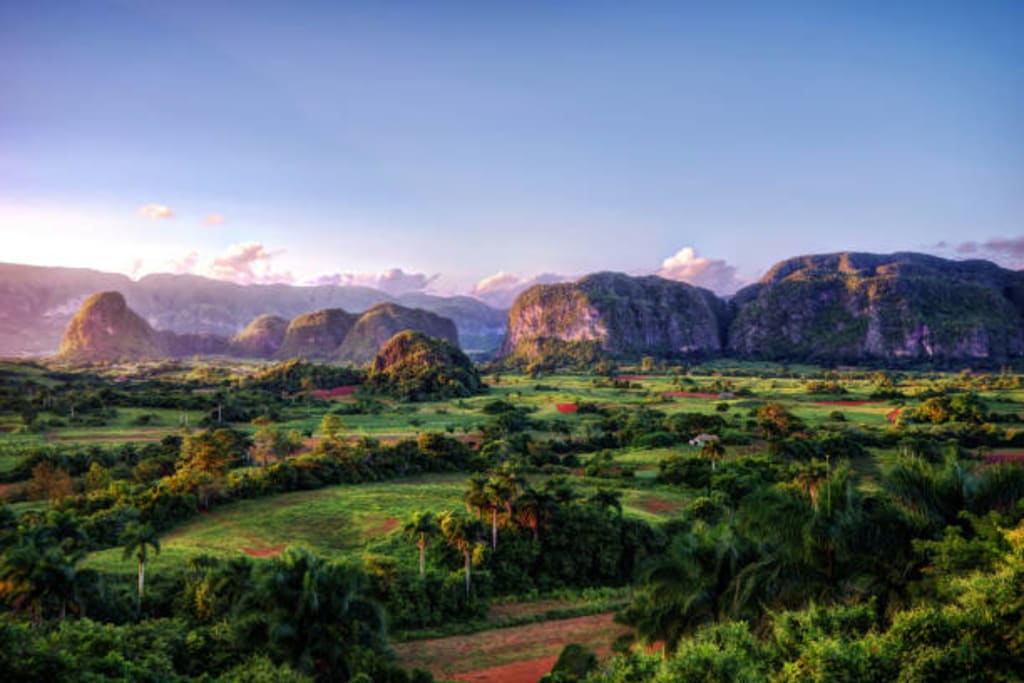
The following days were dedicated to discovering the Viñales Valley, a place where nature and history intertwine in an extraordinary landscape. This valley, located in the province of Pinar del Río, is known for its fertile red soil and tobacco plantations, where some of the world's finest cigars are produced.
Viñales offers a unique landscape, with the "mogotes," karst hills covered in lush vegetation, rising from the plains. These formations, of extraordinary beauty, create a dramatic contrast with the cultivated fields and traditional rural homes. The region is known for its tobacco culture, which has been a source of pride for the local farmers for centuries.
Visiting a traditional tobacco farm in Viñales is an immersive experience into Cuban culture and traditions. Here, farmers continue to cultivate the plant in a traditional manner, preserving artisanal practices that have been passed down through generations. Observing the meticulous process of drying the leaves and rolling the cigars offers a unique perspective on the life of the Cuban "guajiros," the rural workers who represent the soul of the Cuban countryside.
The history of Viñales is intertwined with the history of Cuba's resistance. The valley has been a refuge for fugitive slaves, "cimarrones," who fled the Spanish plantations and created secret communities in the caves hidden among the hills. These stories of resistance and resilience are still present in the memory of the people of Viñales, who are proud of their heritage and culture.
One of the most evocative places in Viñales is the Cueva del Indio, a vast cave that was once inhabited by indigenous people before the arrival of the Spanish. The cave can be visited by boat, navigating an underground river that winds through the dark caverns, illuminated by faint lights that create a mysterious and suggestive atmosphere.
The following day, I visited the Caverna de Santo Tomás, the largest cave system in Cuba and one of the largest in Latin America. This natural wonder, stretching over 46 kilometers of galleries and tunnels, is a testimony to the geological history of the region and offers an incredible underground adventure. The cave system was also used as a refuge during the Cuban Revolution and is a symbol of the resistance that has characterized the history of this land.
During the journey, the memory of comrade Omar, a proud Cuban who has always stood by his people, who passed away in 2015, resurfaced. The bond between him and the people of the island is an example of how the Revolution has woven ties of friendship and solidarity among all who fight for a better world.
Cayo Jutías: August 4
After immersing myself in the history and culture of Viñales, I allowed myself a moment of rest on the beaches of Cayo Jutías, a small island located off the northern coast of Pinar del Río. Here, the crystal-clear waters and white sands create a paradise on earth, where time seems to stand still. Walking along the beach, I thought of the beauty of this land, which has managed to maintain its natural splendor despite the economic difficulties caused by the embargo and international isolation.
Return to Havana and Departure for Italy: August 5 - 6
On August 5, I returned to Havana, where I spent the last day reflecting on the emotions and experiences of this intense journey. Before leaving, I had the opportunity to meet with my friend Ermis de la Iglesia, a person who has always fought for the rights of the Cuban people and who continues to support the Revolution with unwavering commitment.
The departure from Cuba on August 6 was a bittersweet moment. I left behind a piece of my heart in this land that I love deeply, but I brought with me the memories of an unforgettable experience and the conviction that the Cuban people, with their strength and determination, will continue to fight for their freedom and dignity.
I would like to express my deepest gratitude to those who made the organization of the educational and cultural events in Pinar del Río and Viñales possible.
A huge thank you to Otto L. Medero Ungo and Hanoi Diaz Pereda for their invaluable support and dedication in contributing to the success of these events. Their collaboration was crucial in creating moments of cultural exchange and personal enrichment.
A special thanks also goes to the entire Icap Pinar del Río for their ongoing commitment to promoting culture and education in the region.
Finally, I want to express my profound appreciation to Yana Rosa Figueroa Castillo for her outstanding assistance and tireless work in the cultural and literary fields. Her passion and dedication have been a true source of inspiration.
Heartfelt thanks to all of you for making this unforgettable experience possible!
About the Creator
Keep reading
More stories from Maddalena Celano and writers in History and other communities.
Cuba's Vigilance Against Terrorism: Defending Sovereignty Amidst Challenges
In a recent announcement from the Cuban Ministry of the Interior, the dismantling of a criminal network financed by the United States marks a crucial moment in Cuba's ongoing struggle against external threats to its sovereignty. The operation, aimed at preventing "violent actions" within the country, underscores Cuba's firm commitment to national security and the protection of its people.
By Maddalena Celano2 years ago in History
The Seven Wonders of the World: Amazing Human Creations
People have always been fascinated by things that are grand and unusual. From the very beginning of civilization, humans wanted to build structures that were not just useful, but also showed their skill, creativity, and ambition. The Seven Wonders of the World are the most famous examples of this desire. They are impressive not only because of their size or beauty, but also because of the stories they tell about our past, different cultures, and human innovation. The idea of the Seven Wonders comes from ancient travelers and historians who listed the most remarkable human creations. Even though some of these wonders no longer exist, their legacy continues to inspire people around the world. Let’s explore each one, looking at their history, significance, and why they remain unforgettable. 1. The Great Pyramid of Giza (Egypt) The Great Pyramid of Giza is the only surviving wonder of the original Seven Wonders. Built around 2560 BCE as the tomb of Pharaoh Khufu, it is an extraordinary engineering achievement. Made from more than two million limestone blocks, some weighing over 15 tons, the precision of its construction is still astonishing today. The pyramid shows the power and beliefs of ancient Egypt and continues to attract visitors from all over the world. It is a true symbol of human skill and vision. 2. The Hanging Gardens of Babylon (Iraq) The Hanging Gardens of Babylon are famous for their beauty and clever design, though historians still debate whether they really existed. Ancient stories say King Nebuchadnezzar II built these stepped gardens for his wife, Amytis, who missed the green hills of her homeland. The gardens, described as terraces full of trees, flowers, and shrubs, appeared to float above the city. Whether real or partly mythical, they show how ancient people combined nature and architecture in extraordinary ways. 3. The Statue of Zeus at Olympia (Greece) Around 435 BCE, the sculptor Phidias created the Statue of Zeus at Olympia. This huge statue of the Greek god Zeus, seated on a throne, was over 12 meters tall and made of ivory and gold-plated bronze. It represented both artistic skill and religious devotion. Even though it was destroyed long ago, records and artistic depictions keep its memory alive, showing the Greeks’ dedication to beauty, religion, and craftsmanship. 4. The Temple of Artemis at Ephesus (Turkey) The Temple of Artemis, built around 550 BCE, was dedicated to the Greek goddess of the hunt and wilderness. Known for its enormous size, detailed sculptures, and beautiful design, it was rebuilt several times after destruction, reflecting its cultural importance. People traveled from across the Mediterranean to see it, making the temple a center of religion, art, and commerce. Today, its ruins still tell the story of a civilization that valued beauty and spiritual devotion. 5. The Mausoleum at Halicarnassus (Turkey) Built between 353 and 350 BCE, the Mausoleum at Halicarnassus was the tomb of Mausolus and his wife Artemisia. Combining Greek, Egyptian, and Lycian styles, it stood around 45 meters tall and was decorated with intricate sculptures. Its design influenced monumental tombs for centuries. Even after earthquakes destroyed it, the Mausoleum remains a symbol of human creativity and architectural achievement. 6. The Colossus of Rhodes (Greece) The Colossus of Rhodes, built between 292 and 280 BCE, was a massive bronze statue of the sun god Helios, celebrating Rhodes’ victory over an invading army. Over 30 meters tall, it was one of the tallest statues of the ancient world. Although it only stood for 54 years before an earthquake toppled it, the Colossus became a symbol of triumph, resilience, and artistic achievement, inspiring large statues throughout history. 7. The Lighthouse of Alexandria (Egypt) The Lighthouse of Alexandria, or Pharos, was built around 280 BCE on the small island of Pharos. Standing over 100 meters tall, it served as both a landmark and a guide for sailors entering Alexandria’s busy harbor. Its elegant design combined functionality and beauty. Though earthquakes destroyed it long ago, it remains a symbol of human ingenuity and innovation in maritime engineering. The Legacy of the Seven Wonders The Seven Wonders are more than just buildings; they are symbols of human creativity, ambition, and achievement. Each wonder tells a story about the people who built it, the culture it came from, and the new ideas of its time. Even though some no longer exist, their stories continue to live through historical records, art, and the fascination of people worldwide. These wonders still inspire architects, artists, engineers, and travelers today. From the pyramids of Egypt to the Hanging Gardens of Babylon, they remind us that imagination and effort can create something that lasts for thousands of years. They are examples of determination, vision, and the pursuit of excellence. Conclusion The Seven Wonders of the World are timeless creations that celebrate human creativity and determination. They are more than stones, metals, or ruins—they represent entire civilizations and the marks they left on history. Even after centuries, their stories continue to inspire people to dream, create, and achieve greatness. These wonders remind us that with vision, passion, and effort, humans can build creations that
By Binan Mooona day ago in History
3 Everyday Rules That Exist Because Someone Once Did Something Very Stupid
Everywhere you go, you are surrounded by rules that feel oddly specific. Do not touch. No running. Contents hot. Do not insert body parts. These warnings aren’t theoretical. They weren’t written by pessimists or lawyers with too much free time. They exist because at some point in history, a real human being looked at a situation and thought, “This will probably be fine.”
By Enoch Sagini4 days ago in History


Comments (2)
Thanks for sharing
I really love your content and how it's crafted , I love it and happily subscribed , you can check out my content and subscribe to me also , thanks for this beautiful one