
NASA’s Remarkable Revival of Voyager 1’s Thrusters
How Engineers Saved the Farthest Spacecraft from Silence

It’s Friday, May 16, 2025, at 3:11 PM here in my corner of the world, and the latest news from NASA has got a lot of us talking. The space agency has pulled off an incredible feat by reviving the backup thrusters on Voyager 1, the farthest human-made object from Earth, which had been considered dead for over two decades. This update, reported yesterday by The Register, highlights the ingenuity of NASA’s Jet Propulsion Laboratory (JPL) team and ensures the spacecraft can keep communicating with us for a bit longer. Let’s break down what happened, why it matters, and what it means for the future of this aging explorer.
Voyager 1, launched in 1977 alongside its twin Voyager 2, has been a trailblazer in space exploration. Now over 15 billion miles away, it crossed into interstellar space in 2012, becoming the first human-made object to leave the heliosphere—the Sun’s protective bubble. Its primary mission was to study the outer planets, but it’s been sending back data about interstellar space ever since, powered by a fading radioisotope thermoelectric generator. Keeping it operational is a challenge, especially with its thrusters, which are critical for pointing its antenna toward Earth to maintain contact.
The trouble started last year when NASA noticed issues with Voyager 1’s thrusters. The primary attitude control thrusters, responsible for orientation, were clogging up due to silicon dioxide buildup in the fuel lines, a byproduct of the aging rubber diaphragm in the fuel tank. This problem was first detected in 2002, and by 2024, the clogging had worsened, reducing the thruster efficiency. To cope, the team switched to a different set of thrusters in 2018 and 2019, but those too began to degrade. The backup thrusters, unused since 2004 and declared inoperable due to similar clogging, became the last hope. The Register’s report from May 15, 2025, confirms that NASA successfully revived these backup thrusters, a move dubbed a “Hail Mary” fix by some
The urgency of this repair came from a tight deadline. The Deep Space Network’s Canberra antenna, the only one with enough power to send commands to Voyager 1, went offline on May 4 for upgrades that will last until February 2026. This antenna is vital because it’s the primary link to the spacecraft, located 15 billion miles away, where radio signals take about 22.5 hours to travel one way. Without the ability to adjust its orientation, Voyager 1 risked losing contact during this blackout. The JPL team had to act fast, and their solution involved a creative approach—likely using heat to clear the clogged lines, though exact details haven’t been disclosed. Within 20 minutes of sending the command, they saw the thruster temperature rise, confirming the fix worked.
This isn’t the first time Voyager 1 has faced challenges. Over the years, NASA has turned off instruments to conserve power, like the plasma science experiment in 2007, and recently adjusted operations to extend its life. The thruster issue added another layer of complexity, but the team’s success is a testament to their problem-solving skills. Todd Barber, the mission’s propulsion lead at JPL, called it a “miracle save,” noting the high morale when the thrusters fired up. The backup thrusters, though dormant since 2004, were brought back online just in time to ensure Voyager 1 can maintain its position through the antenna upgrades, with brief operational windows in August and December 2025.
Voyager 1’s data has been invaluable, revealing details about the heliosphere’s shape and interstellar conditions. Its twin, Voyager 2, is about 13 billion miles away and has undergone similar thruster swaps in 1999 and 2019, though its situation is less critical. Both spacecraft, launched to explore Jupiter, Saturn, Uranus, and Neptune, have exceeded their original missions, now focusing on the space beyond. The recent thruster fix buys Voyager 1 more time, but its power will likely run out by 2030, forcing NASA to prioritize which instruments stay active.
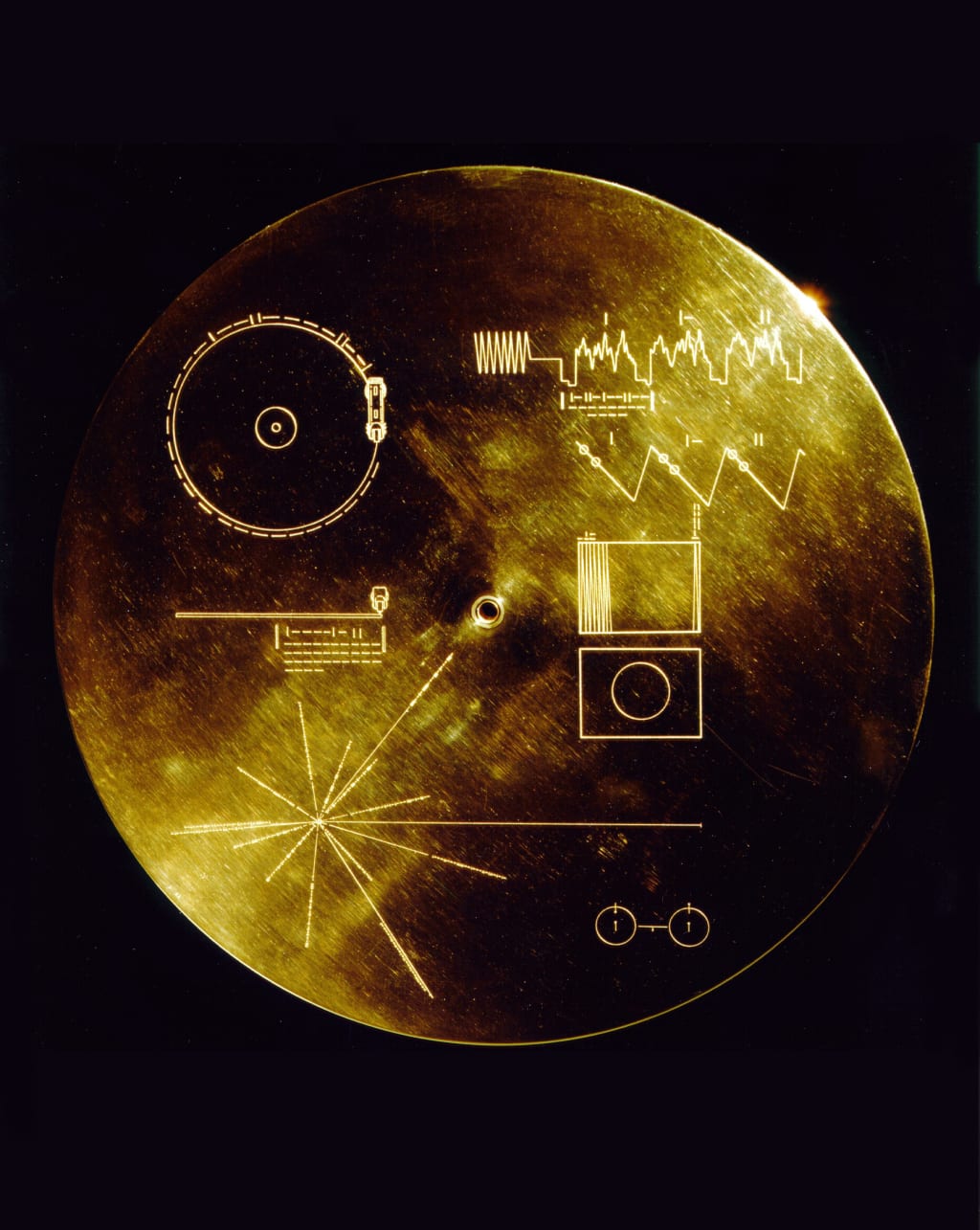
This achievement has sparked excitement online. People on platforms like X have called it a “stunning save,” with some marveling at how a spacecraft from the 1970s, with tech less powerful than a modern calculator, keeps going. The revival reflects NASA’s commitment to pushing the boundaries of what’s possible, even with aging equipment. It’s also a reminder of the spacecraft’s golden record, carrying Earth’s sounds and images, a message to any potential extraterrestrial finders.
It shows that with creativity and determination, we can keep exploring the unknown. Voyager 1’s journey—now extended by this thruster fix—continues to inspire, offering a glimpse into the cosmos that’s been traveling since before many of us were born. As the upgrades proceed, NASA will keep monitoring the spacecraft, hoping to squeeze out every last bit of science. It’s a small victory, but one that keeps our connection to the stars alive a little longer.
About the Creator
Ahmed Jubayer
Amplifying untold stories with a bold, authentic voice. Passionate about weaving words that resonate, provoke, and inspire.
Keep reading
More stories from Ahmed Jubayer and writers in History and other communities.
The Alien Mirror That Pulled Me to Another World
It’s Wednesday, May 14, 2025, and just a few minutes ago, at 2:52 PM +06, I was up in the dusty attic of my family’s old farmhouse in rural Oregon. I’m Liam, a 16-year-old kid who spends most days helping Dad with the cows or messing around with my guitar. Life’s pretty quiet here, but today I found something wild while digging through Grandpa’s old boxes—a round mirror with a silver frame covered in weird, twisty carvings. When I wiped the dust off, the glass rippled like water, and a low hum filled the room. I leaned in to get a better look, and the next thing I knew, I was falling through it, landing in a place that wasn’t Oregon—or Earth. That’s how I met some of the strangest beings I’ve ever seen, aliens from a parallel universe, and it turned my world upside down.
By Ahmed Jubayer8 months ago in Fiction
The Koh-i-Noor Diamond
The Koh-i-Noor, meaning “Mountain of Light” in Persian, is one of the most famous and controversial diamonds in the world. More than just a gemstone, it is a symbol of power, conquest, imperial ambition, and historical dispute. For centuries, the Koh-i-Noor passed from one ruler to another, almost always through war, betrayal, or political domination. Its story is deeply intertwined with the history of South Asia, Persia, Afghanistan, and the British Empire. Origins in Ancient India The exact origins of the Koh-i-Noor are surrounded by legend and uncertainty. Most historians agree that the diamond was discovered in India, likely in the Golconda region (modern-day Telangana), which was once the world’s richest source of diamonds. Golconda diamonds were renowned for their exceptional clarity and brilliance, and many legendary gems came from this area. Ancient Indian texts and folklore suggest that the Koh-i-Noor may have been known thousands of years ago. Some legends associate it with the Syamantaka Mani, a mythical jewel mentioned in Hindu scriptures. While this link cannot be proven, it reflects how deeply the diamond is embedded in Indian cultural imagination. What is more certain is that for centuries, India was the only known source of diamonds in the world, making gems like the Koh-i-Noor extraordinarily rare and valuable. The Delhi Sultanate and Early Rulers By the medieval period, the Koh-i-Noor had become part of royal treasuries in northern India. It is believed to have been owned by rulers of the Delhi Sultanate, a series of Muslim dynasties that ruled large parts of India from the 13th to the 16th centuries. During this time, the diamond was not merely an ornament. It symbolized divine favor, royal authority, and military dominance. Possessing such a gem enhanced a ruler’s prestige and legitimacy. However, the diamond’s history already showed a pattern: it rarely stayed with one dynasty for long. The Mughal Empire and the Peacock Throne The Koh-i-Noor reached new heights of fame under the Mughal Empire, one of the greatest empires in South Asian history. In 1526, Babur, the founder of the Mughal dynasty, defeated Ibrahim Lodi at the Battle of Panipat. The diamond came into Mughal possession shortly after. Babur himself mentioned a famous diamond in his memoirs, the Baburnama, describing its immense value. Later Mughal emperors treasured the Koh-i-Noor, but it was under Shah Jahan—the builder of the Taj Mahal—that the diamond achieved legendary status. Shah Jahan placed the Koh-i-Noor in the magnificent Peacock Throne, a jewel-encrusted seat symbolizing Mughal wealth and glory. At this point, the diamond was not just a treasure; it was the heart of imperial power. Nadir Shah and the Name “Koh-i-Noor” In 1739, disaster struck the Mughal Empire. Nadir Shah, the ruler of Persia (modern Iran), invaded India and sacked Delhi. The Mughal capital was looted, and unimaginable wealth was carried away. According to legend, when Nadir Shah first saw the diamond, he exclaimed “Koh-i-Noor!”—Mountain of Light. From that moment, the diamond became known by this name. Nadir Shah took the Koh-i-Noor back to Persia, but his reign was short-lived. He was assassinated in 1747, and once again, the diamond changed hands amid chaos. Afghanistan and the Durrani Empire After Nadir Shah’s death, the Koh-i-Noor came into the possession of Ahmad Shah Durrani, the founder of the Durrani Empire in Afghanistan. For a time, the diamond remained in Afghan royal custody. However, internal conflicts weakened Afghan rulers. One of Ahmad Shah’s descendants, Shah Shuja Durrani, was eventually overthrown and imprisoned. Desperate to regain his throne, Shah Shuja sought help from the Sikh Empire in India—and brought the Koh-i-Noor with him as a bargaining tool. Maharaja Ranjit Singh and the Sikh Empire In the early 19th century, the Koh-i-Noor entered the treasury of Maharaja Ranjit Singh, the powerful founder of the Sikh Empire. Shah Shuja gave the diamond to Ranjit Singh in exchange for military assistance. Ranjit Singh valued the Koh-i-Noor deeply, but unlike many rulers before him, he reportedly wished for the diamond to be donated to a Hindu temple after his death. However, this wish was never fulfilled. After Ranjit Singh’s death in 1839, the Sikh Empire rapidly declined due to internal struggles and British interference. This set the stage for the final and most controversial chapter of the Koh-i-Noor’s journey. British Conquest and Transfer to Britain Following the Anglo-Sikh Wars, the British East India Company annexed Punjab in 1849. As part of the Treaty of Lahore, the Koh-i-Noor was handed over to the British. The diamond was presented to Queen Victoria and transported to Britain. This transfer remains one of the most disputed moments in the diamond’s history, as it occurred under colonial domination, not free consent. In 1851, the Koh-i-Noor was displayed at the Great Exhibition in London. However, many viewers found it disappointing, as its original cut did not reflect light well by European standards. Recutting and the British Crown Jewels To enhance its brilliance, Prince Albert ordered the diamond to be re-cut in 1852. While this made the Koh-i-Noor smaller, it significantly increased its sparkle. The diamond was later set into various pieces of British royal jewelry. Today, it is mounted in the crown of Queen Elizabeth The Queen Mother, part of the British Crown Jewels, and kept in the Tower of London. Traditionally, the Koh-i-Noor is worn only by female members of the royal family, due to a long-standing belief that the diamond brings misfortune to men who possess it. Modern Controversies and Claims In the modern era, the Koh-i-Noor has become a symbol of colonial injustice. India, Pakistan, Iran, and Afghanistan have all, at different times, claimed rightful ownership of the diamond. India argues that the Koh-i-Noor was taken during British colonial rule and should be returned. Pakistan claims it as part of the Sikh Empire’s legacy, which was based in Lahore. Afghanistan cites its period under Durrani rulers, while Iran references Nadir Shah. Britain, however, maintains that the diamond was acquired legally under the Treaty of Lahore. Conclusion: A Symbol Beyond a Gem The Koh-i-Noor is far more than a diamond. It represents centuries of empire-building, conquest, ambition, and loss. Its journey mirrors the violent and complex history of South Asia and imperial expansion. Whether it will ever be returned remains uncertain. But one thing is clear: the Koh-i-Noor is not just a Mountain of Light—it is a mountain of history, carrying within it the stories of rulers, empires, and nations.
By The best writer 4 days ago in History
When the Pyramids Learned to Breathe
The desert was silent in the way only ancient places can be—not empty, but listening. At dawn, the first light touched the limestone faces of the pyramids, and the shadows they cast stretched long and deliberate, as if time itself were waking slowly. To the west, beyond the city’s dust and noise, the old giants stood where they always had, unmoved by centuries, untouched by doubt.
By LUNA EDITH5 days ago in History



Comments
There are no comments for this story
Be the first to respond and start the conversation.