
Mythology - Unveiling the Extraordinary Tales of the Human Imagination
Enjoy
Introduction:
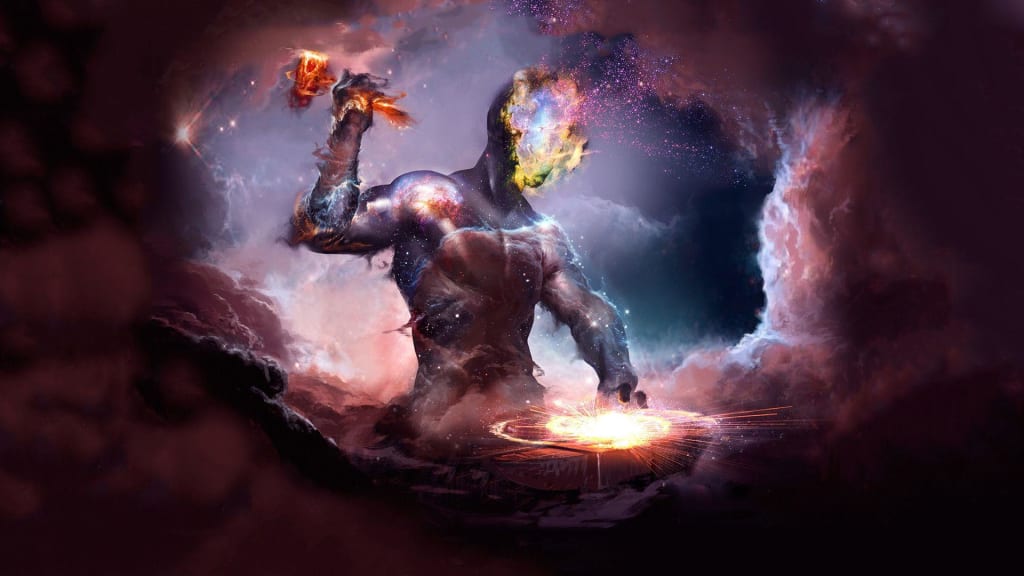
Mythology is an enchanting ensemble of narratives that describe the beliefs, values, and religious systems of various cultures. The word "mythology" finds its origins in the Greek language, blending "mythos" (meaning "story" or "legend") and "logos" (meaning "word" or "speech"). These traditional literary works serve the purpose of explaining the mysteries of nature, the origin of humanity, and the existence of fantastical beings and deities. Often intertwined with legends, myths are distinct in that they are entirely imaginative, devoid of any historical truths.
Definition and Scope:
The term "mythology" can encompass the entirety of myths within a culture or religion, such as Greek mythology, Egyptian mythology, or Norse mythology. It can also refer to the field of study that reconstructs, interprets, and analyzes myths.
Mythology, as a comprehensive system, has evolved from the early stages of primitive cultures to the advent of early technological civilizations and their theoretical frameworks. It is during this transformation that mythology, as an integral system, becomes absorbed and partially or wholly codified by religion.
An Inward Perspective:
Subjectively defined, mythology represents a profound quest for absolute knowledge of the universe, incorporating mystical pursuits and a comprehensive science that excludes empirical experimentation, typical of primitive cultures.
The Formation of Great Mythologies:
Major mythologies emerged for each human group between the Mesolithic and the end of the Neolithic period. This was a time when societies established a new way of life, providing relative comfort compared to the risks of their nomadic and uncertain past, reliant on hunting and fishing. It was within this context that epic narratives and the first coherent myths began to take shape. Chronologically dating these myths proves challenging, but as Mircea Eliade wisely said, one must not confuse the "age" of a religious conception with the date of its first documented attestation.
Distinctive Features of National Mythologies:
National mythologies possess specific characteristics reflecting the ethnic conception or vision of visible and invisible relationships between humans and the universe. These distinctive features enrich the tapestry of human understanding and the multiplicity of worldviews.
Transmission and Evolution of Myths:
The majority of ancient or primitive mythologies, containing the conceptions from the formative era of myths, have reached subsequent generations through various means of cultural preservation. Transcribed literature (e.g., Homer's epics, Hesiod's Theogony, the Mahābhārata), theological texts (e.g., the Bible, the Avesta), historical accounts (e.g., the Popol Vuh, the Kojiki, the Huainanzi), folklore (e.g., the Old Edda, the Kalevala), philosophy (e.g., the Vedas, the Upaniṣads), and ethnography have played significant roles in transmitting these mythologies. The intricate processes of sorting, interpolating, and philosophically replicating these narratives, along with historical recontextualization, poetic restyling (often utilizing allegory to filter mythical narratives), and their eventual inclusion into religious ideas, have shaped mythologies enriched by diverse sources and concepts.
Classification of Myths:
Throughout history, various types of myths have emerged. Ritual myths explain the efficacy of religious practices or are associated with temples or sanctuaries. Origin myths narrate the beginnings of customs, objects, or names. Cult myths emphasize the importance and significance of rituals dedicated to specific deities. Prestige myths often revolve around heroes, cities, or people, chosen and supported by divine entities. Eschatological myths describe catastrophic events that usually signal the end of human civilization or even the entire universe. Social myths reinforce, justify, or defend the moral values and practices of a society.
Conclusion:
Mythology stands as a testament to the extraordinary capacity of human imagination, providing profound insights into the human experience and the diverse ways in which cultures have sought to comprehend the universe. From primitive origins to the technologically advanced civilizations, the allure of myths continues to captivate the human mind, transcending time and boundaries, and illuminating the mysteries that still resonate with us today.
About the Creator
A Story of the World
The history of the world is the longest story ever told—a vast journey that began long before written words, long before cities, and even before humans themselves. It is a story shaped by nature, driven by curiosity, and transformed by ideas, power, faith, and struggle. The Dawn of Life and Early Humanity Billions of years ago, the Earth was a violent and restless place. Volcanoes erupted, oceans formed, and the first simple life appeared in the seas. Over immense stretches of time, life evolved from single-celled organisms into complex plants and animals. Eventually, a branch of primates learned to walk upright, use tools, and think beyond survival. These were the early humans. For tens of thousands of years, humans lived as hunters and gatherers. They followed animals, gathered plants, and learned to cooperate in small groups. Fire changed everything—it provided warmth, protection, and a way to cook food. Language allowed ideas to pass from one generation to the next. Slowly, humans spread across continents, adapting to deserts, forests, mountains, and ice. The Agricultural Revolution and the First Civilizations Around 10,000 years ago, a turning point arrived: agriculture. Humans learned to grow crops and domesticate animals. This allowed them to settle in one place, build villages, and increase their population. Farming began independently in regions such as Mesopotamia, the Indus Valley, China, Egypt, and Mesoamerica. With settled life came civilization. Cities rose near rivers that provided water and fertile soil. Governments formed to organize labor and protect land. Writing was invented to record trade, laws, and stories. The first legal codes appeared, such as the Code of Hammurabi, which tried to define justice. Religion became organized, explaining the mysteries of life and death and giving meaning to human existence. Empires, Power, and Belief As civilizations grew, so did conflict. Powerful kingdoms expanded into empires through conquest and control. The Egyptian, Persian, Greek, Roman, Mauryan, and Han empires shaped large parts of the ancient world. Roads, armies, taxes, and laws connected millions of people under a single rule. Ideas traveled along with armies and traders. Greek thinkers explored philosophy, science, and democracy. In India and China, deep philosophies like Hinduism, Buddhism, Confucianism, and Taoism offered guidance on morality and harmony. In the Middle East, monotheistic faiths emerged, teaching belief in one God and emphasizing justice and compassion. The Roman Empire became a bridge between ancient and modern worlds. It spread law, engineering, and language across Europe and the Mediterranean. Yet no empire lasts forever. Over time, internal weakness, economic strain, and outside pressures caused great empires to fall. The Middle Ages and the Flow of Knowledge After the fall of Rome in the West, Europe entered a period often called the Middle Ages. Power was divided among kings, nobles, and the Church. Life was difficult for many, but this era was not without progress. Universities formed, architecture flourished, and faith shaped daily life. Meanwhile, the Islamic world experienced a golden age. Scholars preserved and expanded knowledge in mathematics, medicine, astronomy, and philosophy. Cities like Baghdad and Cordoba became centers of learning, where ideas from Greece, India, and Persia were studied and improved. Trade routes connected Asia, Africa, and Europe, allowing goods and cultures to mix. In Asia, powerful dynasties ruled China, advancing technology such as paper, printing, gunpowder, and the compass. These inventions would later transform the world. The Renaissance and the Age of Exploration Around the 14th century, a rebirth of learning began in Europe: the Renaissance. Artists, scientists, and thinkers looked back to classical knowledge while pushing forward with new ideas. Figures like Leonardo da Vinci and Galileo challenged old beliefs and celebrated human potential. At the same time, explorers set sail across unknown oceans. The Age of Exploration connected the world as never before. Europeans reached the Americas, Africa, and Asia, creating global trade networks. This brought wealth and knowledge—but also suffering. Indigenous civilizations were destroyed, millions were enslaved, and colonial empires rose through exploitation. Revolutions and the Modern World The 18th and 19th centuries were ages of revolution. Political revolutions in America and France challenged absolute monarchy and promoted ideas of liberty, equality, and rights. The Industrial Revolution transformed economies, as machines replaced manual labor and cities grew rapidly. Life improved for some, but workers often faced harsh conditions. New ideologies emerged—capitalism, socialism, nationalism—each offering different visions of society. Nations formed and competed, leading to global conflicts. The 20th century witnessed two devastating world wars that reshaped borders and shattered illusions of progress. Yet from the ruins came international cooperation, technological leaps, and movements for independence and civil rights. The World Today and Beyond In recent decades, technology has accelerated history. Computers, the internet, and artificial intelligence have changed how humans communicate, learn, and work. Globalization has connected economies and cultures, while also creating new challenges. Climate change, inequality, and conflict remind humanity that progress is fragile. The history of the world is not just a record of kings and wars—it is the story of ordinary people: farmers, thinkers, builders, dreamers. It is a story of mistakes and lessons, destruction and hope. Each generation inherits this long journey and adds its own chapter. The future remains unwritten. Like those who came before, humanity stands at a crossroads—guided by the past, tested in the present, and responsible for what comes next.
By The best writer about 19 hours ago in History
Martin Luther King Jr.: The Voice of Peace and Justice
Martin Luther King Jr. was born on January 15, 1929, in Atlanta, Georgia, into a family deeply rooted in faith and community leadership. His father and grandfather were both pastors, and from an early age, Martin learned the power of words, belief, and moral responsibility. Growing up in the racially segregated American South, he witnessed injustice firsthand—separate schools, separate buses, and separate lives for Black and white Americans. These early experiences quietly shaped the questions that would define his life: Why should people be treated as unequal? And how could such injustice be peacefully undone?
By The best writer 6 days ago in History
How to Succeed at the Benson Directory®
Congratulations and welcome to the Benson Directory® employee #22391! As our newest call handler, you will have the privilege of speaking with dozens of unique and interesting people on a daily basis as well as the opportunity to earn bonuses for high performance. Contained within this handbook you will find a set of ease to follow instructions designed to help you settle in to your new role and begin paving the way to success.
By S. A. Crawford4 days ago in Fiction



Comments
There are no comments for this story
Be the first to respond and start the conversation.