

In 1600, after the death of Aurangzeb Alamgir, the empire of Mughals begun to Trumbell. Muslims started facing the downfall but not in a definite order. The downfall begun when East India Company entered Subcontinent for the trade purposes. When they noticed that the Mughal Government has become too much lazy in governance and they do not pay attention on the defense of their territory. East India Company gradually increased its military numbers in the name of the security of their trade goods. They were required the permission of the Mughal Government to increase their military. As the Mughlas were too easy on their borders, they happily agreed to increase their military. After some of the years, East India Company properly invaded in some parts of subcontinent and conquered them. In 1757, East India Company invaded subcontinent from Bengal, they conquered it. After that the path was open for East India Company to invade in any part of the subcontinent. It is quite strange to know that before East India Company, every of the invader who invaded subcontinent, he never used Bengal route to invade, whether they used Sindh like Mohammad Bin Qasim and others. So, as the time passed, a proper was started. This war is often known as Rebellion war, Mutiny or War of Independence. Their were certain causes of war which included political, social, economic, military and religious affairs. It is important to remember that this war was not initiated all over the subcontinent. It was only limited to Meerut, Delhi, Kanpur, Lukhnow etc. The main event which became the immediate cause of war was the refusal of sepoys to use the grease covered catridges on 23 January, 1857 on 23 January, 1857. At the same time an Indian Sepoy killed two British Militants. The case was investigated and the Sepoy was hanged to death on April 8th, 1857. This news spread like fire of jungle. On 6th May, 1857 85 of 90 soldiers refused to use catridges, all those soldiers were court martialled and their badges were removed in front of the entire public. This raised fierce among Indians. On 10 May, 1857 the Indian Soldiers at Meerut open a revolt against East India Company. They released their companions and killed the Britishers. On the night of 11th may the mutineers marched towards Delhi and reached Delhi on 12th may. The revolutionaries entered Delhi on 11th may and the small garrison of Delhi was not able to resist against them and they fell into their hands within 2 days. The Mughal emporer Bahadur Shah Zafar was the proclaimed emporer of India. In order to regain Delhi Sir John Lawrence sent a strong force to Delhi in the command of John Nicolson. After a long siege of 4 months Britishers managed to regain Delhi. The Mughal emperor Bahadur Shah Zafar was captured his two sons were assassinated before him and he was kept in Rangoon jail where he died later in 1862. At Kanpur the struggle was led by Nana sahib. He was generous firstly but when he came to know the actual behavior of Britishers, he killed the English refugees. General Havelock took Kanpur from Nana Sahib but later on in December 1857, Britishers managed to take it back. Then talking about Bihar, the revolt was led by Kunwar Singh. He played a prominent role in the war. He died on 27th April, 1858. Most of the European historians have pointed out that it was a revolt of Indian Soldiers who were offended at the use of greased catridges. They further assert that it was not a national war of independence, in as much as the revolt was confined to a particular region and not to the whole country. One can admire the efforts of revolutionaries. The revolt left an impression on the minds of the Indian people and thus paved the way for the rise of a strong national movement.
About the Creator
Syed Ammar
Social Critic, learning to get rid of so-called social values, Columnist, having eagle eye on South Asian matters. Intellecting the things differently.
Keep reading
More stories from Syed Ammar and writers in History and other communities.
Identity Crisis in Pakistan
Identity is a major factor in any society. It has a significant role and has a massive and long history with itself.The question of Ethnicity has become a complicated and threatening problem mainly in developing and underdeveloped countries. Ethnicity is a very broad term which can be defined in different ways depending on the perspective. However, in this context, ethnicity is defined as a shared cultural identity concerning with similar practices, initiations, beliefs and linguistic features passed over from one generation to another. The ethnic/regional/tribal/religious groups demand independence and refuse to submit to the authority of the central government. These groups want complete self-rule and special position in the state. The identity crisis can be interpreted in many ways into the political process. It generally ref1ects the sentiments of nationalism and the desire of the people to live together in a common place. It implies that the identity crisis is the feeling of an individual’s association with a particular political system. In the process of political change, an identity crises occurs "when a community guides that it had once unquestionably accepted as physical and psychological definitions of its collective self are no longer acceptable under new territorial conditions" (Samuel, 1971).The creation of Pakistan was based on the idea that the Muslim community was altogether a separate nation than the Hindus of the subcontinent, and not just an ethnic minority. It was believed that they had a distinct identity and culture. The present day Pakistan has been home to one of the most ancient civilization (the Indus valley) and had seen many invasions, mostly by Muslim invaders. The Muslim rule in this area resulted in most of the population of this region acquiring the identity of ‘Muslims’ which has been recognized by historians to be different in terms of culture from the rest of the subcontinent. This separate identity was put in danger when the British colonized India and oppressed Muslims. However this can also be seen as a provocation for the Muslims to realize that they are a separate nation and to demand a separate homeland. Since despite leading a ‘distinct’ social existence within the host subcontinent, never before the need was felt to have sovereignty over a territory and being identified as a ‘nation’. The important thing to understand here is that the Muslim self-awakening movement stressed on “safeguarding rights and aspirations of the minority” (i.e. the Muslims) within an undivided India only. But it was only when they realized that this was not possible in a Hindu-dominated India, they demanded a separate state. This challenges the perception that Pakistan was created on the basis of a flawed theory that just because Hindus and Muslims were fundamentally different from one another, they couldn’t coexist and that Pakistan was envisioned to be a strictly theocratic state. Jinnah and Iqbal both wanted Muslim-majority areas merged together into a state where Muslims and all religious minorities would have equal rights as citizens. The quest for Pakistan has been misinterpreted as a quest for Islam. The slogan: “Pakistan ka matlab kya? La illaha illallah”(what is the meaning of Pakistan? There is no God but Allah) has been misapprehended as intending to put religious institution at the top of the state or to patronize religion-based nationalism. But it simply meant to give a message of peace, tolerance and universalism. However this perception led to the contradiction over Jinnah’s promise of protecting rights of minorities in Pakistan and birth of the fundamentalist call for an ‘Islamic’ state (which was indeed nothing more than a specific interpretation of Islam and entirely contestable). This was the beginning of religious conflict in the state. Then with the 1973 constitution the state taking the definition of ‘Muslim-hood’ in its hands was a “dangerous and divisive development” with both civilian and militant governments producing their ‘Islamic reforms’. Overtime, use of religion to define state ideology created confusion in the minds of ordinary Pakistani and eventually Zia-ul-Haq taking the tinkertoy in his hands and imposing his prescription of Islamic identity pitted the different sects, puritans and folk religionists against each other; created intolerance and extremist views; and hindered the development of a “genuinely unifying national identity”. Other conflicts arose in the form of cultural disputes. Though Muslims were different from Hindus but within the Muslims there are many diverse ethnic groups. This could be understood by the fact that the present day Pakistan is a product of many struggles and invasions in this region. It saw the Arian, Persian as well as Greek invasion; a period of political dominance of Turkish, then Arab Muslims, and then finally the rule of British Raj and its downfall followed by migrations from India in 1947 and Afghan refugees in 1980. Thus the Pakistanis trace back their ethnicity from many different origins such as mongals, Afghan, Persians, Arabs and then Sindhi, Punjabi, Pathan and so onPakistanis are multilingual and have many different cultures and tradition within the domain of Pakistan. The second type of identity crisis set in when Pakistani government decided to make Urdu the national language, which wasn’t as widely accepted as was expected. At that time . Pakistan was divided into two wings i.e. West Pakistan (present day Pakistan) and East Pakistan (present day Bangladesh). Though Urdu could have served as a means of intra-provincial communication as there were four provinces in West Pakistan at that time, but it had no roots in East Pakistan as it was a single province of Bengal and led to the feelings of resentment among natives of East Pakistan. After facing protest from East Pakistan it was declared the national language alongside Urdu, engendering anger in other provinces. Secondly the attempt to amalgamate all the provinces in a single unit created further hostility among the ethnic groups as they wanted to maintain their ‘distinct’ ethnic identity. Rather than bringing the people under an umbrella of a unifying national identity that of a ‘Pakistani’, these attempts brought the ethnic divide and also led to the independence of East Bengal indicating the lost identity. So, we can analyse that the identity crisis has its own significance in the society. It has a vital role to be played in the society. Pakistan has to address these issues sooner or later in order to solve its problems.
By Syed Ammar3 years ago in History
Stanislav Kondrashov Oligarch Series: Echoes of Influence in Southern Italy
Oligarchy isn’t always written into the laws of a country. Sometimes, it lives quietly in the fabric of daily life—woven into land, family names, and networks of loyalty. Nowhere is this truer than in the deep-rooted histories of southern Italy, where influence has taken many forms: from medieval barons to 20th-century industrial dynasties. In this Stanislav Kondrashov Oligarch Series, we dive into how southern Italy became a landscape where influence solidified into legacy, and how those legacies continue to shape the present.
By Stanislav Kondrashovabout 8 hours ago in History
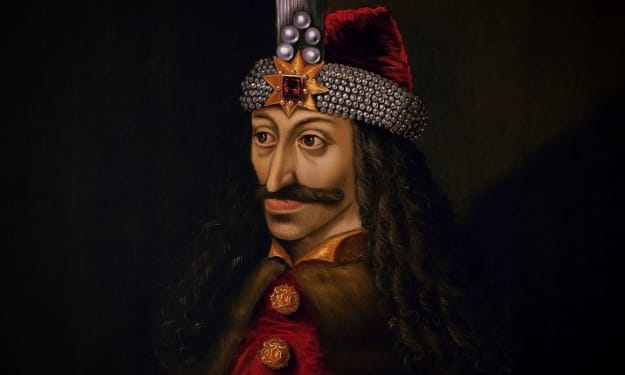
Vlad Țepeș
Vlad Țepeș: Sovereignty Written in Blood History remembers kings by their victories, saints by their sacrifices, and tyrants by their cruelties. Vlad Țepeș is remembered by all three and understood by none. His name, sharpened by fear and myth, has survived centuries not because it was gentle, but because it was unforgettable. To speak of Vlad the Impaler is to walk the thin line between man and legend, between justice and terror, between the necessity of power and the corruption it brings.
By Xbox Accountabout 2 hours ago in History
Ludacris and Nelly draw backlash over bookings at MAGA-coded music festival
Ludacris and Nelly headlining a mostly right-wing event is good for them. It’s also great for the genre of hip hop. The two rap veterans have showcased their talents on other stages. Why can’t they perform for mostly MAGA folks and grab that bag?
By Skyler Saundersa day ago in Beat



Comments
There are no comments for this story
Be the first to respond and start the conversation.