
"Mr. Chips: A Quiet Hero"
"One Man’s Quiet Impact on Generations"
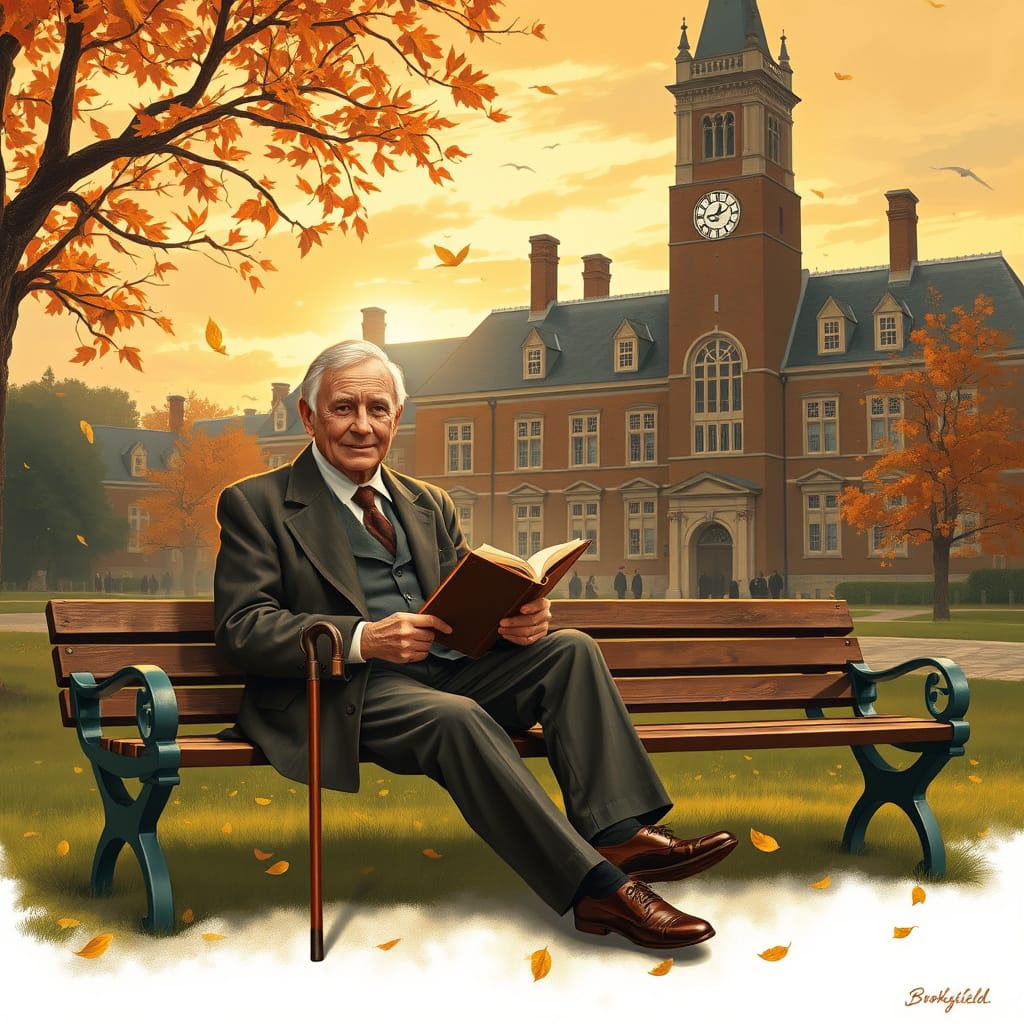
In the quiet halls of Brookfield School, where ivy curled along old stone walls and generations of boys grew into men, one man stood as a constant — Mr. Chipping, affectionately known as Mr. Chips. He was not a famous man, nor did he ever lead armies or write great books. Yet, for the hundreds of students who passed through those halls, his presence meant something far greater: the stability of tradition, the warmth of understanding, and the quiet strength of character.
Mr. Chips began his career as a young, somewhat timid Latin teacher. At first, he was unsure, struggling to maintain discipline and command attention. His students, often mischievous and full of youthful energy, tested his patience. Yet, over time, he found his rhythm. He developed a gentle firmness, coupled with a dry sense of humor that endeared him to his pupils. Slowly but surely, Mr. Chips transformed from a nervous young teacher into the very soul of Brookfield.
His life was not one of dramatic change, but of quiet growth. In the early years, he met and married Katherine, a spirited young woman who brought new joy into his life. Her warmth and liveliness softened his edges and gave him renewed purpose. Although their time together was tragically short — Katherine and their unborn child died in childbirth — her influence never left him. She became part of his spirit, guiding his words, tempering his judgment, and giving him the courage to connect more deeply with his students.
Mr. Chips was not revolutionary in his methods. He did not chase modern trends or educational reforms. Instead, he believed in consistency, discipline, and a sense of duty. His classroom was a place of order and tradition. Yet, beneath the formal tone and the old-fashioned mannerisms was a heart filled with compassion. He remembered names, families, quirks, and dreams. He attended every match, every play, and every important moment in a student’s life. For many, he became more than a teacher — he became a mentor, a second father, a symbol of home.
As the years passed, Brookfield changed. New masters came and went. Wars began and ended. The boys who once sat in his classroom returned as men in uniform, sometimes stopping by to say hello, other times only remembered in the school’s memorial. Mr. Chips, now older, frailer, and slower, remained. He retired eventually, but Brookfield never truly left him — nor he it.
In his retirement, Mr. Chips continued to live in a cottage near the school. He would take walks through the gardens, read newspapers by the fire, and receive visits from former students, many of whom now held important positions — lawyers, doctors, politicians, and soldiers. They would sit by his side and speak of the past, of Latin lessons and cricket matches, of harmless pranks and wise advice. And always, they would speak with reverence.
What made Mr. Chips so unforgettable was not grand achievement, but his unwavering humanity. He understood the true value of teaching — not just in imparting knowledge, but in shaping character. He saw potential where others saw trouble, patience where others found irritation. He treated each student as an individual, capable of growth, of decency, of greatness. He believed, quietly but firmly, in the goodness of people.
When Mr. Chips grew too ill to leave his bed, the school sent boys to read to him, to sit by his side, and to let him know that he was never alone. In those final days, he looked out the window at the old school building and smiled. His memory, now a patchwork of years and faces, found comfort in the enduring presence of Brookfield.
He passed away peacefully one autumn evening, as the sun cast golden light over the fields. The school flew its flag at half-mast. A memorial service was held in the chapel, filled with people from every generation — students young and old, colleagues, and friends. There was no grand eulogy, no long speeches. Just a moment of silence and a simple inscription:
“He taught with kindness. He lived with dignity. He loved without measure.”
Though Mr. Chips was gone, his influence endured. In the laughter of students echoing through the halls, in the firm hand of a teacher on a young boy’s shoulder, in the quiet moment before a lesson begins — he was there. His legacy was not written in books or medals, but in the hearts of those he taught.
In a world that often measures success by wealth or fame, Mr. Chips reminded us that greatness lies in simplicity, in devotion to others, in doing one’s duty with love and grace. His story is not just about a teacher, but about the timeless impact one human can have on another.
Mr. Chips didn’t change the world in a headline-making way. He changed it gently, through words spoken in classrooms, through a raised eyebrow or an encouraging nod, through a lifetime of care. And in doing so, he left behind something rare and beautiful — a life in lessons.
About the Creator
Keep reading
More stories from Iqrar Hussain and writers in History and other communities.
The Lion King
The sun rose over the golden plains of the vast kingdom of Zubara, painting the sky in hues of fire and gold. The land stirred to life as birds took to the sky and herds of antelope grazed peacefully beneath the watchful eyes of towering baobab trees. At the heart of this vibrant realm stood a towering rock formation—Eagle’s Watch, the throne of the lion king.
By Iqrar Hussain8 months ago in History




Comments
There are no comments for this story
Be the first to respond and start the conversation.