
“Modern Medicine’s Dark Secret: The Untold Tragedy of Anarcha Westcott”
“The Enslaved Girl Who Endured 30+ Unanesthetized Surgeries for Gynecology’s ‘Advancement’”

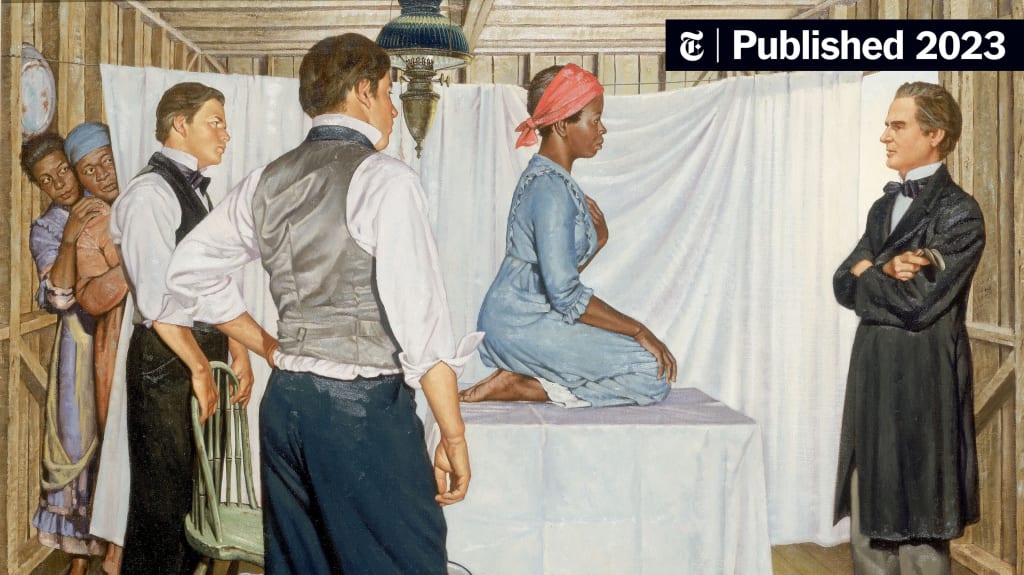
Throughout history, medical advancements have often come at a terrible cost. Behind some of the procedures we take for granted today are stories of exploitation, suffering, and unethical experimentation. One of the most harrowing examples is that of Anarcha Westcott, an enslaved Black woman who was subjected to non-consensual medical experiments by Dr. J. Marion Sims, often called the “father of modern gynecology.”
Anarcha’s story is one of pain and resilience, yet for too long, she was erased from history, remembered only as a medical subject rather than as a human being. Today, her story demands to be told—not just to acknowledge her suffering, but to shed light on the dark legacy of racism and exploitation in medicine.
The Woman Behind the Experiments
Anarcha Westcott was around 17 years old when she developed a vesicovaginal fistula, a childbirth-related condition that causes chronic pain and incontinence. This condition was common among enslaved women, as they were often forced into childbirth at a young age and given little to no medical care. Rather than seeking compassionate treatment for Anarcha and others like her, Sims saw them as the perfect subjects for experimentation.
Alongside two other enslaved women, Lucy and Betsey, Anarcha became a test subject for Sims’ surgical procedures. Over the course of several years, she endured at least 30 experimental surgeries—all without anesthesia. While Sims claimed that anesthesia was not widely available or necessary, historical records show that it was being used during that period, particularly on white patients. Instead, Sims chose to operate on these enslaved women fully conscious, often restraining them as they screamed in agony.
The Reality of Medical Racism
Sims’ experiments on Anarcha and other enslaved women highlight a broader issue: the exploitation of Black bodies in the name of science. During the 19th century, many white doctors believed that Black people had a higher pain tolerance, a racist myth that justified cruel and inhumane medical practices. This belief persists in some ways even today, with studies showing that Black patients are less likely to receive adequate pain management compared to white patients.
Despite the horrific nature of his experiments, Sims was praised for his contributions to gynecology. He went on to refine his fistula repair technique, later using anesthesia when performing the procedure on white women. He became a celebrated figure in medicine, with statues erected in his honor, including one in New York’s Central Park (which was eventually removed in 2018 after public outcry).
Meanwhile, Anarcha, Lucy, and Betsey were largely forgotten. Their suffering was dismissed as a footnote in the history of medicine, their names buried while Sims was glorified.
Recognizing Anarcha’s Legacy
In recent years, activists, historians, and medical ethicists have worked to reclaim Anarcha’s story, ensuring that she is remembered as more than just a victim. Her endurance in the face of unimaginable pain speaks to the resilience of enslaved Black women, who suffered not only under slavery but also under a medical system that dehumanized them.
Efforts have been made to memorialize Anarcha, Lucy, and Betsey, recognizing them as pioneers in medical history. In Montgomery, Alabama, a statue honoring these women now stands as a counterpoint to the past glorification of Sims. Their names are finally being spoken, their pain acknowledged, and their stories told in a way that centers them as people, not just medical subjects.
The Ongoing Impact
Anarcha’s story is not just a historical tragedy—it’s a reminder of the medical injustices that continue today. From the disproportionate Black maternal mortality rates to the continued racial bias in pain management, the legacy of medical racism persists. Acknowledging the past is the first step toward dismantling these harmful practices and ensuring that no one else suffers the way Anarcha did.
Anarcha Westcott should be remembered not as a nameless patient in a medical textbook, but as a young woman who endured unimaginable suffering at the hands of a system that saw her as less than human. By telling her story, we honor her resilience and demand accountability for the injustices that shaped modern medicine.
About the Creator
Kiana Joy
you’ll find a mix of thought-provoking stories covering current events, international relations, and personal growth. I dive into global affairs, share insights on entrepreneurship and business,explore topics that inspire positive change.
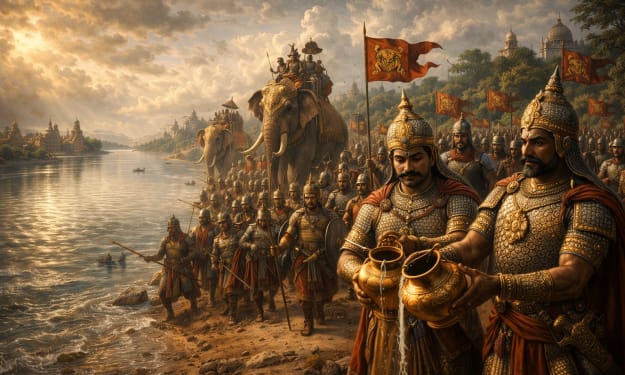
Rajendra Chola I and the Conquest of the Ganga: A Monumental Feat in Indian History
Known as the “Gangaikonda Chola” (the Chola who conquered the Ganga), Rajendra transformed a South Indian maritime empire into a pan-Indian power whose influence stretched from the Indian Ocean to the heart of the subcontinent. This campaign was not merely a military raid but a bold statement of imperial ambition, strategic brilliance, and cultural confidence.
By Say the truth 6 days ago in History



Comments
There are no comments for this story
Be the first to respond and start the conversation.