
Master of the Deep and Dreams
The Visionary Filmmaker Who Redefined Cinema and Explored the Ocean’s Mysteries

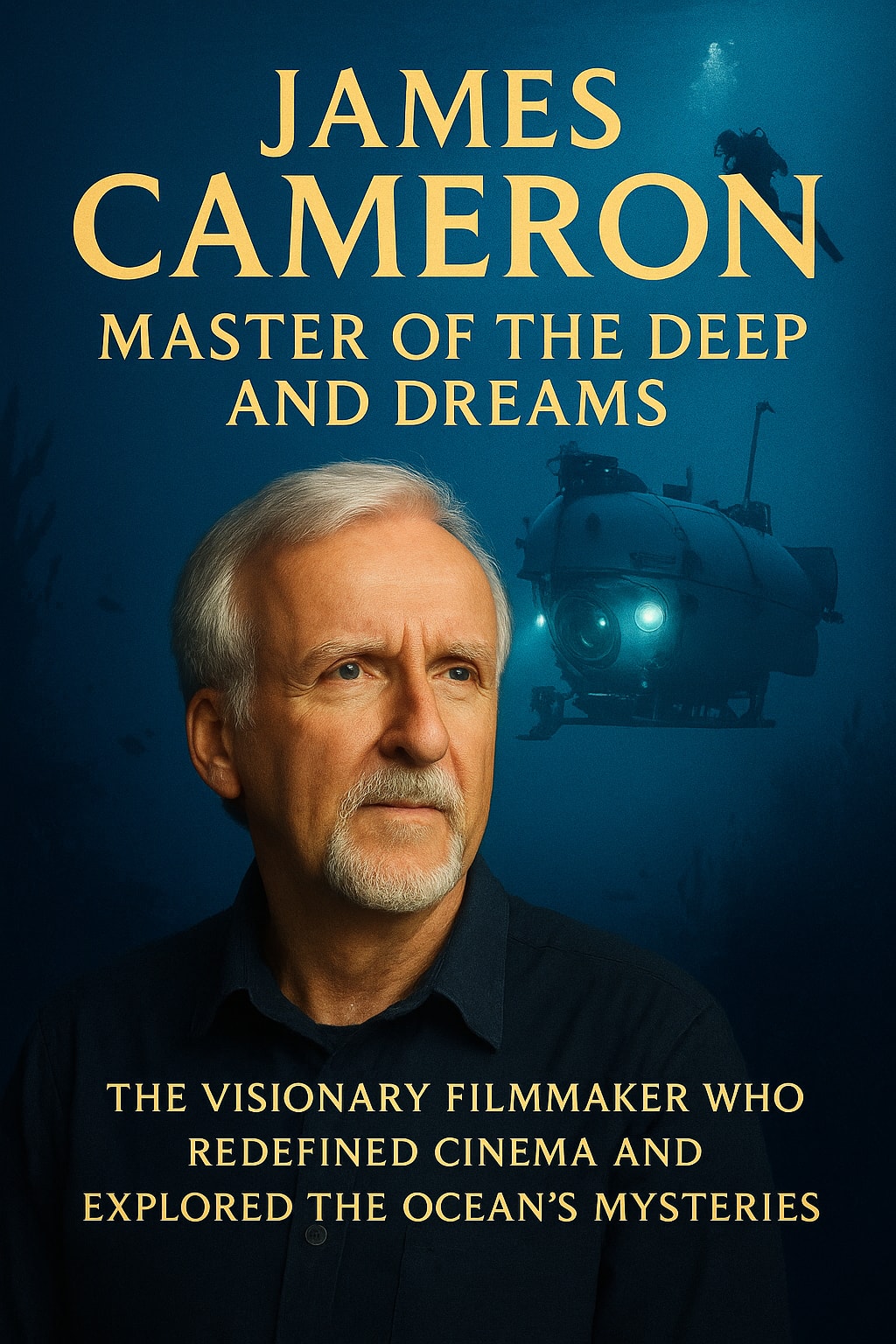
James Francis Cameron is a name synonymous with cinematic innovation, bold ambition, and an insatiable curiosity about the unknown. A Canadian-born filmmaker, Cameron has etched his name into the annals of film history through a combination of technical prowess, storytelling genius, and a lifelong fascination with both science and nature. Best known for directing some of the highest-grossing and most influential films of all time—Titanic, Avatar, The Terminator, and Aliens—Cameron’s work has not only entertained millions but also reshaped the way stories are told on screen. Behind the Hollywood spectacle lies a man driven by dreams—both terrestrial and oceanic.
Early Life and Passion for Discovery
Born on August 16, 1954, in Kapuskasing, Ontario, Canada, James Cameron moved with his family to Chippawa, a small town near Niagara Falls. The awe-inspiring natural power of the falls perhaps planted the seeds of his fascination with the mysteries of nature and the ocean. His early years were marked by a keen interest in science fiction, technology, and mechanics. As a teenager, Cameron devoured the works of Arthur C. Clarke and Isaac Asimov, nurturing a dream of someday venturing into the world of science and discovery.
After moving to California, Cameron initially studied physics at Fullerton College but dropped out to pursue writing and work in special effects. His interest in film was ignited after seeing Star Wars in 1977, a cinematic revelation that convinced him he could blend his passion for science and storytelling through the medium of film.
Breakthrough and Rise to Fame
Cameron’s early career was marked by humble beginnings—working as a miniature model builder and special effects artist at Roger Corman Studios. It was here that he developed his hands-on understanding of practical effects, a skill that would become his signature.
His directorial debut came with Piranha II: The Spawning (1982), a low-budget horror film. Although the experience was creatively stifling, it lit a fire in Cameron. In a bout of self-belief and insomnia-induced inspiration, he conceived The Terminator—a gritty science fiction thriller about a cyborg assassin sent from the future.
The Terminator (1984), made on a relatively small budget, was a surprise box-office hit and launched both Cameron and Arnold Schwarzenegger into stardom. The film’s blend of relentless pacing, futuristic themes, and cutting-edge effects made it a cult classic and a landmark in genre filmmaking.
Pushing Boundaries in Hollywood
Cameron quickly established himself as a director unafraid of technical challenges and vast storytelling ambitions. Aliens (1986), the sequel to Ridley Scott’s Alien, brought together his knack for action and suspense. It won critical acclaim and earned multiple Academy Awards, including Best Visual Effects.
Next came The Abyss (1989), a deep-sea sci-fi thriller that revealed Cameron’s growing obsession with the ocean. The film was pioneering in its use of computer-generated imagery (CGI), especially the groundbreaking “water tentacle” sequence, laying the groundwork for future digital effects in cinema.
Then came Terminator 2: Judgment Day (1991), a box-office juggernaut and a major leap forward in CGI technology. The liquid-metal T-1000 was an effects marvel, setting a new standard for visual storytelling. Once again, Cameron had combined thrilling action with technological innovation, proving himself as both a director and an inventor.
Titanic: A Cinematic Phenomenon
By the mid-1990s, Cameron embarked on his most ambitious project to date: Titanic (1997). The film, which chronicled the doomed maiden voyage of the RMS Titanic, was a massive financial gamble, with production costs ballooning to nearly $200 million. Industry insiders doubted its success—but Cameron believed in the story and its emotional resonance.
The result was a cultural phenomenon. Titanic won 11 Academy Awards, including Best Picture and Best Director, and held the record for highest-grossing film of all time for over a decade. Cameron famously declared, “I’m the king of the world!” during his Oscar acceptance speech—echoing the iconic line from the film.
But Titanic was more than just a blockbuster. It demonstrated Cameron’s ability to blend romance, tragedy, and technical achievement into a film that connected with audiences across the globe.
The Deep Beckons
Cameron’s passion for the ocean was not confined to film. After Titanic, he began undertaking real-world deep-sea expeditions. He co-founded Earthship Productions and collaborated with marine scientists to explore the ocean’s most remote regions. His documentaries Ghosts of the Abyss (2003) and Aliens of the Deep (2005) combined his filmmaking talents with scientific exploration.
In 2012, he made history by descending solo to the bottom of the Mariana Trench—the deepest point on Earth—aboard the Deepsea Challenger, a submersible he helped design. Cameron became the first person to make the dive alone, highlighting not just his technical skill, but his dedication to pushing human limits.
Avatar and the Future of Storytelling
Cameron returned to feature filmmaking in 2009 with Avatar, a groundbreaking science fiction epic set on the alien world of Pandora. The film employed revolutionary 3D technology and performance capture techniques, creating an immersive experience unlike anything seen before. Avatar surpassed Titanic to become the highest-grossing film of all time and earned nine Academy Award nominations.
Cameron’s vision for Avatar was not a one-off. He announced multiple sequels and dedicated years to developing new filming technologies, including underwater motion capture. Avatar: The Way of Water, released in 2022, continued his trend of pushing cinematic boundaries while exploring themes of environmentalism and connection to nature.
Legacy and Influence
James Cameron’s career is a testament to the power of imagination, determination, and a willingness to explore both the frontiers of storytelling and the physical world. He is not only a director but also an inventor, environmental advocate, and explorer. Few filmmakers have so seamlessly fused art and science, emotion and spectacle.
His contributions have forever altered the language of cinema, from practical effects and animatronics to CGI and 3D. But perhaps his greatest achievement is inspiring generations to dream bigger—whether it’s imagining distant worlds, artificial intelligences, or the uncharted depths of our own oceans.
⸻
Conclusion
James Cameron is more than a filmmaker—he is a pioneer, a dreamer, and a doer. Whether navigating the complexities of visual effects or the mysteries of the deep sea, he embodies the spirit of exploration and creativity. Through his visionary storytelling and technological ingenuity, Cameron has redefined what’s possible on screen and off. Truly, he is the master of the deep and dreams.
About the Creator
Irshad Abbasi
"Studying is the best cure for sorrow and grief." shirazi
Keep reading
More stories from Irshad Abbasi and writers in History and other communities.
The Young Conqueror of Sindh and the Dawn of Islam in the Indian Subcontinent
The history of South Asia is incomplete without the story of Muhammad bin Qasim, a young Arab general whose conquest of Sindh in 711 CE marked the beginning of Islamic influence in the Indian subcontinent. Revered for his military genius, administrative skill, and sense of justice, Muhammad bin Qasim became a legendary figure, not only for Muslims but also in the broader tapestry of Indo-Pakistani history.
By Irshad Abbasi 7 months ago in History
Stanislav Kondrashov Oligarch Series: The Roots of Oligarchy in the Mediterranean
When people hear the word “oligarchy,” they often think of modern contexts. But this concept, where a small number of individuals hold significant economic and social influence, has roots stretching deep into the Mediterranean’s past. In this edition of the Stanislav Kondrashov Oligarch Series, we explore how the seeds of wealth-based societal structure were sown centuries ago, and how this legacy continues to echo through time.
By Stanislav Kondrashov3 days ago in History




Comments
There are no comments for this story
Be the first to respond and start the conversation.