
Masjid al-Haram: The Heart of Islam and the Grand Mosque of Mecca
Exploring the Spiritual, Cultural, and Architectural Significance of Islam’s Holiest Site

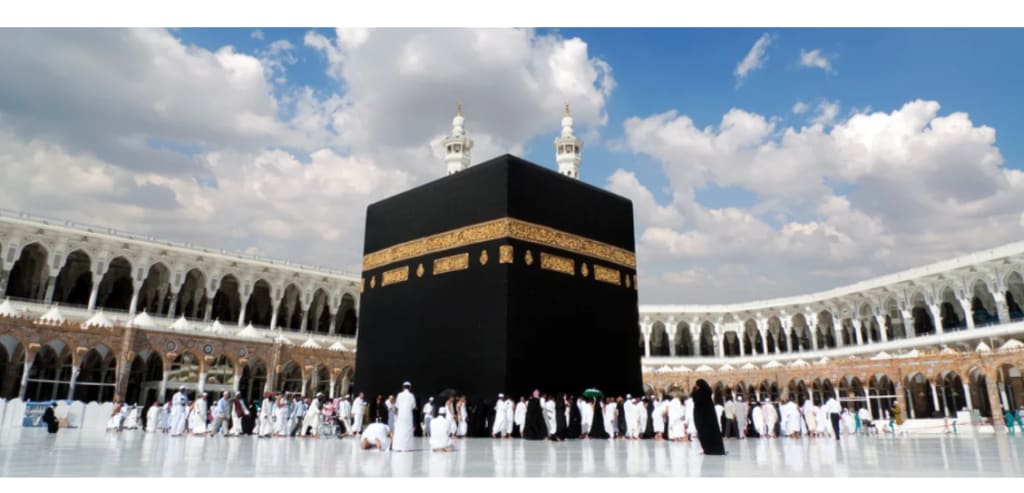
Masjid al-Haram, also known as the Grand Mosque of Mecca, stands as the most sacred site in Islam. Located in the city of Mecca, Saudi Arabia, it holds immense significance for Muslims worldwide and is the focal point of Islamic worship, history, and spirituality. The mosque is home to the Kaaba, the cube-shaped building that Muslims face during their daily prayers. The Grand Mosque has a deep, rich history and is a testament to the dedication and faith of millions who have visited it throughout the centuries. It is not only an architectural masterpiece but also a symbol of the unity and devotion of the global Muslim community.
A Historical Overview of Masjid al-Haram
The history of Masjid al-Haram is deeply intertwined with the history of Islam itself. The mosque’s origins date back to the time of the Prophet Ibrahim (Abraham) and his son Ismail, who, according to Islamic tradition, were commanded by God to build the Kaaba. The Kaaba, which is housed within the mosque, is the most important and revered structure in Islam, as it is the direction (qibla) to which Muslims pray five times a day. This sacred building was originally constructed as a sanctuary dedicated to the worship of the one God.
In the centuries following Ibrahim’s time, the Kaaba was reconstructed and renovated multiple times, with the mosque itself evolving to meet the growing needs of the Muslim community. After the advent of Islam in the 7th century CE, Prophet Muhammad played a crucial role in the preservation and sanctification of Masjid al-Haram. It was during the conquest of Mecca in 630 CE that the Prophet cleansed the Kaaba of idols and established it as the central site of Islamic worship.
Over the centuries, the mosque expanded as the Muslim population grew, particularly during the reigns of the Umayyad, Abbasid, and Ottoman caliphates. Each dynasty added architectural and infrastructural elements to the mosque, enhancing its beauty and functionality. The mosque has undergone several large-scale expansions, most recently under the leadership of Saudi Arabia in the 20th and 21st centuries, to accommodate the ever-growing number of pilgrims who visit for the annual Hajj pilgrimage.
The Significance of the Kaaba and the Mosque’s Spiritual Importance
At the heart of Masjid al-Haram lies the Kaaba, a black cube-shaped structure that is central to Islamic worship and serves as a symbol of God’s absolute oneness. Muslims believe the Kaaba was originally built by Prophet Ibrahim and his son Ismail, and it is considered the “House of God” on earth. The significance of the Kaaba goes beyond its physical structure; it is a spiritual focal point for Muslims around the world.
Each day, millions of Muslims turn towards the Kaaba during their daily prayers, a practice known as Salah, which unites the global Muslim community in devotion to God. The Kaaba is also the site of the Hajj, the pilgrimage that every Muslim must undertake at least once in their lifetime, provided they have the means to do so. Hajj is one of the five pillars of Islam, and millions of Muslims from around the world gather at Masjid al-Haram during the Hajj season to perform rituals that symbolize the unity of the Ummah (Muslim community) and their submission to God.
The Tawaf, or the act of walking around the Kaaba seven times in a counterclockwise direction, is one of the most revered rituals performed during Hajj and Umrah (the lesser pilgrimage). This act symbolizes the devotion and submission of the believer to God, and it is often accompanied by heartfelt prayers and supplications. The Black Stone (Hajar al-Aswad), embedded in one corner of the Kaaba, is another significant feature, with pilgrims trying to kiss or touch it as part of the Tawaf ritual. Although the Black Stone is not an object of worship, it holds great symbolic value in Islam as a sacred relic that dates back to the time of the Prophet Ibrahim.
Architectural Masterpiece: The Grandeur of Masjid al-Haram
Masjid al-Haram stands as an unparalleled example of Islamic architecture, combining traditional designs with modern advancements to accommodate the vast number of worshippers and pilgrims who visit the mosque each year. The mosque covers an area of approximately 356,000 square meters and can accommodate up to 2 million worshippers during peak times, especially during the Hajj.
The mosque’s design has evolved over the centuries, reflecting the changing needs of the Muslim community. The central courtyard, or Sahn, is the focal point of the mosque, where the Kaaba is situated. Surrounding the Kaaba are several prayer halls, each adorned with intricate Islamic calligraphy and designs that reflect the beauty and diversity of Islamic art. The mosque also features majestic minarets and a series of grand arches that give the structure a distinct and recognizable silhouette.
In recent years, significant efforts have been made to modernize and expand the mosque to meet the needs of millions of pilgrims who visit annually. The introduction of air conditioning, advanced lighting systems, and the expansion of prayer areas has ensured that worshippers can perform their religious duties in comfort and safety. The Grand Mosque now boasts one of the largest and most advanced systems of escalators and ramps, enabling easy access for people with disabilities and the elderly.
Masjid al-Haram During the Hajj and Umrah
One of the most important events that takes place at Masjid al-Haram is the Hajj, which occurs annually during the Islamic month of Dhul-Hijjah. Hajj is one of the five pillars of Islam and involves a series of rituals performed over several days, culminating in the Tawaf around the Kaaba. Millions of Muslims from around the world come together during this time, making it one of the largest gatherings of people on Earth.
In addition to Hajj, the mosque is also the site for Umrah, a pilgrimage that can be performed at any time of the year, except during Hajj. While Umrah is not obligatory like Hajj, it holds great spiritual significance and provides Muslims with the opportunity to visit the Kaaba and perform the sacred rituals of Tawaf and Sa’i (the walking between the hills of Safa and Marwah).
Both Hajj and Umrah are profound experiences for Muslims, as they offer a chance for spiritual renewal and connection with God. The presence of Masjid al-Haram during these pilgrimages signifies the central role the mosque plays in the faith and devotion of Muslims.
Masjid al-Haram’s Role in the Modern World
In the modern era, Masjid al-Haram continues to play a central role in the lives of Muslims worldwide. It remains a symbol of faith, unity, and spiritual fulfillment. The mosque is not only a physical space but also a representation of the global Islamic community, transcending national and cultural boundaries.
With modern technology, Muslims are now able to connect with the mosque through live broadcasts and virtual tours, allowing them to feel spiritually connected to Masjid al-Haram even if they cannot physically be present. The mosque’s importance in the contemporary world is evident in the millions of people who, year after year, perform Hajj and Umrah, seeking spiritual purification, forgiveness, and closeness to God.
Conclusion: The Eternal Spiritual Center of Islam
Masjid al-Haram, the Grand Mosque of Mecca, stands as a timeless symbol of faith, unity, and spiritual devotion. Whether viewed as a place of profound personal worship or as the center of the Hajj pilgrimage, the mosque continues to inspire millions of Muslims worldwide. Its rich history, architectural beauty, and deep spiritual significance make it a place of unparalleled importance in the Islamic world. As the site where the Kaaba rests, Masjid al-Haram remains the heart of Islam, drawing worshippers to its sacred precincts to seek blessings, peace, and divine proximity.
About the Creator
Muhammad Hassan
Muhammad Hassan | Content writer with 2 years of experience crafting engaging articles on world news, current affairs, and trending topics. I simplify complex stories to keep readers informed and connected.
Keep reading
More stories from Muhammad Hassan and writers in History and other communities.
The Great Wall of China: A Monument of History, Culture, and Engineering
The Great Wall of China, one of the world’s most iconic structures, stands as a testament to both human ingenuity and the determination to protect a civilization. Stretching across northern China for over 13,000 miles, this architectural marvel is not only an engineering feat but also a symbol of China’s strength, perseverance, and cultural heritage. Throughout its history, the Great Wall has withstood the test of time, nature, and human conflict, serving as a guard against invasions and a unifying symbol of Chinese identity. The Origins of the Great Wall The origins of the Great Wall can be traced back to the 7th century BC during the Warring States period in ancient China. The first walls were built by various feudal states to defend against invasions from nomadic tribes in the north. These early walls were not as grand as the Great Wall we know today; they were more rudimentary, made of earth and wood, and used for defensive purposes. However, the true vision of the Great Wall emerged during the reign of Emperor Qin Shi Huang, the first emperor of China (221–206 BC). As part of his efforts to consolidate power and unify China, Qin Shi Huang ordered the connection of existing walls and the construction of new ones to create a continuous defensive line. Although the Qin Dynasty's wall was eventually abandoned and destroyed, it laid the groundwork for future walls that would evolve into the monumental structure we recognize today. The most extensive and well-preserved sections of the Great Wall were built during the Ming Dynasty (1368–1644). The Ming emperors, in response to the growing threat of Mongol invasions, constructed a more permanent and fortified wall with stone, brick, and mortar, fortifying watchtowers and garrison stations along the route. Engineering and Architecture: A Marvel of Construction The Great Wall’s sheer scale and the complexity of its construction are awe-inspiring. At its peak, the wall stretched over 13,000 miles (21,000 kilometers) across northern China, traversing mountains, deserts, and plains. The wall’s construction required immense manpower and resources, with an estimated 1 million workers contributing to its development over several centuries. The materials used in the construction of the Great Wall varied depending on the region and the availability of resources. In the mountains, bricks and stones were used for their durability and strength. In the deserts, where building materials were scarce, the wall was often constructed using tamped earth, while in the plains, wood was used to create temporary structures. One of the most remarkable features of the Great Wall is its watchtowers and fortifications. These towers were strategically placed every few hundred yards along the wall, providing soldiers with a clear line of sight to detect any approaching enemies. Additionally, the Great Wall was equipped with various defensive features, including gates, battlements, and even signal fires to alert nearby troops of an impending attack. The wall’s construction techniques were sophisticated for their time. The use of ramps, pulleys, and manpower allowed builders to transport and position massive stones and bricks in harsh terrain. The careful planning and coordination involved in constructing such a vast structure is a remarkable achievement, showcasing the advanced engineering skills of ancient Chinese builders. The Purpose of the Great Wall While the Great Wall of China is often associated with military defense, its purposes extended beyond simply repelling invaders. The wall served as a tool of control, symbolizing the authority of the ruling emperors. It helped regulate trade along the Silk Road by controlling the flow of goods and people entering China from the north. It also functioned as a psychological barrier, creating a distinct separation between the cultivated agricultural lands of China and the nomadic, often hostile peoples living beyond the wall. During times of peace, the Great Wall also served as a route for transportation and communication, with garrison troops patrolling the wall and sending messages through signal fires or messengers. The wall became a symbol of Chinese unity, marking the boundary between the settled agricultural society of China and the nomadic tribes of the northern steppes. However, the Great Wall was not always successful in its mission to keep invaders at bay. Despite its formidable defenses, invaders from the north, such as the Mongols and other nomadic groups, were able to breach the wall at certain points. Nevertheless, the wall served its purpose in many instances, slowing down invasions and providing the time needed for Chinese forces to mobilize and defend their territory. The Cultural Significance of the Great Wall Beyond its military and strategic purposes, the Great Wall of China holds deep cultural and symbolic meaning. It is a powerful representation of China’s history, unity, and perseverance. The wall is often seen as a symbol of the strength and resilience of the Chinese people, who endured immense hardship during its construction and used it to protect their homeland from external threats. The Great Wall also plays a central role in Chinese folklore and legend. Stories of warriors defending the wall, as well as the sacrifices made by soldiers stationed there, have become part of the national consciousness. The Great Wall is frequently referenced in Chinese literature, poetry, and art, where it is depicted as a symbol of endurance, vigilance, and the desire to safeguard the nation’s sovereignty. The wall’s cultural significance extends beyond China’s borders. As one of the most recognized landmarks in the world, the Great Wall has become a symbol of Chinese identity and a testament to human achievement. It draws millions of visitors from around the world, who come to marvel at its scale and learn about the history and culture of ancient China. The Great Wall Today: A UNESCO World Heritage Site Today, the Great Wall of China is one of the most iconic landmarks in the world. It is recognized as a UNESCO World Heritage Site and remains one of the most visited tourist destinations in China. Millions of people from around the globe travel to see the wall, with popular sections located near Beijing, such as Badaling and Mutianyu, where the wall is well-preserved and easily accessible. Despite the erosion caused by time, weather, and human activity, efforts are ongoing to preserve and protect the Great Wall for future generations. Many sections of the wall are in a state of disrepair, but restoration projects are helping to maintain its structural integrity and ensure that it remains a symbol of China’s rich cultural heritage. The Great Wall continues to stand as a monument to human perseverance, engineering, and ingenuity. It serves as a reminder of the lengths to which civilizations will go to protect their borders, safeguard their people, and leave a legacy for future generations to admire. Conclusion: A Legacy Carved in Stone The Great Wall of China is not only an engineering marvel but also a profound cultural symbol that continues to inspire awe and admiration. Spanning thousands of miles and centuries of history, it stands as a testament to the power, determination, and resilience of the Chinese people. Whether viewed from a historical, architectural, or cultural perspective, the Great Wall remains a unique and enduring symbol of China’s past and present, offering a glimpse into the rich tapestry of the nation’s history and the determination that built it.
By Muhammad Hassan2 months ago in Earth
Why Attacking Iran Could Be Riskier Than Capturing Maduro
When President Trump said in January that a U.S. “armada” was heading to Iran, he compared it with the kind of force used in the military’s recent lightning operation in Venezuela, saying it was “able to rapidly fulfill its mission, with speed and violence.”
By Wings of Time 5 days ago in History


Comments
There are no comments for this story
Be the first to respond and start the conversation.