Latest Stories
Most recently published stories in History.
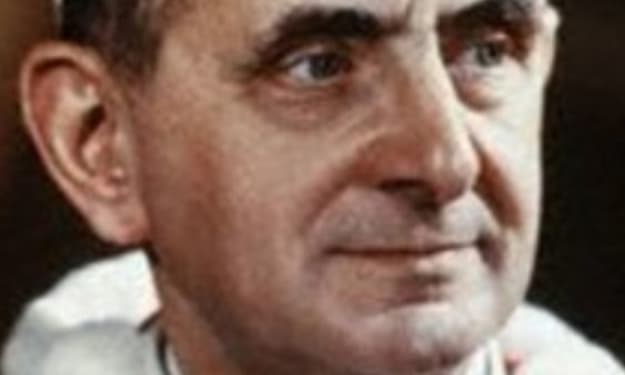
Pope Saint Paul 6 (1897-1978)
Pope Saint Paul VI, born Giovanni Battista Enrico Antonio Maria Montini on September 26, 1897, in Concesio, Italy, was one of the most significant popes of the 20th century, with notable contributions in shaping the direction of the Catholic Church in the modern era.
By Catholic family community2 years ago in History
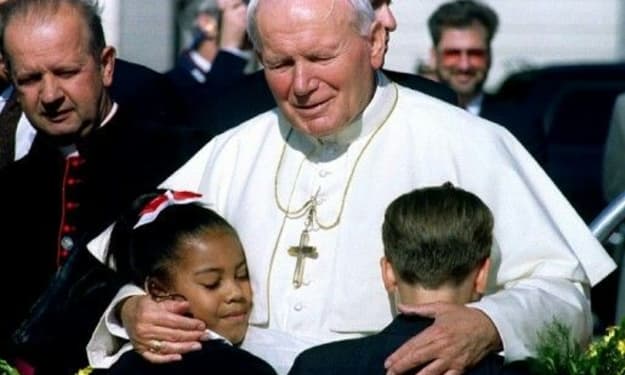
Pope Saint John Paul II (1920-2005)
Saint Pope John Paul II, born Karol Józef Wojtyła, was born on May 18, 1920, in Wadowice, Poland. He was the youngest of three children in a devout Catholic family. His mother passed away when he was just eight years old, and his father, a non-commissioned army officer, raised him.
By Catholic family community2 years ago in History
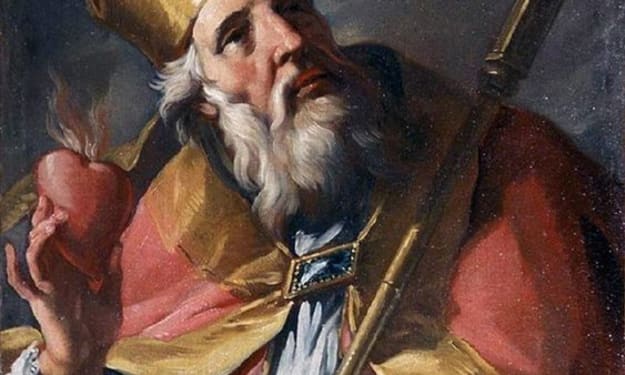
Saint Augustine, Bishop, Doctor of the Church (354-430)
Saint Augustine, Bishop, Doctor of the Church: Saint Augustine, a renowned philosopher and theologian, was born on November 13, 354, in Thagaste, a town in Numidia, which is now Souk-Ahras, Algeria. His father, Patricius, was a small farmer and city councilor, who converted to Christianity in his later years. His mother, Saint Monica, devoted her life to prayer and the spiritual upbringing of her children, especially Augustine.
By Catholic family community2 years ago in History
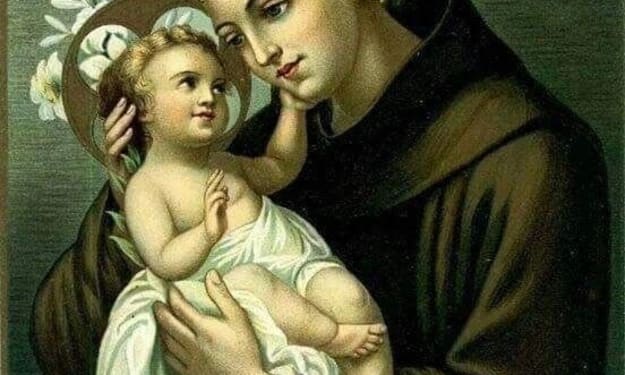
Thánh Antôn Padua (1195-1231)
Saint Anthony of Padua. A saint is revered by many because he is a virtuous person. During his life, the saint performed many good deeds and miracles. When he died, he left behind a great legacy of Christian faith. Below are some detailed information about the Saint:
By Catholic family community2 years ago in History
Saint Vincent de Paul (1581-1660)
Saint Vincent de Paul, also known as Vincent, was a renowned Catholic priest, Frenchman, and one of the most important figures in the history of the Catholic Church. He was born on April 24, 1581, in Pouy, a small village in the Landes region of France.
By Catholic family community2 years ago in History
India - Historical View
Origins of the Indus Valley Civilization The earliest evidence of humans in South Asia dates back two million years. Beginning about 30,000 years ago, stone age hunters and gatherers inhabited sites in the area. Between 8000 and 6500 B.C.E., there was a gradual shift from dependence on wild resources to domestic plants and animals.
By Gaurav Gupta2 years ago in History
Major successes of Babar
Setting out in November 1525, Bābur met Ibrāhīm at Panipat, 50 miles (80 km) north of Delhi, on April 21, 1526. Bābur’s army was estimated at no more than 12,000, but they were seasoned followers, adept at cavalry tactics, and were aided by new artillery acquired from the Ottoman Turks. Ibrāhīm’s army was said to number 100,000 with 100 elephants, but its tactics were antiquated and it was dissentious. Bābur won the battle by coolness under fire, his use of artillery, and effective Turkish wheeling tactics on a divided, dispirited enemy. Ibrāhīm was killed in battle. With his usual speed, Bābur occupied Delhi three days later and reached Agra on May 4. His first action there was to lay out a garden, now known as the Ram Bagh, by the Yamuna (Jumna) River.
By Gaurav Gupta2 years ago in History
History of Roman Catholicism
Catholicism, or Roman Catholicism, is one of the largest and most popular religions in the world. Built on the foundation of Protestantism - belief in Christ as the Son of God, Catholicism is a system of beliefs and doctrines organized, centered on Christ and combined with sacraments and rituals. knowledge, and rituals. The official founding date of Catholicism is determined to be the first century AD, when Jesus Christ, whom Catholics consider the Son of God, lived and proclaimed his teachings in the Middle East. However, Catholicism developed from the third to fourth centuries, when Catholicism became the official religion of the Roman Empire. Historically, Catholicism has been influenced by many different cultural and historical factors, from the Roman and Byzantine Empires to the Middle Ages and the modern era. Throughout its history, Catholicism has divided into many dioceses and religions depending on specific territories and cultures. One of the important characteristics of Catholicism is the organization of a strong administrative structure. The Pope, the supreme leader of Catholicism, plays an important role in governing and maintaining the unity of the religion. In addition, Catholicism has a strong education and training system, with universities, secondary schools and primary schools around the world. Catholicism also focuses on providing social services and charitable labor, aimed at helping the poor and those in need. The Catholic organization is currently one of the largest and most influential religious communities in the world, with more than 1 billion followers worldwide, distributed on every continent and territory.
By Catholic family community2 years ago in History