Latest Stories
Most recently published stories in History.
THE ARROW THAT WROTE ANABASIS
Persian Empire is known as one of the most interesting big Empires in “Before BC” period of history. We’ve all heard about story of Babilon tower found in the Book of Genesis in the Hebrew Bible. There are many myths that are connected to this Great Empire and some of most strange war strategies and weapons that were used. Persians also used different animals in battles such are war elephants.
By Bleda Senka Stranca2 years ago in History
Oppenheimer's secret city, explained
In the early 1940s, the enigmatic quote, “Now I am become death. The destroyer of worlds,” gained a chilling significance intertwined with the story of P.O. Box 1663 in Santa Fe, New Mexico. Approximately 300 newborns were erroneously recorded as having P.O. Box 1663 as their birthplace on their official birth certificates. However, this seemingly innocuous address was nothing more than a clever ruse to mask the true location: P.O. Box 180, Project Y, and Los Alamos, New Mexico. It was at this remote and secret site that an awe-inspiring community of scientists gathered to work on one of the most ambitious and daunting projects in human history: the creation of the world's first nuclear bomb.
By Allan Njarumi2 years ago in History
Unveiling the Enigmatic Customs of Ancient Egypt
Unveiling the Enigmatic Customs of Ancient Egypt: 15 Terrifying Norms** **Introduction** The grandeur of ancient Egypt often conjures images of majestic pyramids, intricate hieroglyphs, and captivating mythology. Yet, beneath this veil of wonder lies a trove of peculiar customs and rituals that, by today's standards, appear grim and unsettling. From scarification to mummification, the ancient Egyptians led a life that simultaneously mesmerizes and unnerves us. In this exploration, we delve into the 15 most chilling practices that were considered ordinary in ancient Egypt, shedding light on their cultural significance.
By Emmanuella Oquaye Yeboah2 years ago in History
Title: Beyond the Horizon:
In the quiet corners of memory, where the heart's whispers linger, there exist stories that transcend tragedy—tales of lives lived, dreams cherished, and futures unrealized. Among these stories, the narrative of Flight Horizon 214 emerges as a poignant reminder that every life is a universe unto itself, a universe that deserves to be acknowledged beyond the shadows of catastrophe.
By paul josiah2 years ago in History
Accelerate Your Growth: The Benefits of Agile Transformation Services
In today's rapidly changing business environment, organizations need to be able to adapt quickly to remain competitive. Agile transformation services are becoming increasingly popular as a way to achieve this goal. Agile methodology emphasizes flexibility, collaboration, and rapid iteration to deliver products and services that meet the needs of customers more efficiently. Agile transformation services can help organizations implement agile methodologies across their entire enterprise, from product development to marketing and sales. By embracing agile, businesses can drive faster innovation, reduce costs, and increase customer satisfaction. In this blog post, we will explore the benefits of agile transformation services and how they can help organizations accelerate their growth. We will examine some of the key advantages of agile, including increased productivity, enhanced collaboration, and greater flexibility. We will also discuss some of the challenges that organizations may face when implementing agile and how to overcome them. Whether you are a small startup or a large multinational corporation, agile transformation services can help you stay competitive in today's fast-paced business world.
By Sherpa Corner2 years ago in History
Exploring the Rich History and Versatile Uses of Turpentine Spirits
Imagine walking through a dense pine forest where the air is filled with the earthy scent of resin. Feeling excited, right? And then, amidst the towering trees, a history as old as time itself unfolds - the history of turpentine spirits.
By Creekwood Naturals2 years ago in History
Gipsy and his trumpet
Around the globe gypsies are known as travelers in carriages, circus entertainers, fortune tellers but also as victims of Nazis in WW1 and WW2.If you put a side the “rest of a world” gypsies are known as a musicians in the Balcan states. Serbia, Bulgaria, North Macedonia, Croatia, Hungary… Here they are seen as singers and trumpet virtuosos.
By Bleda Senka Stranca2 years ago in History
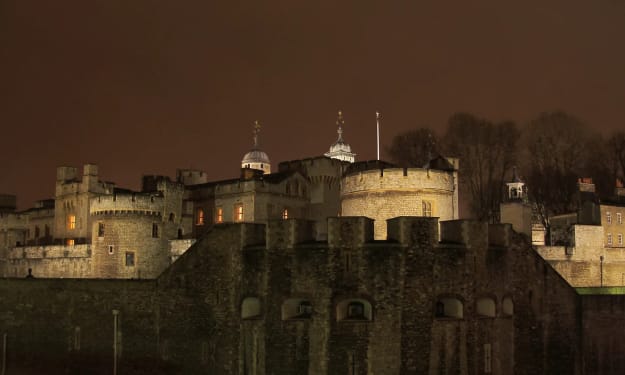
The Tower of London Zoo. Top Story - August 2023.
Many of you will be familiar with The Tower of London, its fame as the world's largest jewellery box is well known. Some will also know that this was the site of two famous beheadings, both of them at the request of King Henry VIII when he asked for his wife's heads to be removed.
By Sam H Arnold2 years ago in History
War Myths uncovered!
Even though the Second World War ended definitively more than seven decades ago, many of its major mysteries—including those involving missing crews who vanished without a trace and legendary lost objects like the Amber Room—remain unanswered to this day.
By paul okorodudu2 years ago in History
War and Human Nature
War is a controversial topic that has been discussed many places. Some people say that it's a part of human nature, while others argue that it's not. But we're not going to get into that here. Instead, we're going to talk about whether making war is something that humans do naturally. We'll explore some questions about nature that can complicate things a bit, but we're just doing that for now. Waging war is something humans are known to do, with varying degrees of success. %Some% of the popular philosophical thinkers regarding this topic have been Hobbes and Rousseau, with their differing viewpoints on human nature. Learning about these thinkers through world history has helped to illuminate the debate. Without a time machine, it's difficult to say for certain if life in the "state of nature" was better or worse than what people experienced during civilization. However, anthropological evidence can help shed some light on the matter. Making assumptions about the very distant past based on observations of present hunter-gatherers is exceedingly difficult, yet it's all we have. That, and archaeology. So, what do anthropologists have to say? It's not looking good for Rousseau. Many anthropologists believe that pre-civilization social arrangements were rather violent. Killing and fighting, for example, were among the leading causes of death in Australia, and archaeology has uncovered traces of violence dating back thousands of years. Some of these anthropological results are debatable, but when paired with cave drawings and remains of individuals who were clearly slain by other humans, it becomes evident that we've been killing each other for "a long ass time". So Hobbes appears to be correct in his assessment that life in the "state of nature" was most likely brutal and fleeting. Was it, however, war? Again, anthropologists can help us out here. Some studies have shown relatively large-scale group conflicts akin to battles, although they are mostly symbolic and rarely result in much death. The majority of the real violence committed by hunter-gatherers against one other occurs during raids, in which one group creeps up on another and assaults. So, in the end, there may be a very violent middle way between individual homicides and, say, Cain v. Abel, and today's modern warfare. But why do humans appear to be hardwired for violence? It may be evolution, after all. Thank you so much, Thought Bubble. So, let me be really clear about something. We may be aggressive "by nature," but you can't murder others! You also don't have to. Many of us, if not the majority of us, go our whole lives without murdering someone. So, while I don't believe our genes have turned us into stone-cold killers, it is plausible that hostility is an intrinsic feature in humans. And, given the appropriate circumstances, it may manifest itself in violence and conflict. We should all be suspicious of applying evolutionary biology to cultural qualities such as warlike conduct, because Darwin's concepts have been misapplied to explain a wide range of undesirable phenomena. Particularly in nineteenth-century ideas about race. You know, if you're in a socially privileged position, it's easy to think, "Huh, I wonder how I got here. Probably natural selection." "When in fact, you know, slavery was not a function of biology; it was a function of oppression." Another reason we should be aware is that we often refer to cultures "evolving" very quickly, often in a generation, but biological evolution takes a lot longer. That said, there are a few ways that evolutionary imperatives could contribute to a warlike human nature. As a result, we may be required to fight in order to protect members of our clan. However, attempting to defend your family from harm is not the same as murdering other people's families. Here's where remembering that for the great bulk of human history, conflict consisted of raiding comes in handy. It was all about stealing things from other people's kin groups so that your kin group might take them. That's how we battled for 99% of human history. Not as many structured states are at odds with one another. So, instead of thinking about groups of individuals or even individual humans, consider genes for a moment. Insofar as genes are concerned, they want to continue. We must be careful not to interpret conflict only as an evolutionary need, as this might lead to the fatalistic conclusion that war is unavoidable. But it isn't. In human history, the cycle of bloodshed depicted in the Odyssey is constantly broken. And, while ending a war is considerably more difficult than starting one, it is not impossible. When we get carried away with biological explanations, we lose sight of the fact that, while humans haven't changed all that much in the last thousand years, our institutions have. And this has occurred as a result of human decisions that go well beyond the demand for sustenance or the drive to reproduce.
By Patrick Galang2 years ago in History
LIFE AFTER CIVIL WAR IN SUDAN IN 2023
The fighting between the Army and the RSF in Khartoum has spread to other parts of the country, but the situation in Darfur is particularly bad. The UN has accused both sides of crimes against humanity, and one man's account of what's happening in Dark Forest paints a much worse picture.
By PATRICK GATHU2 years ago in History