Latest Stories
Most recently published stories in History.
Unveiling Atlantis: A Journey into the Mysteries of the Lost Civilization
Introduction For centuries, the legend of Atlantis has captivated the imaginations of explorers, scholars, and dreamers alike. Described by the ancient Greek philosopher Plato in his dialogues "Timaeus" and "Critias," Atlantis is said to have been a powerful and advanced civilization that vanished beneath the waves in a single cataclysmic event. The enigma surrounding Atlantis has spurred numerous expeditions, theories, and debates, with some fervently believing in its existence and others dismissing it as mere mythology. In this article, we will embark on a journey to uncover the mysteries of Atlantis, examining the historical accounts, modern interpretations, and the evidence that supports or refutes its existence.
By Harika Vaddi2 years ago in History
Discovering the Enchanting Beauty of Indonesia
Nestled in the heart of Southeast Asia, Indonesia is a diverse and captivating country that boasts a breathtaking array of natural wonders, vibrant cultures, and warm hospitality. From the stunning beaches of Bali to the lush rainforests of Borneo and the ancient temples of Java, Indonesia is a treasure trove of beauty waiting to be explored. In this article, we will take you on a virtual journey through the enchanting landscapes and cultural riches that make Indonesia a truly beautiful destination.
By Asep Gumilar2 years ago in History
the reasons why the Titanic had insufficient lifeboats
When Kate Winslet's Rose discovers something about the lifeboats in James Cameron's 1997 film Titanic, it turns out to be kind of significant.There doesn't appear to be enough for everyone on board.Victor Garber, who played Thomas Andrews, the architect of the Titanic, replies in a perfect Irish accent, "I have built a good ship, strong and true."She is the only lifeboat you require. Given that the audience is already aware of how this story concludes
By Nora Ariana2 years ago in History
The explanation of Oppenheimer's secret city
"I've turned into death now. "he world-destroying force,"In 1943, P.O. Box 1663 was given as the address for Santa Fe, New Mexico.And over the following few years, it was listed as the site of birth on the birth certificates of roughly 300 newborns.as the true location was unknown.Everything delivered to that PO Box arrived here:At a location sometimes known as P.O. Box 180, Project Y, and Los Alamos, New Mexico, 33 miles from Santa Fe.There had been a hidden city constructed.And a group of scientists called it home."Scientists from various countries."the researchers behind the first nuclear weapon.They were a few hundred kilometers away from the location where their creation would be put to the test."Desert in New Mexico."Trinity.How did J. Robert Oppenheimer, the head of the laboratory, come to create a town and detonate the first nuclear bomb here?This letter was written by
By Nora Ariana2 years ago in History
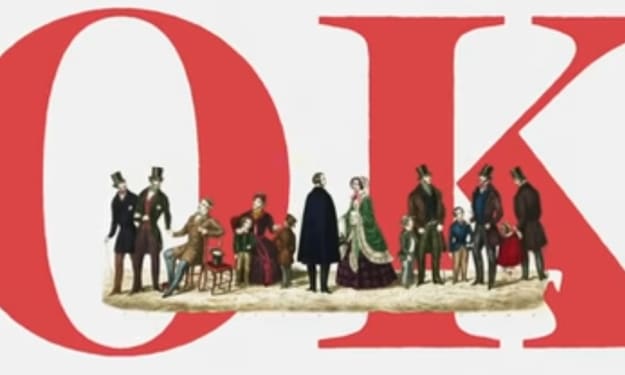
Why we use the word OK
We constantly hear this two-letter phrase. OK.Okay. Annie, how are you doing? OK OK OK, women, OK The word "OK" may be the most well-known on the planet.OK!OK.Even with technology, it is crucial to how we connect with one another.Alexa, turn out the light in the living room.OK.Even if you are unaware of it, you probably utilize it every day.But what exactly does OK mean?And from where did it originate?Hm.OK.good, then.Thank you.Actually, the origins of OK can be found in a fad of deliberate misspelling of acronyms in the 1830s.
By Nora Ariana2 years ago in History
Does Giant Really Exist?
In the natural world, there have been no confirmed discoveries of giant humanoid beings or creatures of enormous size that resemble the mythical giants often found in folklore, mythology, and legends. However, it’s important to note that the concept of giants exists in many cultures and myths throughout history. These giants are typically portrayed as beings of immense size and strength and are often part of the folklore and oral traditions of various societies. Examples include the giants in Norse mythology, Greek mythology (like the Titans), and stories of giants in various indigenous cultures. In the realm of paleontology, there is evidence of large prehistoric animals and creatures, such as dinosaurs and prehistoric mammals, that were significantly larger than modern animals. However, these are not humanoid giants but rather ancient, extinct species. Nevada’s Lovelock in 1911. Two miners are looking for bat guano, an essential component of fertilizer, inside a small cave. But as they move further into the shadows, they come across something surprising. More than 40 human remains, some of which are very huge, are discovered. Huge bones were found in Lovelock cave in 1911, according to Davis Weatherly. 7 to 8 foot tall human skeletons and skulls, which would have been of some significance to prehistoric man. HUGH NEWMAN: This caused a commotion. And one of the strange things about what was discovered in the Lovelock cave was that the skeletons commonly had red hair. Therefore, it would seem that there were some people who stood out from the local Native Americans. Narrator: A number of the massive bones discovered In Lovelock Cave were sadly lost to the passage of time, but for many years, the heads were conserved at a nearby museum. HUGH NEWMAN: Up until approximately ten years ago, the museum had four enormous skulls on exhibit. These were afterwards taken out and ceremoniously buried. The fact that Lovelock cave yielded over 100,000 artifacts is also intriguing. The majority of the objects were enormous, which is strange. For instance, you have enormous sandals that would fit someone who is around 9 feet tall and measures 15 inches long. Even some of the clothing appeared to be worn by giants since it was so large. Narrator: To some, the notion that enormous bones were truly discovered in a cave in Nevada may seem improbable. However, the truth is that several reports of these discoveries from the Wild West exist. There are several really bizarre tales of these dead bodies or skeletons being regularly discovered in the southwest of the United States. This is a strong theme in terms of the accounts of giants. The notion that a huge race formerly inhabited this area attracted people. And this relates to a lot of biblical belief from that age, which tended to be quite literal. Additionally, the Bible mentions a time when a race of giants formerly inhabited Earth. Therefore, when several skeletons were discovered after being pulled up from the ground in the Wild West, it seemed to confirm this for many people there. This was also a confirmation of biblical literalism. NARRATOR: Are the countless findings that were reported throughout the 1800s actually proof that a race of giants had lived in the Old West? If so, was there any proof of these giants found at Lovelock Cave? Examining the past of the Native Paiute people, who have lived in the Nevada desert for generations, may yield a clue. DAVIS WEATHERLY: In the 1800s, a woman by the name of Sarah Winnemucca, a Paiute chief’s descendant, authored a book about her people’s conflict with the sai-duka’a race of giants. The interesting thing about this is that she claims there was a real battle. Not a piece of folklore or tribal lore, but something that truly happened. The cannibal sai-duka’a were red-haired people who lived in the highlands close to the Paiute nation. The Paiutes claimed that they faced the giants after becoming naturally tired of being eaten. The giants and the Paiute people got into a fight, according to CHAD LEWIS. They fought against one another for three years. The Paiute tribe filled the Lovelock cave’s openings with a lot of brush and fuel and set it on fire after the last of the giants barricaded themselves within. The huge cannibals with red hair perished after that. HUGH NEWMAN: It’s also intriguing to note that when Lovelock Cave was discovered in 1911, researchers also discovered signs of intense fire close to the cave mouth. This therefore closely reflects the plot of the narrative. Again, we can see that Sarah Winnemucca Hopkins had red hair because she saved some of it and stitched it into a morning dress that she wore when she gave lectures. As a result, the legend of the Paiutes vanquishing the giants unexpectedly came to pass. NARRATOR: For many, the evidence in support of the Paiute story about the red-headed giants is compelling. Not only because of what was found in Lovelock cave, but also because there have been reports of giant bones being discovered in other places throughout the Western Nevada desert. If you go back and look through the records, and you can find numerous accounts of bones, skeletons, and giant-sized artifacts that have been found in this area. HUGH NEWMAN: In 1904, it was reported that an 11 foot tall skeleton was found. And then we have accounts in 1931 of an 8 and ½ foot skeleton that was reported. And so the fact is, you have the stories, you have the skeletal evidence, and you have the artifacts, and even the legends that prove this was a real story of giants in this area. TOK THOMPSON: To be sure, the Paiutes believe this to be a historical truth. People might dismiss them as just folklore, but, again, who’s to say that it didn’t happen? Of course, there were ethnic conflicts. Of course, there were wars. And, of course, people tend to remember this. So this has been a real important part of many, many people’s historical beliefs, and how they think about their own history.
By Raymark Marcos2 years ago in History
The purpose of Silicon Valley
These are the prune tree blooms. The Santa Clara Valley in California, which is situated in a geologic trough, was formerly referred to as the Valley of Heart's Delight because of its farmland abundant with flowers and fruit, including prunes.How did a place renowned for its fruits and flowers.. become a center of knowledge?
By Nora Ariana2 years ago in History
Hawaii: Understanding America's Most Unique Population Pattern
Hawaii has an unusually uneven population distribution compared to expectations, with the bulk of residents concentrated on Oahu Island rather than the geographically largest islands. This emerged from Hawaii's unique geological origins and demographic shifts following the first Western contact, leaving a complex legacy still confronted today.
By STEPHANIE CLARKE2 years ago in History
The Remnants of Empire: How the Ghost of the Soviet Union Still Haunts Russia and Its Neighbors
Thirty years after the collapse of the Soviet Union, the 15 republics that emerged as independent states are still grappling with their post-Soviet identity and relationship with Russia.
By KWAO LEARNER WINFRED2 years ago in History
The Nile: Sudan's Eternal River of Life and Civilization
The Nile River is the longest river in the world, flowing over 4,000 miles through northeast Africa. For millennia, it has been the lifeblood of civilizations along its banks. One of the most influential was the kingdom of Nubia, centered in modern-day Sudan.
By KWAO LEARNER WINFRED2 years ago in History
Babylon's Undoing: The Fall of the Richest City in History
Introduction The city of Babylon, once renowned as the richest city in the world and a paramount center of power, now lies in ruins, a testament to the ebb and flow of history. Its extraordinary journey from prosperity to decay is a fascinating tale of ambition, conquest, and a king's hubris. In this article, we delve into the enigmatic history of Babylon, exploring its origins, achievements, and the events that ultimately led to its downfall.
By Konstantin Stefanov2 years ago in History
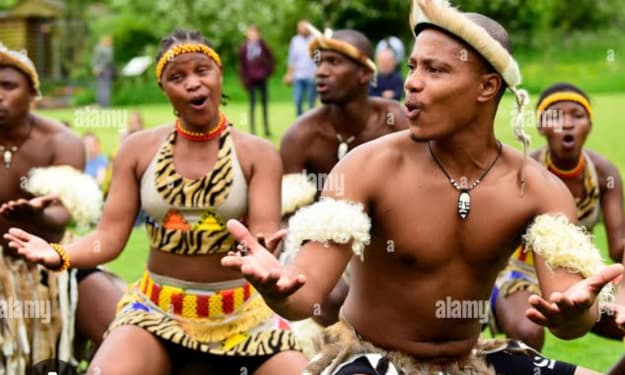
African culture
Title: Exploring the Rich Tapestry of African Culture Introduction Africa, often referred to as the cradle of humanity, boasts a diverse and vibrant cultural landscape that is as varied as the continent itself. With 54 recognized countries and over 2,000 distinct ethnic groups, Africa is a treasure trove of traditions, languages, art forms, and beliefs that have evolved over millennia. In this article, we embark on a journey to explore the multifaceted nature of African culture, delving into its key elements, historical significance, and enduring influence on the world.
By Sharon Chiamaka2 years ago in History