
LARGEST ANIMALS THAT EVER EXISTED
Hey it will shock your nerve
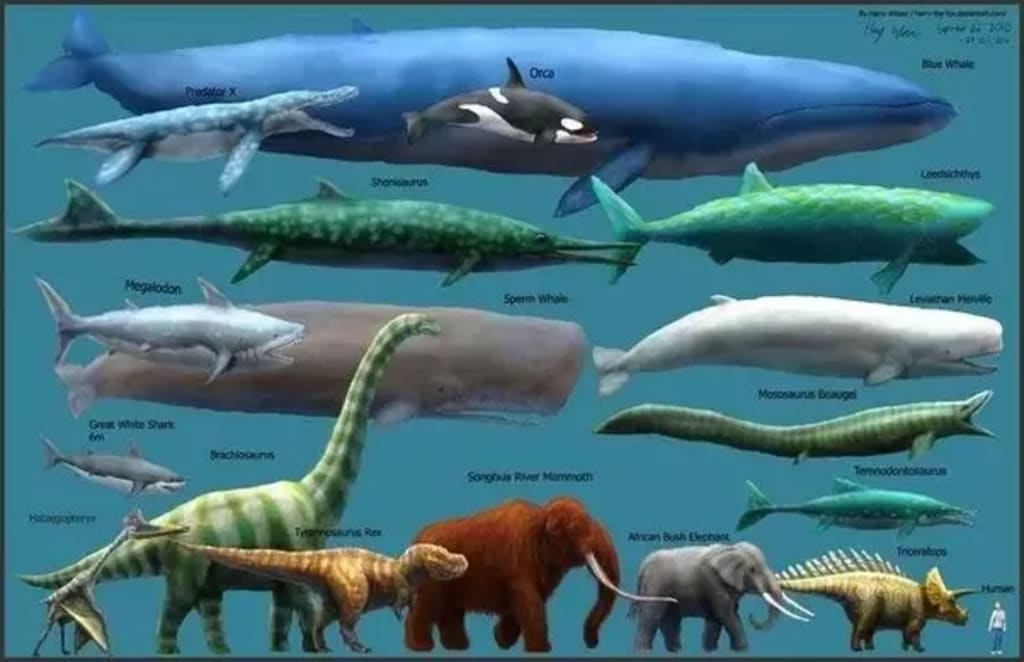
We'll introduce you to 15
abnormally large animals that truly
exist prepare to be amazed as we dive
into the unique characteristics and
adaptations that set these colossal
beings apart from the rest
number one
Blue whale
the blue whale is the largest animal
ever to have existed on Earth these
gigantic marine mammals can grow up to
100 feet 30 meters in length and weigh
as much as 200 tons 181 metric tons
blue whales are predominantly found in
the world's oceans including the
Atlantic Pacific and Indian oceans their
massive size is supported by their
watery habitat as the buoyancy of water
helps to Bear their immense weight
blue whales have a unique diet that
consists mostly of tiny shrimp-like
creatures called Krill despite their
enormous size blue whales have a
relatively small throat which prevents
them from consuming larger prey instead
they filter enormous quantities of krill
through their baleen plates a system of
comb-like structures in their upper jaw
during the feeding season a blue whale
can consume up to 40 million Krill per
day which equates to roughly 8 000
pounds 3 600 kilograms of food these
gentle Giants have a distinct
streamlined body shape that allows them
to glide effortlessly through the water
their bluish gray coloration which gives
them their name helps them blend in with
their Oceanic surroundings
blue whales are also known for their
powerful vocalizations producing some of
the loudest sounds in the animal kingdom
these low frequency calls can be heard
up to one thousand miles 1 600
kilometers away and are essential for
communication and navigation blue whales
are solitary creatures typically
traveling alone or in small groups
however they are known to congregate in
specific regions during their feeding
and mating Seasons blue whales follow a
seasonal migration pattern moving
towards the poles in the summer to feed
on abundant Krill and returning to
warmer Waters in the winter to mate and
give birth
the blue whale population has faced
numerous threats over the years
primarily from commercial whaling
between the early 20th century and the
1960s blue whales were hunted to near
Extinction thankfully with the
introduction of the international
whaling commission's ban on Commercial
whaling in 1986 blue whale populations
have slowly started to recover today the
blue whale is classified as an
endangered species and ongoing
conservation efforts are in place to
protect This Magnificent creature and
its habitat
2 African elephant
African elephant
holds the title of the largest
land animal on Earth with males reaching
up to 13 feet 4 meters in height and
weighing up to 14 000 pounds 6 350
kilograms these majestic creatures are
found throughout the African continent
inhabiting a variety of ecosystems such
as savannas forests and deserts African
elephants can be distinguished from
their smaller Asian counterparts by
their larger ears which are shaped like
the African continent and the presence
of two finger-like projections on the
tip of their trunk
the trunk itself is a remarkable
appendage containing over forty thousand
muscles and tendons which provide the
elephant with exceptional dexterity and
strength elephants use their trunks for
a wide range of activities including
feeding drinking bathing and
communication
one of the most striking features of
African elephants is their massive ivory
tusks which continue to grow throughout
their lives tusks are actually elongated
incisor teeth and serve various purposes
such as digging for water or minerals
stripping bark from trees and as a
formidable weapon during confrontations
with Predators or rival elephants
unfortunately the demand for Ivory has
led to widespread poaching posing a
significant threat to the elephant
population
African elephants are herbivores
consuming a diverse diet of grasses
leaves fruit and bark they're known to
spend up to 18 hours a day feeding and
can consume up to 660 pounds 300
kilograms of vegetation in a single day
this enormous appetite results in
significant impacts on their environment
as they clear paths through dense
vegetation and disperse seeds in their
droppings promoting biodiversity
socially African elephants live in
complex matriarchal societies led by a
dominant female known as The Matriarch
family groups usually consist of related
females and their offspring while adult
males typically lead a more solitary
existence
elephants are known for their strong
bonds and displays of affection as well
as their remarkable intelligence and
problem-solving abilities unfortunately
the African elephant population faces
numerous threats including habitat loss
human elephant conflict and the illegal
ivory trade
over the past Century the African
elephant population has declined
dramatically with some estimates
suggesting that numbers have dropped by
as much as 90 percent
conservation organizations and
governments have been working tirelessly
to protect these iconic animals through
anti-poaching efforts habitat
preservation and community-based
conservation initiatives in recent years
some African elephant populations have
shown signs of recovery but continued
efforts are needed to ensure their
long-term survival number three
saltwater crocodile
saltwater crocodiles also known as
estuarine or indo-pacific crocodiles are
the largest living reptiles on Earth
they can grow up to 23 feet 7 meters in
length and weigh up to 2 200 pounds one
thousand kilograms these impressive
Predators inhabit coastal regions
estuaries and rivers in parts of
Southeast Asia Northern Australia and
the eastern coast of India saltwater
crocodiles are excellent swimmers and
can travel long distances in search of
food and mates their powerful Tales
propel them through the water while they
are streamlined bodies and partially
webbed feet enable them to maneuver
effortlessly
these apex predators are known for their
Ambush hunting technique patiently
waiting for prey to approach before
launching a Swift and Powerful attack
the diet of saltwater crocodiles
includes a variety of animals such as
fish birds and mammals they are known to
take down large prey including water
buffalo wild boar and even sharks
saltwater crocodiles possess an
incredibly strong bite force which
combined with their sharp teeth allows
them to subdue and dismember their prey
with ease
salt water crocodiles display a high
degree of territoriality particularly
among males they will fiercely defend
their territories from other crocodiles
and are known to engage in aggressive
confrontations during the breeding
season males compete for the attention
of females who will lay between 40 and
60 eggs in a carefully constructed Nest
the female guards The Nest during the
incubation period and will help her
hatchlings reach the water once they
emerge conservation efforts for
saltwater crocodiles have been
successful in some regions particularly
in Australia where strict protective
measures have led to a significant
population increase
however in other parts of their range
habitat loss pollution and illegal
hunting continue to pose threats to
their survival
number four giraffe giraffes are the
tallest animals on Earth with adult
males reaching Heights of up to 18 feet
5.5 meters and females up to 14 feet 4.3
meters
these long-necked mammals inhabit the
savannas grasslands and open Woodlands
of sub-Saharan Africa their distinct
appearance characterized by their
elongated necks and legs and their
unique spotted coat patterns sets them
apart from other animals the giraffe's
extraordinary height provides several
advantages such as a wider field of
vision to spot predators and access to
leaves and foliage that are Out Of Reach
for other herbivores
giraffes have a specialized
cardiovascular system to pump blood up
their long necks and their complex
network of blood vessels helps to
regulate blood pressure
giraffes are ruminants and spend most of
their day browsing on leaves flowers and
fruits from trees particularly favoring
the acacia tree
they have a prehensile tongue that can
measure up to 18 inches 45 centimeters
long which they use to strip leaves from
branches and avoid the tree's thorns
giraffe social structures are relatively
fluid with individuals forming loose
temporary associations that can change
frequently
adult males engage in a behavior known
as necking in which they use their long
necks to deliver powerful blows to one
another to establish dominance and
access to breeding females
giraffe populations have declined
significantly in recent decades largely
due to habitat loss poaching and human
Wildlife conflict this decline has led
to the classification of giraffes as a
vulnerable species with some subspecies
listed as critically endangered
conservation organizations are working
to protect giraffe populations through
habitat preservation anti-poaching
efforts and community-based conservation
programs that aim to reduce human
Wildlife conflict number five eastern
gorilla Eastern gorillas which include
two subspecies the mountain gorilla and
the eastern lowland gorilla are the
largest living primates on Earth adult
male Eastern gorillas known as
Silverbacks due to the silver hair on
their backs can weigh up to 440 pounds
200 kilograms and stand up to 5.6 feet
1.7 meters tall when upright these
magnificent creatures inhabit the dense
forests and mountainous regions of
Central and Eastern Africa primarily in
Uganda Rwanda and the Democratic
Republic of the Congo
Eastern gorillas are primarily
herbivorous consuming a diet rich in
leaves stems fruits and occasionally
insects they're powerful jaws and large
molars are well adapted for grinding
fibrous plant material while their
strong arms help them navigate their
forest habitat and gather food
gorillas are known to consume over 200
different plant species highlighting
their dietary adaptability
Eastern gorillas live in cohesive social
groups known as troops which typically
consist of one dominant Silverback
several adult females and their
offspring
the dominant Silverback is responsible
for leading the troop protecting the
group from predators and rival males and
making decisions about feeding and
resting sites
Guerrilla troops have complex social
hierarchies and strong bonds with
individuals engaging in mutual grooming
play and other social behaviors
Eastern gorillas particularly mountain
gorillas have become a symbol of
endangered species conservation due to
habitat loss poaching and disease their
populations have been under significant
pressure mountain gorillas were once on
the brink of Extinction with their
numbers dwindling to just a few hundred
individuals however dedicated
conservation efforts including habitat
protection anti-poaching patrols and
ecotourism have led to a slow but steady
increase in their population
as of 2021 there were over 1 000
mountain gorillas a testament to the
success of these initiatives eastern
lowland gorillas on the other hand
continue to face severe threats due to
ongoing conflict and political
instability in their range their numbers
have declined dramatically in recent
decades and they are now classified as
critically endangered conservation
organizations and governments are
working to implement measures that will
protect these remarkable animals and
their habitats but the challenges they
face are immense Eastern gorillas serve
as a powerful reminder of the importance
of conservation and the need to
safeguard our planet's biodiversity
by protecting these magnificent primates
we not only preserve their unique
ecosystems but also contribute to the
well-being of the countless other
species that share their habitats number
six whale shark
whale sharks are the largest fish
species on Earth reaching lengths of up
to 40 feet 12 meters and weighing as
much as 20.6 tons 18.7 metric tons
despite their enormous size these gentle
Giants are filter feeders consuming vast
quantities of Plankton Krill and small
fish whale sharks inhabit warm tropical
oceans around the world and are known
for their distinctive white spots and
stripes on a bluish gray background
whale sharks are slow swimmers cruising
at speeds of around 3 miles 5 kilometers
per hour
they have a unique feeding mechanism
known as RAM filter feeding in which
they swim with their mouths open
allowing water and prey to flow through
their gills
the Gill rakers act as filters trapping
their food while allowing water to pass
through
these colossal fish are migratory
traveling long distances to find
abundant food sources and favorable
breeding conditions they are known to
gather in specific locations around the
world such as the coast of Western
Australia and the waters off Mexico's
Yucatan Peninsula where they feed on
seasonal Plankton blooms
whale sharks are solitary creatures
typically traveling alone or in small
groups however they are known to
congregate in large numbers during
seasonal feeding events providing a rare
opportunity for scientists to study
their behavior and biology
despite their size whale sharks are
docile and pose little threat to humans
making them popular subjects for
ecotourism and underwater photography
whale shark populations are under threat
due to human activities such as fishing
bycatch and habitat degradation
they are classified as endangered by the
international Union for conservation of
Nature iucn and numerous conservation
efforts are in place to protect these
gentle Giants
some of these efforts include the
implementation of marine protected areas
public awareness campaigns and the
promotion of sustainable eco-tourism
number seven ostrich the ostrich is the
largest and heaviest living bird species
with adult males standing up to nine
feet 2.7 meters tall and weighing as
much as 320 pounds 145 kilograms these
flightless birds are native to the
Savannahs and grasslands of Africa where
they have adapted to a terrestrial
lifestyle with remarkable Speed and
Agility ostriches are characterized by
their long legs neck and large round
body covered in feathers their powerful
legs enable them to run at speeds of up
to 43 miles 70 kilometers per hour
making them the fastest running bird in
the world
ostriches also possess strong sharp
claws that can deliver powerful kicks to
defend against predators
these unique birds are omnivorous
consuming a diet that consists primarily
of plant material such as leaves seeds
and fruits as well as insects and other
small animals ostriches have a
specialized digestive system that allows
them to break down and process the tough
plant fibers they consume ostriches live
in groups called flocks which usually
consist of one dominant male several
females and their offspring during the
breeding season the dominant male will
perform elaborate courtship displays
such as fluffing his feathers spreading
his wings and swaying his neck to
attract potential mates
ostrich populations are generally stable
and not currently threatened with
Extinction however they have faced
challenges due to habitat loss hunting
and competition with livestock for
resources conservation efforts for
ostriches primarily focus on habitat
preservation and the sustainable
management of their populations in some
regions ostriches are also farmed for
their meat feathers and eggs providing
an alternative source of income for
local communities and reducing pressure
on wild populations number eight Kodiak
bear
Kodiak bears also known as Alaskan brown
bears are among the largest and most
powerful terrestrial carnivores on Earth
these impressive animals are found
primarily on the Kodiak archipelago in
Alaska and are closely related to the
mainland grizzly bear
adult male Kodiak bears can weigh up to
1 500 pounds 680 kilograms and stand up
to five feet 1.5 meters at the shoulder
when on all fours with a standing height
of up to 10 feet 3 meters the Kodiak
Bear's size and strength are supported
by a rich protein-packed diet that
includes salmon berries vegetation and
other animals such as deer and Elk they
are especially renowned for their
fishing skills often catching salmon
during their annual spawning runs
Kodiak bears use their sharp claws and
powerful jaws to catch and consume their
prey as well as to dig for roots and
tubers Kodiak bears are solitary
creatures typically roaming alone or in
small family groups consisting of a
mother and her Cubs they have a keen
sense of smell which they rely on to
locate food and communicate with other
bears
during The Mating Season Kodiak bears
May engage in Fierce battles to
establish dominance and win the right to
mate with females one of the most
notable features of Kodiak bears is
their remarkable ability to gain weight
rapidly in preparation for hibernation
during the summer and fall months they
can put on up to 400 pounds 180
kilograms of body weight which allows
them to survive their winter hibernation
without eating or drinking the Kodiak
bear population is currently stable
thanks to a combination of factors such
as the isolation of their habitat
sustainable management practices and the
protection of their primary food source
salmon
the Kodiak National Wildlife Refuge
established in 1941 provides a safe
haven for these magnificent animals
ensuring their long-term survival
ongoing monitoring and research helped
to inform management decisions and
support the conservation of Kodiak bears
and their unique ecosystem number nine
green anaconda the green anaconda native
to the tropical rainforests of South
America is the heaviest and one of the
longest snake species in the world these
powerful non-venomous constrictors can
grow up to 30 feet 9 meters in length
and weigh up to 550 pounds 250 kilograms
with females generally being larger and
heavier than males their striking green
coloration adorned with black circular
markings provides excellent camouflage
in their Lush swampy habitats green
anacondas are semi-aquatic and can often
be found lurking in slow-moving Rivers
swamps and marshes they are excellent
swimmers you using their muscular bodies
to glide effortlessly through the water
their eyes and nostrils are positioned
on the top of their head allowing them
to remain almost entirely submerged
while still being able to see and
breathe these massive snakes are Ambush
Predators patiently waiting for
unsuspecting prey to venture too close
before launching a rapid powerful strike
green anacondas primarily feed on a
variety of animals including fish birds
reptiles and mammals their flexible Jaws
can stretch widely enabling them to
swallow large prey items whole after
consuming a large meal anacondas can go
for weeks or even months without needing
to eat again
green anacondas employ constriction as
their primary method of subduing prey
they coil their powerful bodies around
their prey applying immense pressure
that ultimately causes the victim to
succumb to Suffocation or circulatory
failure
despite their fearsome reputation green
anacondas pose little threat to humans
and although green anacondas face few
natural Predators they are threatened by
human activities such as habitat
destruction pollution and hunting for
their skins however their remote and
often inaccessible habitats provide some
protection from these threats
conservation efforts for green anacondas
include habitat preservation the
establishment of protected areas and the
regulation of hunting and trade to
ensure the long-term survival of this
remarkable species number 10 Chinese
giant salamander the Chinese giant
salamander is the world's largest
amphibian reaching lengths of up to six
feet 1.8 meters and weighing as much as
110 pounds 50 kilograms
these remarkable creatures are found in
the freshwater rivers and streams of
central Southwestern and Southern China
their wrinkled skin which varies in
color from dark brown to greenish black
provides camouflage against the rocky
riverbeds where they reside Chinese
giant salamanders are primarily
nocturnal and spend their days hidden in
rock crevices or Burrows along
Riverbanks they are highly adapted for
an aquatic lifestyle with flattened
heads small eyes and large paddle-like
tails that enable them to navigate their
underwater environments with ease these
salamanders have poor eyesight relying
on sensory nodes on their skin to detect
vibrations and locate prey as
carnivorous amphibians Chinese giant
salamanders feed on a variety of animals
including fish insects Crustaceans and
other amphibians they employ a unique
feeding method known as suction feeding
rapidly opening their mouths to create a
vacuum that sucks in prey
once captured their strong jaws and
sharp teeth help to secure and consume
their prey
Chinese giant salamanders have an
intriguing reproductive strategy
males establish underwater territories
known as nests where they Court females
and protect their fertilized eggs
the male salamander stays with the eggs
throughout the incubation period
guarding them from predators and
ensuring their survival
unfortunately Chinese giant salamanders
are critically endangered due to factors
such as habitat loss pollution and over
harvesting for the luxury Food Market
populations have declined dramatically
in recent decades prompting urgent
conservation efforts to save this unique
species
these efforts include habitat
restoration the establishment of
protected areas and the implementation
of captive breeding programs to boost
wild populations additionally laws have
been enacted to regulate the trade and
consumption of Chinese giant salamanders
aiming to curb the demand for this
threatened species
by protecting and preserving these
fascinating amphibians we can ensure the
survival of an integral part of China's
Rich biodiversity
number 11 ocean sunfish
the ocean sunfish or mola mola is the
world's largest bony fish with adults
weighing up to 5 100 pounds 2 300
kilograms and measuring up to 10.8 feet
3.3 meters in length these peculiar fish
are found in temperate and tropical
oceans around the globe often swimming
near the surface where they bask in the
sun to warm their bodies giving them
their common name ocean sunfish have a
distinctive flattened body shape with a
large dorsal fin and an elongated
trailing anal fin
their body tapers to a clavis a rounded
rudder-like structure that takes the
place of a true tail fin ocean sunfish
are known for their Curious Behavior
such as leaping out of the water and
allowing smaller fish or Birds to clean
parasites from their skin these gentle
Giants primarily feed on gelatinous
zooplankton such as jellyfish salps and
katanophores they're beak-like mouths
filled with small sharp teeth are well
adapted for consuming their soft-bodied
prey despite their size ocean sunfish
pose no threat to humans and are
considered harmless
ocean sunfish populations are vulnerable
to human impacts such as bycatch plastic
pollution and habitat degradation they
are currently listed as vulnerable by
the international Union for conservation
of nature iucn
conservation efforts for ocean sunfish
include the implementation of
sustainable fishing practices reducing
plastic pollution and raising public
awareness about these unique and
fascinating creatures number 12 Goliath
bird eater spider the Goliath bird eater
spider or therafosa Blondie is the
world's largest spider by mass with
adult females weighing up to 6.2 ounces
175 grams and having a leg span of up to
11 inches 28 centimeters
these impressive arachnids inhabit the
rainforests of Northern South America
where they reside in Burrows and venture
out at night to hunt for prey
despite their name Goliath birdeater
spiders rarely consume Birds they
primarily feed on insects amphibians and
small mammals using their powerful fangs
to inject Venom and immobilize their
prey their fangs are capable of piercing
human skin but their venom is relatively
harmless to humans causing only mild
pain and swelling Goliath bird eater
spiders are solitary creatures that only
interact during mating when males
cautiously approach females to avoid
being mistaken for prey females lay
hundreds of eggs which they guard
fiercely in their burrow until the
spiderlings hatch and disperse although
the Goliath bird eater is not considered
endangered they are threatened by
habitat loss due to deforestation and
climate change as top predators in their
ecosystem these spiders play an
important role in maintaining the
balance of their tropical rainforest
habitats conservation efforts for the
Goliath bird eater spider include
habitat preservation sustainable land
management practices and raising public
awareness about the importance of these
remarkable arachnids number 13 Flemish
giant rabbit the Flemish giant rabbit is
the largest breed of domestic rabbit
known for its gentle temperament and
impressive size adult Flemish Giants can
weigh up to 22 pounds 10 kilograms and
measure up to 2.5 feet 0.76 meters in
length
originating in Belgium this breed has
been popular throughout Europe since the
16th century and was later introduced to
the United States in the early 20th
century
Flemish Giants come in a variety of
colors including black blue fawn light
gray steel gray Sandy and white they
have a muscular elongated body with a
broad head and large erect ears despite
their size these rabbits are known for
their calm and friendly nature making
them popular pets and show animals
Flemish Giants are herbivores primarily
consuming hay pellets and fresh
vegetables due to their size they
require a larger amount of food than
smaller rabbit breeds as well as larger
enclosures to ensure they have ample
space to move and stretch proper care
including a well-balanced diet and
regular Veterinary checkups is essential
for maintaining their health and
well-being
these rabbits have a relatively slow
growth rate compared to other breeds
taking up to a year to reach their full
size
Flemish Giants are also known for their
long lifespan often living up to 8 to 10
years with proper care
they are social animals that enjoy the
company of their owners and other
rabbits making them suitable companions
for families and individuals alike
Flemish Giant rabbits have been bred for
various purposes including fur meat and
show animals while they are not
considered a threatened breed efforts to
preserve their unique characteristics
and promote responsible breeding
practices are essential to maintaining
the health and diversity of the
population
as pets Flemish Giant rabbits require
owners who are dedicated to providing
the necessary space diet and care to
accommodate their size and needs with
their gentle nature and remarkable size
these rabbits continue to Captivate the
hearts of enthusiasts and animal lovers
around the world number 14 Japanese
spider crab the Japanese spider crab or
macrochera camphori is the largest
species of crab boasting the longest leg
span of any arthropod in the world
these fascinating Marine creatures can
be found in the waters surrounding Japan
dwelling at depths of 160 to 2000 feet
50 to 600 meters adult Japanese spider
crabs can weigh up to 44 pounds 20
kilograms with a leg span reaching up to
12.5 feet 3.8 meters Japanese spider
crabs have a distinctive appearance
featuring a rounded spiked carapace and
elongated spindly legs that resemble
those of a spider
they have large powerful claws which
they use for catching and crushing their
prey
their diet consists of a variety of
organisms including fish mollusks and
decaying plant and animal matter these
crabs have a slow growth rate and can
live for up to 100 years they are
primarily solitary animals although they
may congregate in large groups during
The Mating Season females carry their
fertilized eggs underneath their bodies
until they hatch releasing thousands of
larvae into the water column
Japanese spider crabs face several
threats such as overfishing and habitat
degradation in Japan they are considered
a delicacy and are often caught for
consumption
conservation measures have been
implemented to protect these unique
creatures including seasonal fishing
restrictions and the establishment of
protected areas number 15 capybara the
capybara native to South America is the
world's largest rodent weighing up to
140 pounds 64 kilograms and measuring up
to 4.3 feet 1.3 meters in length these
gentle social animals inhabit dense
forests and savannas near bodies of
water such as rivers lakes and swamps
Capybaras have a barrel-shaped body
short legs and a blunt rounded head with
small ears and eyes positioned high on
their skull their coarse fur ranges from
brown to reddish brown providing
camouflage in their natural habitats as
highly social animals Capybaras live.
About the Creator
Reader insights
Outstanding
Excellent work. Looking forward to reading more!
Top insights
Compelling and original writing
Creative use of language & vocab
Easy to read and follow
Well-structured & engaging content
Excellent storytelling
Original narrative & well developed characters
Expert insights and opinions
Arguments were carefully researched and presented
Eye opening
Niche topic & fresh perspectives
Heartfelt and relatable
The story invoked strong personal emotions
Masterful proofreading
Zero grammar & spelling mistakes
On-point and relevant
Writing reflected the title & theme
Keep reading
More stories from Abubakar wamumbi and writers in History and other communities.
America is down
Title: Pondering the Shift: Exploring Potential Paths for the United States to Transition Away from Supremacy Introduction: For decades, the United States has held the coveted position of a global superpower, exerting its influence across diverse realms. However, examining the possibility of the United States relinquishing its superpower status and transitioning into a more equitable global landscape poses intriguing questions. In this article, we will explore potential strategies and factors to consider in this hypothetical journey.
By Abubakar wamumbi 2 years ago in Futurism
3 Ordinary Places That Hid Something Truly Disturbing for Years
Most of us take comfort in ordinary places. Schools feel safe. Homes feel familiar. Workplaces feel predictable. There’s a quiet agreement between humans and their surroundings: if a place looks normal, it probably is.
By Enoch Saginia day ago in History
Stanislav Kondrashov’s Oligarch Series: Renaissance Merchants and Their Support for the Arts
In his *Oligarch Series*, **Stanislav Kondrashov** examines how wealth has shaped political, economic, and cultural systems across history. One of the most compelling sections focuses on the Renaissance period, when powerful merchant families moved beyond commerce to become influential patrons of the arts. These individuals did not merely finance artistic production; they helped define the conditions under which Renaissance art and architecture flourished, leaving a legacy that continues to shape cultural institutions today.
By Stanislav Kondrashov4 days ago in History




Comments (2)
Wow that's wonderful
This is cool