
King Farouk The Last King of Egypt
And his exciting life story

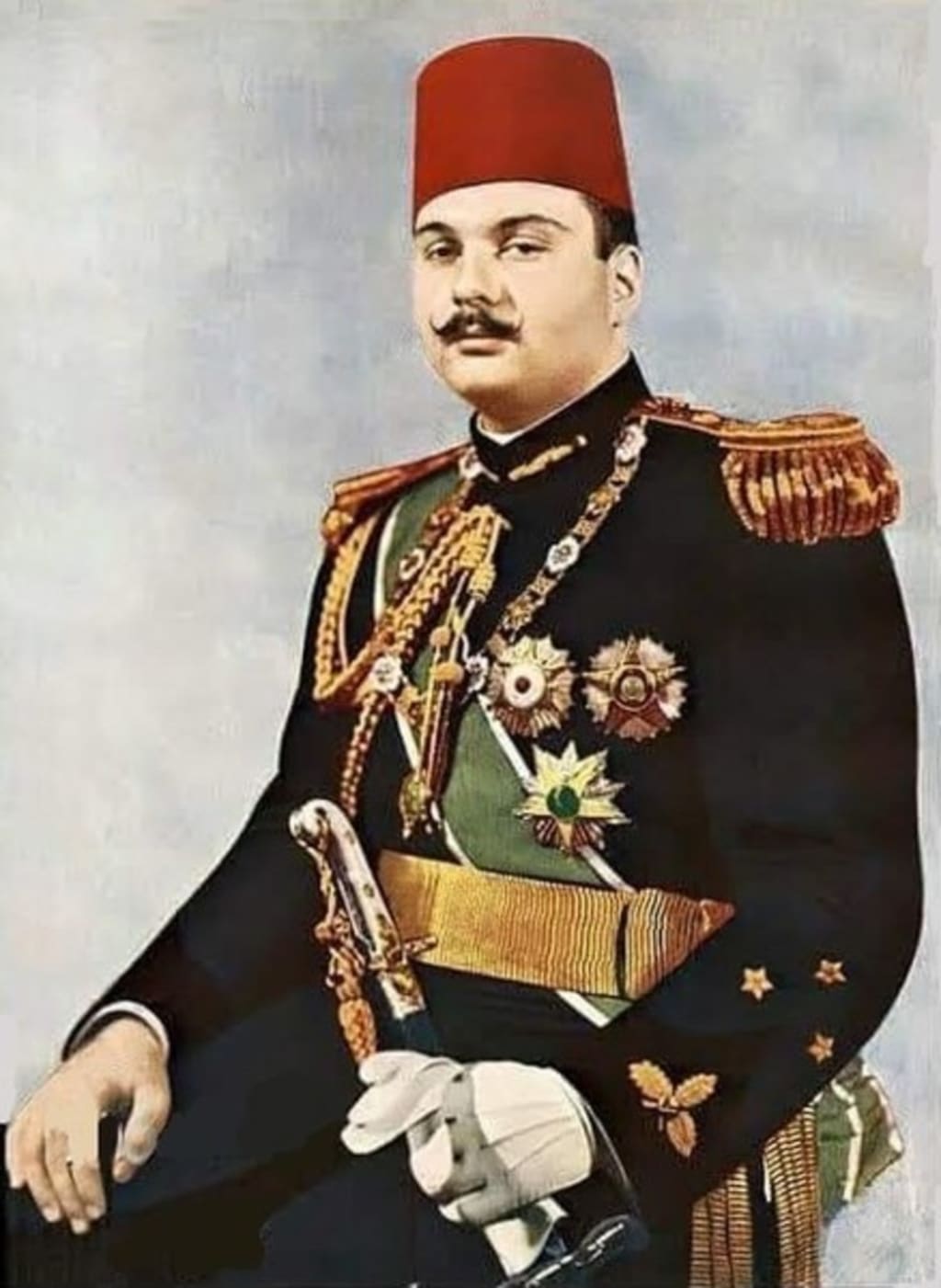
Table of Contents
Introduction
Early Life and Ascension to the Throne
Reign and Legacy
Personal Life and Controversies
Abdication and Exile
Death and Historical Reflection
Conclusion
Introduction
King Farouk I, Egypt's last ruling monarch, remains one of the most intriguing figures in modern Egyptian history. His reign, from 1936 to 1952, was marked by opulence, controversy, and political upheaval. Despite his ultimate fall from grace, King Farouk's story offers a vivid glimpse into the waning days of Egypt’s monarchy, a period characterized by colonial influence, societal change, and national awakening.
Early Life and Ascension to the Throne
Farouk was born on February 11, 1920, in Cairo, into the Muhammad Ali Dynasty. As the son of King Fuad I and Queen Nazli, Farouk was groomed for leadership from an early age. His education included time in Europe, where he attended the prestigious Royal Military Academy in Woolwich, England. These formative years exposed him to Western ideals, but also distanced him from the realities of Egyptian life.
When King Fuad I died in 1936, the 16-year-old Farouk ascended the throne. His early rule was marked by high expectations, as Egyptians hoped he would lead the country toward modernization and independence from British influence. Initially, Farouk’s youthful charisma and nationalistic rhetoric made him a popular figure.
Reign and Legacy
King Farouk’s reign coincided with significant global and regional events, including World War II and the establishment of the Arab League. Despite these challenges, his administration struggled to balance national aspirations with the realities of foreign influence, particularly from Britain, which maintained significant control over Egypt’s military and economy.
Farouk’s rule is often criticized for corruption, inefficiency, and a lack of meaningful reform. While he presided over a period of cultural flourishing in Cairo, marked by advances in arts and education, the broader populace faced economic hardship and social inequality. His failure to address these issues eroded public support and fueled opposition movements, including the Free Officers’ Movement led by Gamal Abdel Nasser.
Personal Life and Controversies
Farouk’s personal life added to his notoriety. Known for his lavish lifestyle, he amassed a collection of luxury cars, fine art, and rare coins. His penchant for gambling, extravagant parties, and eccentric behavior often overshadowed his political responsibilities.
One of the most infamous episodes of his life was his alleged kleptomania. Stories circulated of the king pocketing a pocket watch from Winston Churchill and stealing an expensive sword from the Shah of Iran during official visits. These tales contributed to his image as a ruler disconnected from his people.
Farouk’s relationships were equally controversial. His marriage to Queen Farida in 1938 initially captivated the public, but their union ended in divorce in 1948, following rumors of infidelity. His second marriage, to Narriman Sadek, a commoner, in 1951, was seen as an attempt to reconnect with ordinary Egyptians, but it did little to rehabilitate his image.
Abdication and Exile
By the early 1950s, Egypt was at a crossroads. Mounting dissatisfaction with Farouk’s rule, coupled with military defeats such as the loss in the 1948 Arab-Israeli War, culminated in the July 23, 1952, revolution. Led by the Free Officers, the coup forced Farouk to abdicate in favor of his infant son, Ahmed Fouad II.
Farouk went into exile, initially settling in Italy. His departure marked the end of Egypt’s monarchy and the beginning of a new republican era under Gamal Abdel Nasser. Despite living in exile, Farouk’s presence loomed large in the Egyptian imagination, as a symbol of both royal extravagance and the lost opportunities of his reign.
Death and Historical Reflection
Farouk spent his later years in relative obscurity, living a life far removed from his royal beginnings. On March 18, 1965, he died in Rome, reportedly after collapsing at a restaurant. His cause of death remains a subject of speculation, with some suggesting he was poisoned.
Today, King Farouk’s legacy is a contentious topic. While some view him as a tragic figure undone by his flaws and the pressures of his time, others regard him as a cautionary tale of unchecked power and privilege. His reign, though brief, serves as a critical chapter in Egypt’s transition from monarchy to a modern republic.
King Farouk’s life story is a tapestry of contradictions—a ruler with immense potential who succumbed to personal vices and political missteps. His tale reflects not just the end of an era but also the enduring complexities of leadership and legacy. As Egypt continues to evolve, the memory of its last king serves as a reminder of the challenges and responsibilities that come with power.
About the Creator
lucas quici
Peace be upon you, I am Lucas Quick. My identity is writing articles. Help me to be with you on Medium. I hope everyone wakes up.
Reader insights
Outstanding
Excellent work. Looking forward to reading more!
Top insights
Easy to read and follow
Well-structured & engaging content
Expert insights and opinions
Arguments were carefully researched and presented
Keep reading
More stories from lucas quici and writers in History and other communities.
legacy of the russian empire
Territorial Expansion and Diversity The Russian Empire was unparalleled in its size, spanning three continents—Europe, Asia, and North America. From the Arctic Ocean in the north to the Black Sea in the south, and from the Baltic Sea in the west to the Pacific Ocean in the east, the empire encompassed a variety of climates, landscapes, and peoples.
By lucas quiciabout a year ago in Futurism
"The Power of Belief: Ideology in the Roman Kingdom"
The Rise of Ideology in the Roman Kingdom In the earliest days of Rome, long before it became a republic or an empire, the Roman Kingdom was bound together by more than kings, armies, or stone walls. What truly unified Rome was a powerful and carefully shaped ideology—one that defined how Romans understood authority, duty, morality, and identity. This ideological foundation transformed a small settlement on the banks of the Tiber River into a disciplined and resilient civilization, prepared to rule others long after its kings were gone.
By The best writer 7 days ago in History
THE TREASURE IN THE FOREST
The canoe drifted quietly toward the island, where a wide bay opened beneath a blazing sky. A narrow gap in the white reef marked the mouth of a small river, its path visible by the darker green of thick forest spilling down the hillside. Beyond it, mountains rose like frozen waves. The sea was calm, almost unnaturally so.
By Faisal Khan7 days ago in History



Comments
There are no comments for this story
Be the first to respond and start the conversation.