
John Milton
The Poet Who Saw Beyond Darkness

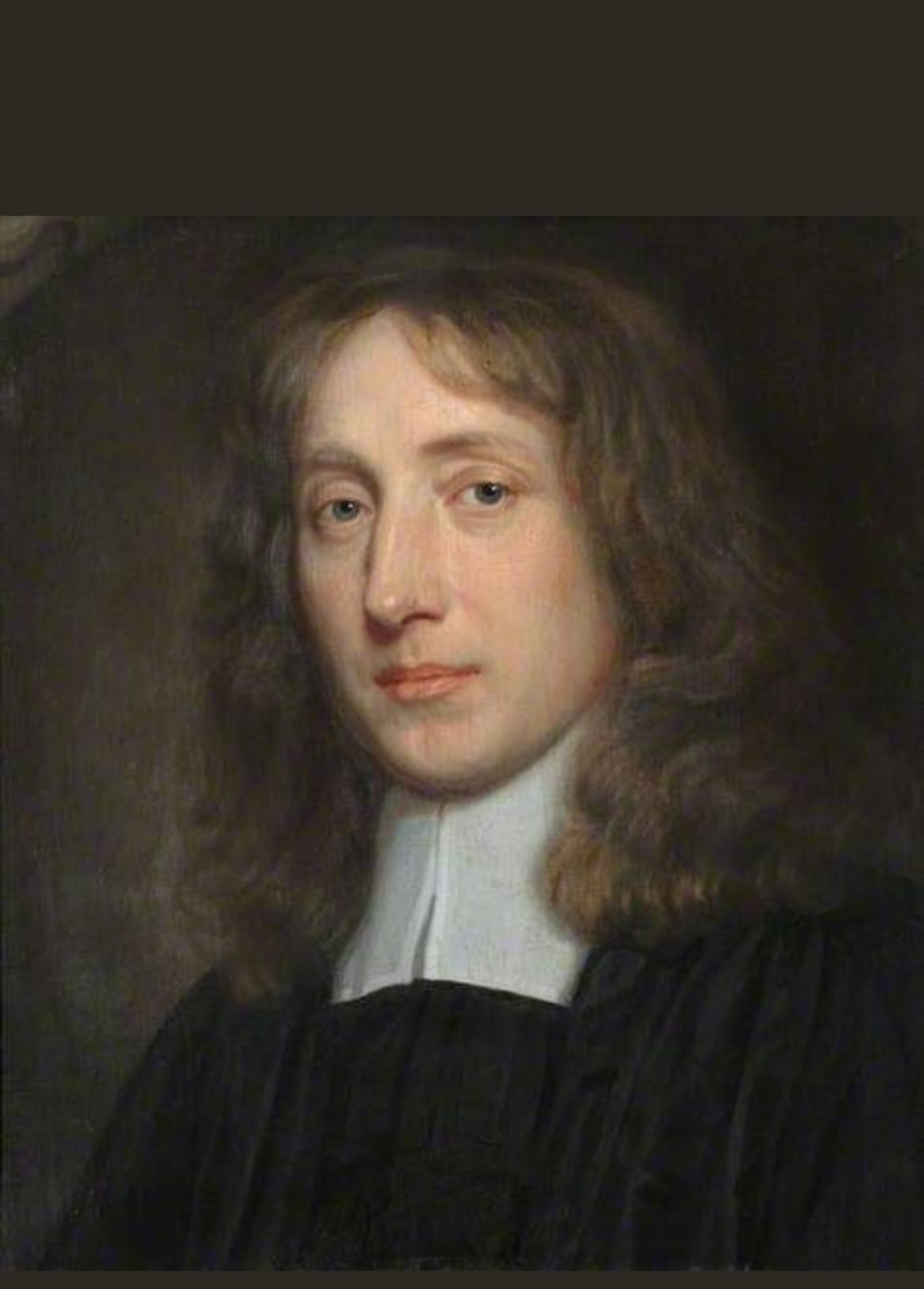
In the winter of 1608, in the bustling city of London, a child was born into a modest yet cultured household. His name was John Milton. Few could have guessed that this quiet boy would grow to become one of the greatest poets in the English language, a man whose words would echo through centuries and whose imagination would paint heaven, hell, and humanity in unforgettable lines.
Milton’s father was a scrivener—a legal copyist and moneylender—who also loved music. From him, young John inherited both discipline and artistic sensitivity. His father believed deeply in education and ensured that his son received the best schooling possible. As a child, Milton showed an unusual seriousness. While other boys played in the streets, he often stayed indoors, reading by candlelight long into the night. His hunger for knowledge was intense, and he once said that he was “learning with great labor and delight.”
At St. Paul’s School, Milton mastered Latin, Greek, and Hebrew. He read classical authors like Homer and Virgil, absorbing their rhythms and ideas. Later, he attended Christ’s College, Cambridge. There, he earned a reputation for brilliance but also for independence. He did not easily accept opinions simply because they were popular. His mind questioned, analyzed, and searched for deeper truth.
After completing his studies, Milton did something unusual. Instead of rushing into a profession, he spent several years in self-directed study. He read history, philosophy, theology, science, and literature. He believed that a poet must first prepare his mind and character before attempting great work. During this time, he wrote some of his early poems, including L’Allegro and Il Penseroso, which explored contrasting moods of joy and contemplation.
In 1638, Milton traveled to Italy, where he met scholars and artists. Italy was the heart of Renaissance culture, and the journey broadened his perspective. He even met the famous astronomer Galileo, who was under house arrest for his scientific beliefs. The meeting left a deep impression on Milton. He admired courage in the face of oppression—a theme that would later shape his political writings.
When Milton returned to England, the country was on the brink of civil war. Tension between King Charles I and Parliament had grown fierce. Milton believed strongly in liberty and the right of people to question authority. Instead of focusing solely on poetry, he began writing political pamphlets. His prose was powerful and passionate, defending freedom of speech and opposing tyranny.
One of his most famous prose works, Areopagitica, was written in 1644. It argued against censorship and for the freedom to publish ideas without government approval. In it, Milton declared that truth and falsehood should be allowed to struggle openly, for truth would ultimately prevail. His words remain influential even today in discussions about free expression.
But Milton’s life was not only filled with intellectual battles. It also carried personal sorrows. He married Mary Powell, but the marriage began with difficulties and separation. Over time, they reconciled and had children together. Tragically, Mary died young, leaving Milton a widower. Later, he married again, but sorrow continued to visit his household.
Perhaps the greatest trial of Milton’s life came slowly and quietly: the loss of his eyesight. By his early forties, his vision had begun to fade. Years of intense reading and writing had strained his eyes. Despite warnings from doctors, he continued his work. By 1652, he was completely blind.
For many, such a loss would have meant despair and silence. But Milton did not surrender. Though he could no longer see the physical world, his inner vision remained sharp. He dictated his writings to assistants and family members, composing lines in his mind before speaking them aloud. In darkness, his imagination seemed to grow brighter.
It was during this period of blindness that Milton created his masterpiece: Paradise Lost. Published in 1667, the epic poem retells the biblical story of the Fall of Man—of Adam and Eve, the temptation by Satan, and humanity’s exile from Eden. But Milton’s version was grand and deeply human. He explored themes of free will, obedience, pride, and redemption.
In the poem, Satan is portrayed as a complex and dramatic figure, full of ambition and defiance. Some readers were struck by the power of his character. Yet Milton’s deeper message was not about glorifying rebellion but about understanding the tragic consequences of pride and disobedience. Through Adam and Eve, he showed the beauty and fragility of innocence. Through their fall, he explored the painful but necessary journey toward growth and redemption.
Milton once wrote that he wished to “justify the ways of God to men.” Paradise Lost was his attempt to wrestle with profound questions: Why does suffering exist? Why are humans given freedom if it leads to error? His poetry did not offer simple answers but invited readers to think deeply about their own choices.
After Paradise Lost, Milton wrote Paradise Regained and Samson Agonistes. The latter reflected his own struggles. Like the biblical Samson, who was blinded and imprisoned yet regained strength in his final act, Milton may have seen himself as a figure tested by hardship but sustained by faith.
Despite his achievements, Milton’s later years were not easy. Political changes in England led to the restoration of the monarchy, and many of Milton’s allies fell from power. For a time, he was even imprisoned because of his earlier writings against the king. Though he was eventually released, he lived quietly afterward, focusing on his literary work.
On November 8, 1674, John Milton died in London. He was buried in St. Giles Cripplegate Church. At the time of his death, he was respected but not universally celebrated. Over the centuries, however, his reputation grew immensely. Today, he stands beside Shakespeare as one of England’s greatest writers.
What makes Milton’s story so powerful is not only his talent but his perseverance. He lost his sight, endured personal grief, faced political defeat—yet he continued to create. His blindness did not silence him; instead, it sharpened his inner world. He proved that true vision does not depend on the eyes but on the mind and spirit.
For readers across generations, Milton’s life carries a quiet lesson. Knowledge requires dedication. Freedom demands courage. And even in darkness, creativity can flourish. He reminds us that human beings are capable of rising above limitation, turning suffering into art, and transforming struggle into meaning.
In the end, John Milton was more than a poet of heaven and hell. He was a poet of resilience. Through disciplined study, bold conviction, and unwavering faith in the power of words, he carved his name into history. His lines continue to be read, studied, and admired—not only because of their beauty, but because they were born from a life that refused to surrender.
And so, though he walked much of his life in darkness, John Milton helped generations see more clearly.
About the Creator
The best writer
I’m a passionate writer who believes words have the power to inspire, heal, and challenge perspectives. On Vocal, I share stories, reflections, and creative pieces that explore real emotions, human experiences, and meaningful ideas.
Keep reading
More stories from The best writer and writers in History and other communities.
T.S. Eliot – The Poet of a Broken World
In the autumn of 1888, in the city of St. Louis, Missouri, a boy named Thomas Stearns Eliot was born into a respectable and thoughtful family. His father was a successful businessman, and his mother, Charlotte, was a teacher and a poet. From an early age, young Thomas—who would later be known to the world simply as T.S. Eliot—grew up surrounded by books, ideas, and quiet discipline. St. Louis, resting beside the Mississippi River, was a city of movement and trade. Yet Eliot was not drawn to noise or crowds. He was a quiet child, often reading alone. He suffered from a double hernia as a boy, which limited his physical activities. While other children played rough games, Eliot stayed indoors, exploring literature and philosophy. In many ways, this isolation shaped his inner world. He learned to observe deeply and to think carefully—qualities that would later define his poetry. As a young man, Eliot attended Harvard University. There, he studied philosophy, literature, and languages. He became fascinated with French poets like Charles Baudelaire and Jules Laforgue. From them, he learned how poetry could express the confusion and complexity of modern life. He also studied ancient texts, Sanskrit, and Eastern philosophy. These influences would later appear in his most famous works. After Harvard, Eliot traveled to Paris to study at the Sorbonne. Europe was changing rapidly. The old traditions were fading, and new ideas were rising. Eliot felt drawn to this shifting world. Eventually, he moved to England in 1914, just as World War I began. It was a time of uncertainty and fear. The war shook Europe to its core, and many people felt that civilization itself was breaking apart. In London, Eliot struggled at first. He worked as a teacher and later as a clerk in a bank. The job was dull and exhausting, but it paid the bills. At the same time, he continued writing poetry in his spare hours. In 1915, he married Vivienne Haigh-Wood. Their marriage was troubled and filled with emotional strain. Vivienne suffered from health problems, and Eliot himself battled anxiety and exhaustion. Their difficult relationship would deeply influence his writing. In 1915, Eliot published “The Love Song of J. Alfred Prufrock.” It was unlike traditional poetry. Instead of heroic themes or romantic beauty, it showed a nervous, uncertain man wandering through a modern city, questioning himself and his life. “Do I dare?” Prufrock repeatedly asks. The poem captured the insecurity of modern individuals—people living in crowded cities yet feeling painfully alone. At first, many readers were confused by Eliot’s style. His poems were fragmented, filled with sudden shifts, cultural references, and broken images. But this was intentional. Eliot believed that modern life itself was fragmented. The old sense of unity and faith had been shattered by industrialization, war, and doubt. Poetry, he felt, should reflect that reality honestly. In 1922, Eliot published his masterpiece: The Waste Land. The poem was written during one of the darkest periods of his life. He was mentally and physically exhausted. His marriage was falling apart. Europe was still recovering from the horrors of World War I. The poem became a portrait of a world spiritually empty and emotionally dry—like a wasteland. The Waste Land is filled with voices, languages, myths, and sudden changes. It moves from ancient legends to modern London streets. It speaks of lost love, broken faith, and the search for meaning. Many readers found it difficult, but they also recognized its power. It perfectly captured the mood of the 20th century—a century marked by conflict and uncertainty. Eliot did not believe that poetry should simply express personal emotion. Instead, he argued that poets should connect the present with the past. He called this idea the “historical sense.” In his essays, especially “Tradition and the Individual Talent,” he explained that a poet must understand and respect literary tradition while also creating something new. This balance made Eliot not only a great poet but also a powerful literary critic. In 1927, Eliot made two life-changing decisions. He became a British citizen, and he converted to Anglican Christianity. His faith became central to his later works. Unlike the despair of The Waste Land, his later poetry showed a deeper spiritual search. In poems like “Ash Wednesday” and later Four Quartets, Eliot explored themes of time, redemption, and divine grace. Four Quartets, written during World War II, is considered by many to be his finest achievement. In these four long poems—“Burnt Norton,” “East Coker,” “The Dry Salvages,” and “Little Gidding”—Eliot meditates on time, memory, suffering, and faith. While the world once again burned in war, Eliot wrote about stillness and spiritual hope. He suggested that even in chaos, there is a deeper order if one learns to listen and reflect. By this time, Eliot was widely respected. In 1948, he was awarded the Nobel Prize in Literature. The award recognized his outstanding contribution to modern poetry and criticism. Yet fame did not change his quiet personality. He remained reserved and serious, often dressed formally, speaking carefully, and living modestly. After years of unhappiness, Vivienne was placed in a mental institution in 1938, where she later died. Eliot rarely spoke publicly about their marriage, but its emotional impact stayed with him. In 1957, at the age of 68, he married Valerie Fletcher, who was much younger than he was. This second marriage brought him peace and happiness in his later years. Throughout his life, Eliot believed that poetry was not merely decoration or entertainment. For him, it was a serious art—one that required discipline, intelligence, and emotional honesty. He once wrote that genuine poetry can communicate before it is understood. That is, even when readers do not fully grasp every reference or symbol, they can still feel its truth. T.S. Eliot died on January 4, 1965, in London. His ashes were buried in East Coker, the English village from which his ancestors had emigrated to America centuries earlier. On his memorial plaque are words from Four Quartets: “In my beginning is my end.” It is a line that reflects his lifelong meditation on time and eternity. Eliot’s legacy remains powerful. He helped shape modern poetry, pushing it away from simple romantic expression toward intellectual depth and emotional complexity. His work challenged readers to think, to question, and to confront the spiritual emptiness of modern life. Yet he also offered hope—that through reflection, faith, and tradition, meaning can be rediscovered. In many ways, T.S. Eliot was a poet of paradox. He was an American who became deeply British. He wrote about despair yet searched for faith. He described fragmentation but longed for unity. His poetry may seem difficult, but beneath its complexity lies a sincere attempt to understand the human condition in a changing world. Today, students across the world still read The Waste Land and Four Quartets. Scholars debate his ideas. Writers study his techniques. But beyond the academic discussions, Eliot’s true achievement lies in this: he gave voice to the anxieties of modern humanity while pointing quietly toward spiritual renewal. From the quiet boy in St. Louis to the Nobel Prize–winning poet in London, T.S. Eliot’s life was a journey through doubt, suffering, intellect, and faith. His words continue to echo through time—reminding us that even in a wasteland, there is the possibility of rain.
By The best writer about 10 hours ago in History
The General’s Tooth
History is often told through the polished lens of oil paintings and marble statues. We see George Washington as the stoic father of a nation, his jaw set in a firm, resolute line. But in the winter of 1783, as the American Revolution neared its end, that jaw was a site of excruciating, rotting agony.
By LUNA EDITH2 days ago in History
Affection and Healing for Yourself
During the night of the last quarter moon, I gathered my ritual supplies. I carefully handled the chunk of black tourmaline that would protect me from your overall negative and narcissistic energy. I carefully walked the house with my stick of selenite in hand, asking the universe to cleanse our working space.
By Alisha Wilkins ✒️🦋🖋️5 days ago in Fiction




Comments
There are no comments for this story
Be the first to respond and start the conversation.