
India-Pakistan Conflict and Ceasefire
"Tensions Flare, Then Cool: India and Pakistan Agree to Ceasefire After Deadly Clashes"

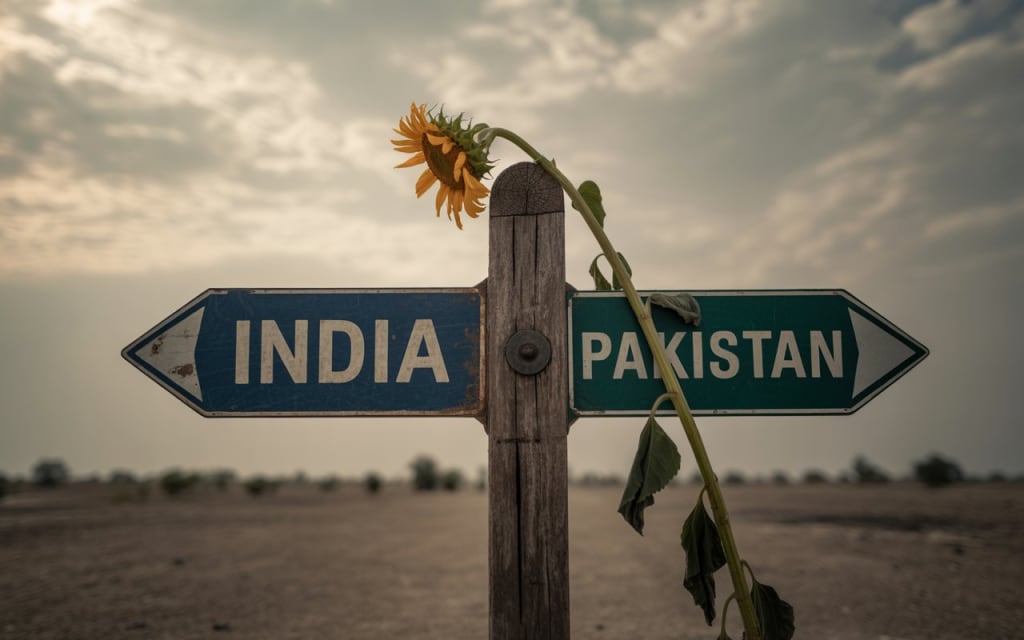
A week of high-intensity military confrontation between India and Pakistan, sparked by a deadly terrorist attack in Kashmir, has culminated in a ceasefire agreement, temporarily defusing tensions between the nuclear-armed neighbors. The conflict, which claimed over 50 lives and drew sharp international concern, now leaves a trail of military, political, and human consequences — and a fragile path toward peace.
The Spark: Attack in Kashmir
On April 22, 2025, a terrorist bombing ripped through a crowded market in Pahalgam, Jammu and Kashmir, killing 26 civilians and injuring dozens more. The Indian government quickly attributed the attack to Pakistan-based extremist group Jaish-e-Mohammed, reviving long-standing accusations that Islamabad provides safe havens for such organizations.
The incident came at a time of relative calm in the region but shattered hopes of continued stability. Indian intelligence presented what it described as "credible evidence" linking the attackers to handlers across the border. Within days, India began preparations for a military response.
India's Retaliation: Operation Sindoor
In a nationally televised address, Indian Prime Minister Narendra Modi vowed swift and decisive action. What followed was a coordinated series of airstrikes and precision drone attacks under the codename "Operation Sindoor". The targets were located in Pakistan-administered Kashmir and deep within Pakistani territory, including alleged militant training camps and military installations.
According to Indian defense sources, several strategic targets were neutralized, including key airbases, communication nodes, and logistics hubs used by militant networks. India claimed the strikes were purely retaliatory and aimed at preventing future attacks.
The Indian Air Force also deployed Rafale jets, marking their first operational use in cross-border combat. Defense Minister Rajnath Singh lauded the mission’s success, calling it "a signal that India will not tolerate terrorism with impunity."
Pakistan’s Response
Pakistan swiftly condemned the strikes as a “violation of its sovereignty” and responded with retaliatory air and missile strikes. The Pakistani military stated that its actions were “measured and proportionate” and that it had deliberately avoided civilian targets.
However, both sides reported casualties. Independent estimates place the death toll at over 50, including soldiers and civilians, with dozens more injured. Infrastructure damage on both sides of the Line of Control (LoC) was extensive, affecting military outposts, power grids, and local communities.
The Pakistan Air Force also elevated the profile of Air Vice Marshal Aurangzeb Ahmed, who led the country’s aerial response and quickly became one of the most searched public figures in Pakistan. His leadership has been hailed by state media as “instrumental in defending national dignity.”
A Region on Edge
The sudden escalation raised alarm across the globe. The United Nations, the United States, China, Russia, and the European Union issued urgent calls for restraint, fearing that the conflict could spiral into a broader war.
Nuclear capabilities on both sides only heightened those concerns. In particular, the movement of Indian short-range nuclear-capable missiles toward its western border and Pakistani reports of high alert status within its Strategic Forces Command sparked fears of potential miscalculation.
The UN Secretary-General António Guterres called the situation "perilous" and urged both sides to engage in immediate dialogue. Global markets briefly dipped amid geopolitical uncertainty, particularly in South Asia and the oil sector.
Ceasefire and Diplomacy
After nearly ten days of skirmishes, a breakthrough came through backchannel diplomacy, facilitated by Oman and the United States. On May 13, 2025, both governments issued a joint statement announcing an immediate ceasefire along the LoC and de-escalation of forward-deployed units.
“We have agreed to cease hostilities in the interest of regional peace and stability,” the statement read. It also emphasized a commitment to resume dialogue on counterterrorism, intelligence-sharing, and cross-border tensions.
Indian External Affairs Minister S. Jaishankar said the ceasefire was "a first step," and reiterated India's long-standing demand that Pakistan must dismantle all terror infrastructure on its soil. Pakistani Foreign Minister Bilawal Bhutto Zardari echoed the need for peace but emphasized “mutual respect and sovereignty” in any future talks.
Public Sentiment
The conflict reignited fierce nationalism in both countries. In India, social media trended with hashtags like #StrikeBack and #NoMoreTerror, while news channels aired round-the-clock coverage of military operations. In Pakistan, state media emphasized national unity and military preparedness, with the army receiving public support across major cities.
However, some voices within civil society and academia have criticized the rush to military action, warning that such escalations risk long-term instability and human cost.
In Pakistan, the sudden rise of Air Vice Marshal Aurangzeb Ahmed as a national hero reflects the country’s deep-rooted civil-military dynamic, where public sentiment often rallies around the armed forces during crises.
Complicating Factors: Balochistan
Adding another layer of complexity, a coalition of Balochistan independence activists declared unilateral independence from Pakistan and sought recognition from India and the United Nations. While largely symbolic and not recognized internationally, the move further inflamed nationalist rhetoric within Pakistan and drew condemnation from Islamabad.
The Indian government has not officially commented on the Balochistan declaration, but the incident is likely to be discussed in diplomatic circles in the coming weeks.
What’s Next?
Though the guns have fallen silent, the situation remains fragile. Experts warn that without substantive dialogue and structural reforms in both countries' approaches to terrorism, border control, and conflict resolution, such flare-ups could recur.
Former Indian National Security Advisor Shivshankar Menon noted, “This ceasefire is tactical, not strategic. Until we address the root causes — cross-border terrorism, Kashmir, and trust deficits — we’ll be stuck in a cycle of provocation and retaliation.”
Meanwhile, humanitarian organizations are calling for assistance to affected civilians, particularly those displaced or injured in border regions.
Conclusion
The latest India-Pakistan conflict serves as a stark reminder of how quickly historical grievances can escalate into open warfare in South Asia. While the ceasefire provides a welcome pause, it also underscores the urgent need for renewed diplomacy, responsible leadership, and long-term peacebuilding efforts.
The world watches closely, hoping that this latest chapter ends not just in a fragile truce — but in a sustained commitment to peace.
About the Creator
iftikhar khan
Welcome! I'm a passionate storyteller dedicated to sharing thought-provoking ideas, personal insights, and creative narratives that inspire and connect. Whether you're here for deep dives into life's complexities or simply lookiing
Keep reading
More stories from iftikhar khan and writers in History and other communities.
Who am i
Not Your Typical Self-Reflection Piece Let’s be honest—when someone starts with “Who am I?” your brain either braces for a soul-baring monologue or zones out entirely. We’ve heard it in college essays, late-night journal entries, and social media captions. It’s been romanticized by poets and overused by influencers. But here’s the truth: this question keeps haunting us because there’s never just one answer.
By iftikhar khan9 months ago in Art
Can the United Nations Survive a Divided World?
Can the United Nations Survive a Divided World? The United Nations was born from the ashes of World War II, at a time when the world agreed on one powerful idea: global problems require global solutions. For decades, the UN served as a meeting ground for rivals, a coordinator of humanitarian aid, and a symbol of international cooperation. Today, however, the organization stands at a crossroads. A more divided, competitive, and unstable world is forcing a serious question—what will the UN become in the future?
By Wings of Time 5 days ago in History
Martin Luther King Jr.: A Black Day in America
On April 4, 1968, the world lost one of its most powerful voices for justice and equality. Martin Luther King Jr., the man whose words had ignited hope in millions, was assassinated on the balcony of the Lorraine Motel in Memphis, Tennessee. That day is remembered as a black day in American history—not only for the loss of a great leader but for the reflection it forced the nation to confront about its values, its divisions, and the long road still ahead for civil rights. Martin Luther King Jr. had spent his life advocating for nonviolent resistance, inspired by the teachings of Mahatma Gandhi. From the Montgomery Bus Boycott in 1955 to the historic March on Washington in 1963, where he delivered his iconic “I Have a Dream” speech, King’s words and actions challenged a society deeply entrenched in racial segregation and discrimination. He had become a symbol of hope, a figure who reminded Americans that justice was not a privilege but a right. By 1968, King was focused on addressing broader issues beyond racial inequality. He had shifted his attention to economic justice, poverty, and the Vietnam War, recognizing that systemic oppression was not limited to race alone. In Memphis, he stood with striking sanitation workers demanding better wages and safer working conditions. He knew that the struggle for dignity and fairness extended to every corner of society. But tensions in the country were high. America was a nation divided. Cities were already experiencing unrest, the war in Vietnam was escalating, and extremist groups actively opposed the civil rights movement. King had received countless death threats, yet he remained steadfast, continuing his mission with courage that inspired millions. His presence in Memphis was meant to support the marginalized, but it would tragically mark the final chapter of his life. On that fateful evening, King stepped onto the balcony of his room at the Lorraine Motel. The sun was beginning to set, casting a warm glow over the streets of Memphis. It was a moment of calm, yet danger lurked unseen. A single gunshot rang out, piercing the air and the hearts of those who had looked to him for guidance. King collapsed, fatally wounded, and chaos erupted. News of his assassination spread like wildfire, leaving communities across America in shock and grief. Television networks interrupted regular programming; newspapers ran bold headlines; the streets filled with sorrow, anger, and disbelief. People who had never met him personally felt the sting of loss as if a father, a teacher, or a friend had been taken from them. For many, the dream that King had spoken of—the dream of equality, justice, and brotherhood—suddenly seemed fragile and distant. The immediate aftermath of King’s death was a period of turmoil. Cities erupted in riots, not out of mindless violence, but as an expression of pent-up frustration and despair. Washington D.C., Chicago, Baltimore, and dozens of other cities experienced burning buildings, looting, and clashes with law enforcement. The country mourned, yet it also faced an urgent question: how could a society that claimed freedom and equality fail so tragically to protect one of its most peaceful advocates? Despite the violence, Martin Luther King Jr.’s legacy endured and even grew stronger in the face of tragedy. His death forced Americans to confront the reality that the fight for civil rights was far from over. Congress passed the Civil Rights Act of 1968, also known as the Fair Housing Act, just days after his assassination, banning discrimination in housing—a testament to the momentum King had built. His dream did not die with him; it lived on in the countless people who continued to march, protest, and speak out against injustice. King’s life and death also revealed the fragility of human progress. The black day of April 4th was a stark reminder that the struggle for justice often comes with immense sacrifice. It highlighted the courage required to challenge deeply rooted systems of oppression and the persistent resistance faced by those who seek to change society for the better. Yet, even in mourning, his death inspired a renewed commitment among civil rights activists, politicians, and ordinary citizens to carry his vision forward. In the years following his assassination, memorials and tributes honored King’s life. Streets were renamed, schools dedicated, and eventually, the Martin Luther King Jr. National Memorial was built in Washington, D.C. On every January 15th, his birthday is commemorated as a national holiday, not merely to remember his death, but to celebrate his contributions and the enduring principles he fought for: equality, justice, and nonviolence. But the black day of April 4th also serves as a cautionary tale. It reminds the world that progress is never guaranteed, and the cost of complacency is high. King’s death symbolized the very real dangers that come with standing up for truth and justice in a divided society. It forced Americans to reflect on their own values and actions, and on the work still required to turn King’s dream into a reality. Martin Luther King Jr. once said, “The arc of the moral universe is long, but it bends toward justice.” His assassination did not halt that arc; it strengthened the resolve of those determined to see it through. Today, when people around the world remember that black day in America, they do not remember only the sorrow—they remember the courage, the vision, and the unyielding spirit of a man who believed in a better world and gave everything to achieve it. King’s life and untimely death continue to inspire generations to question injustice, fight inequality, and act with compassion. Though April 4, 1968, was a day of darkness, it ultimately illuminated the path forward, reminding humanity that even in tragedy, hope, courage, and change are possible. The legacy of Martin Luther King Jr. is a testament to the power of one person to awaken a nation, to challenge hatred with love, and to transform despair into a movement for justice. The black day in America is remembered not merely as a day of loss, but as a turning point—a day when the dream was tested, yet proved resilient, enduring in the hearts of those who dare to believe in equality, peace, and freedom for all.
By The best writer a day ago in History


Comments
There are no comments for this story
Be the first to respond and start the conversation.