
Independence Day of Pakistan 14 August 1947
From the dream of a homeland to the dawn of freedom, the journey of Pakistan’s independence is a tale of vision, sacrifice, and resilience.

Introduction
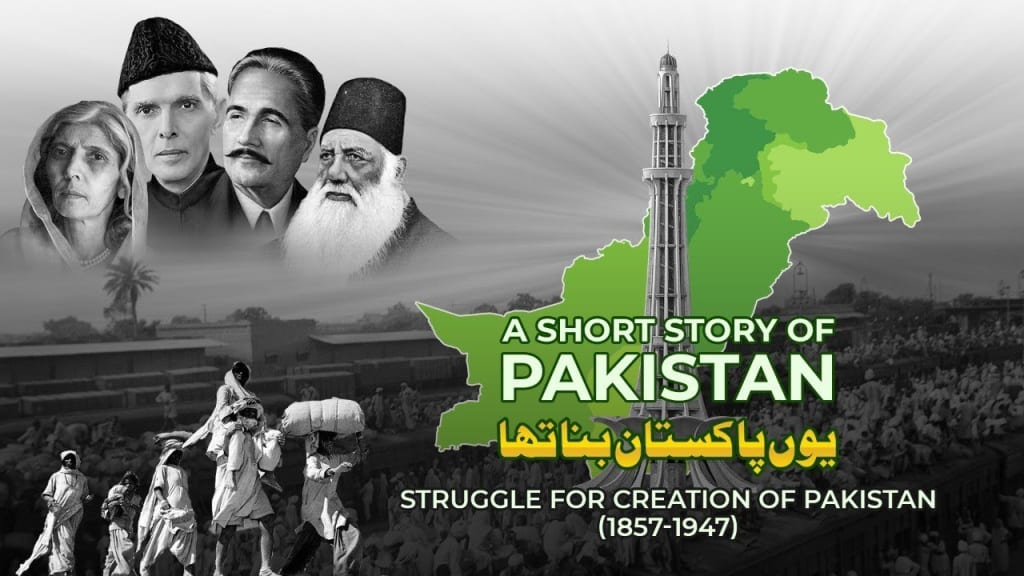
On August 14, 1947, the world witnessed the birth of a new nation—Pakistan. This day marked the culmination of decades of struggle, vision, and sacrifice. It was a day when the dreams of millions of Muslims in the Indian subcontinent were realized, leading to the creation of a homeland where they could live according to their cultural, religious, and social values.
________________________________________
Chapter 1: The Seeds of a Nation
The idea of a separate Muslim state began to take root in the early 20th century. The decline of the Mughal Empire and the subsequent British colonization led to significant changes in the social and political landscape of India. Muslims, who had once been the dominant political force, found themselves marginalized in the new British-Indian polity.
In response to this, leaders like Sir Syed Ahmed Khan emphasized the need for Muslims to modernize and align themselves with the British to secure their rights. However, as the 20th century progressed, many Muslims began to feel that their distinct identity and interests were not being adequately represented in a predominantly Hindu-majority India.
The formation of the All-India Muslim League in 1906 provided a political platform for Muslims to voice their concerns. Over time, the League evolved from seeking safeguards for Muslims within a united India to demanding a separate nation-state.
________________________________________
Chapter 2: The Vision of Allama Iqbal
The philosophical foundation for a separate Muslim state was laid by Allama Muhammad Iqbal. In his 1930 address at Allahabad, Iqbal articulated the vision of an independent Muslim state in the north-western regions of India. He believed that Muslims, due to their distinct religious, cultural, and social practices, needed a separate homeland to preserve their identity.
Iqbal's vision resonated with many Muslims, and his ideas became a rallying point for the demand for Pakistan. His poetry and philosophy inspired a generation of Muslims to strive for a separate nation.
________________________________________
Chapter 3: The Lahore Resolution
The turning point in the demand for Pakistan came with the Lahore Resolution of March 23, 1940. The All-India Muslim League, under the leadership of Muhammad Ali Jinnah, formally demanded separate states for Muslims in the north-western and eastern zones of India.
The resolution marked a shift from seeking safeguards for Muslims within a united India to demanding full autonomy and eventually, independence. It was a bold declaration that set the course for the creation of Pakistan.
________________________________________
Chapter 4: The Struggle for Independence
Following the Lahore Resolution, the Muslim League intensified its efforts to achieve its goal. The Quit India Movement launched by the Indian National Congress in 1942 provided an opportunity for the Muslim League to assert its position. While the Congress called for the British to leave India, the Muslim League focused on the creation of a separate Muslim state.
The political landscape became increasingly polarized. The British, facing pressure from both the Congress and the Muslim League, recognized the need to address the demands of both communities.
________________________________________
Chapter 5: The Mountbatten Plan
In 1947, the British government, under the leadership of Prime Minister Clement Attlee, decided to end British rule in India. Lord Louis Mountbatten was appointed as the last Viceroy of India to oversee the transition.
Mountbatten, recognizing the escalating communal tensions, proposed a plan to partition British India into two independent dominions: India and Pakistan. The plan was accepted by both the Congress and the Muslim League.
The Indian Independence Act of 1947 was passed by the British Parliament, setting the date for independence as August 15, 1947. However, Pakistan chose to celebrate its independence on August 14, 1947, as the transfer of power took place during the day in Karachi, while India’s transfer occurred at midnight in New Delhi.
________________________________________
Chapter 6: The Birth of Pakistan
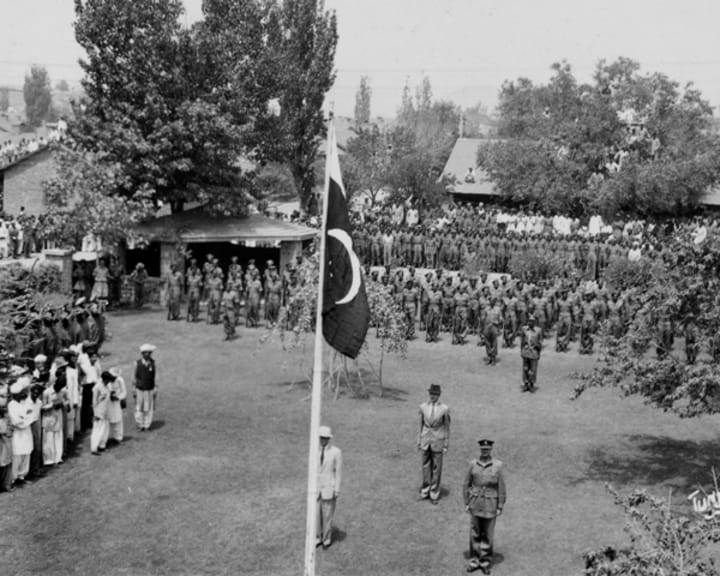
On August 14, 1947, Pakistan emerged as a sovereign nation. The first Governor-General, Muhammad Ali Jinnah, took the oath of office in Karachi. The creation of Pakistan was a momentous event, fulfilling the aspirations of millions of Muslims who had longed for a homeland where they could practice their faith and culture freely.
The day was marked by celebrations and ceremonies across the new nation. However, the joy was tempered by the challenges that lay ahead, including the massive task of nation-building and the scars left by the partition.
________________________________________
Chapter 7: The Tragedy of Partition
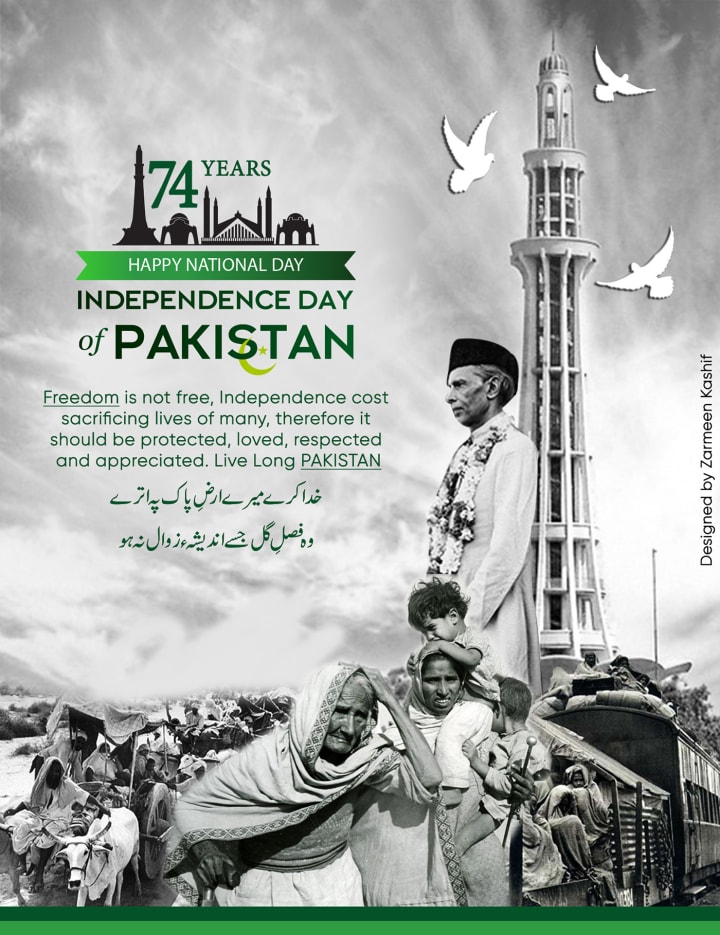
The partition of British India led to one of the largest mass migrations in human history. Millions of Muslims moved to Pakistan, while Hindus and Sikhs migrated to India. The process was accompanied by widespread violence, communal riots, and the loss of countless lives.
The newly drawn borders divided families and communities, leaving deep emotional and psychological scars. The legacy of partition continues to affect relations between India and Pakistan to this day.
________________________________________
Chapter 8: The Early Years of Pakistan
In the years following independence, Pakistan faced numerous challenges. The country had to establish its government, create institutions, and address the needs of a diverse population. The leadership of Muhammad Ali Jinnah was instrumental during this period, providing direction and stability.
However, Jinnah's untimely death in 1948 left a leadership vacuum. Successive governments struggled to maintain the vision of a democratic and inclusive Pakistan, leading to political instability and challenges in governance.
________________________________________
Chapter 9: Celebrating Independence
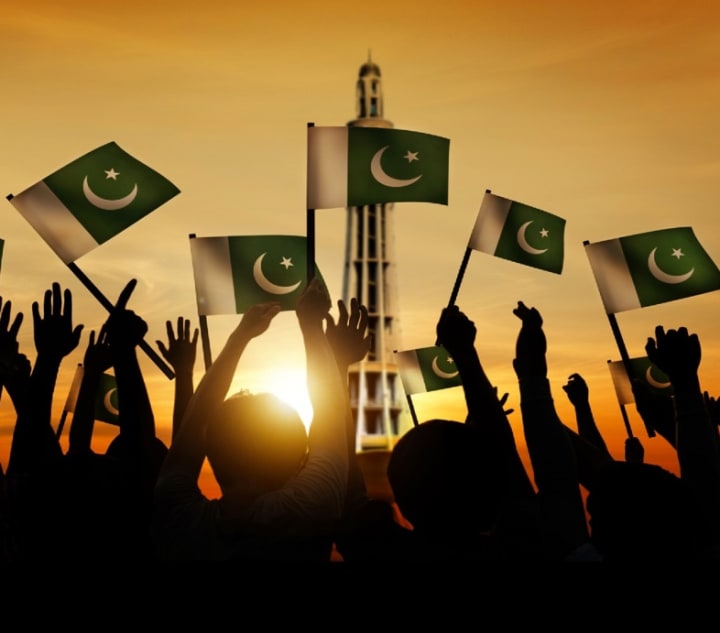
Despite the challenges, Pakistanis have always celebrated their Independence Day with pride and enthusiasm. August 14 is marked by flag-hoisting ceremonies, parades, cultural events, and patriotic displays. The day serves as a reminder of the sacrifices made for the creation of the nation and the ongoing journey towards progress and unity.
________________________________________
Conclusion
The story of Pakistan's independence is one of vision, struggle, and resilience. From the seeds planted by thinkers like Sir Syed Ahmed Khan and Allama Iqbal to the leadership of Muhammad Ali Jinnah and the sacrifices of countless individuals, the creation of Pakistan was a monumental achievement.
As Pakistan continues to evolve, the lessons of its past serve as a guide for building a prosperous and harmonious future. The celebration of August 14 is not just a commemoration of the past but a reaffirmation of the nation's commitment to the ideals of freedom, justice, and unity.
LONGLIVE PAKISTAN
PAKISTAN ZINDABAD
--------------------------------
Thank you for reading
Regards: Fazal Hadi
About the Creator
Fazal Hadi
Hello, I’m Fazal Hadi, a motivational storyteller who writes honest, human stories that inspire growth, hope, and inner strength.
Keep reading
More stories from Fazal Hadi and writers in History and other communities.
Dear Future Me, Please Remember This
Dear Future Me, I hope you're smiling as you read this. Not the fake kind you used to wear when things were falling apart, but the kind that touches your eyes and reaches your heart. I hope you’ve made it to a place that feels peaceful. Not perfect, but peaceful — there’s a difference.
By Fazal Hadi8 months ago in History
Savoy Hotel – Mussoorie: The Colonial Luxury Hotel Where an Unsolved Murder Still Walks the Corridors
The First Night: Beauty Wrapped in Silence Mussoorie looks peaceful from a distance. Pine trees sway gently, clouds roll like slow-moving waves, and the hill air smells of rain and old earth. But as evening falls, the silence becomes heavier—almost watchful.
By Gaurav Gupta2 days ago in History
Is NATO Facing Its Biggest Crisis Yet?
Is NATO Facing Its Biggest Crisis Yet? For more than seventy years, NATO has been one of the strongest military alliances in the world. Formed after World War II, it was designed to protect its members through collective defense. An attack on one was considered an attack on all. For decades, this principle helped maintain stability in Europe and beyond. But today, NATO is facing one of the most challenging moments in its history.
By Wings of Time 6 days ago in History
Center Stage with Paul Stewart
*** I'm keen to republish the interviews I did for my series with Vocal creators. It's been a few years and I thought it might be nice to revisit these wonderful conversations. I'll be releasing them one at a time for a few weeks/months.
By Heather Hubler3 days ago in Interview




Comments
There are no comments for this story
Be the first to respond and start the conversation.