
Imran Khan: The Revolutionary Leader Transforming Pakistan’s Future with Visionary Leadership
From Cricket Star to Prime Minister: How Imran Khan’s Leadership is Redefining Pakistan’s Politics and Inspiring Global Change
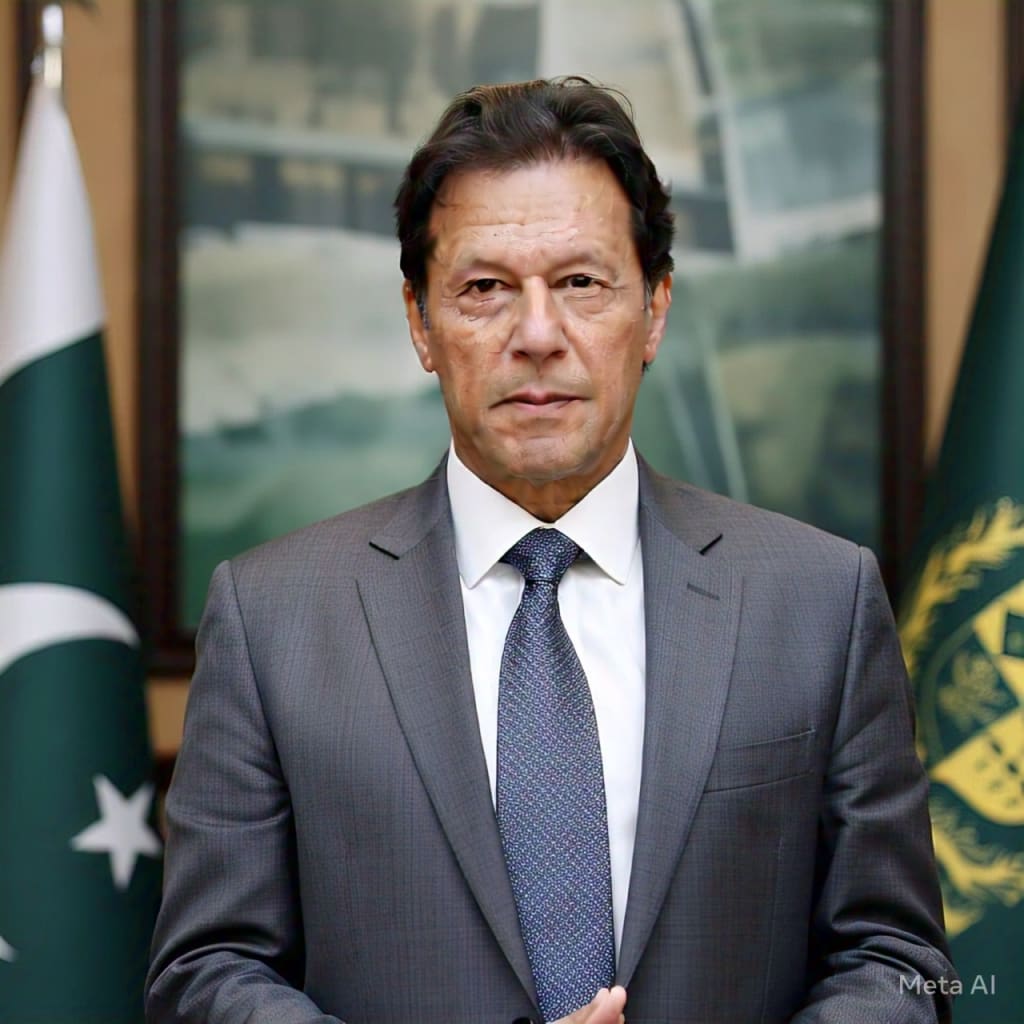
Introduction:"Imran Khan: The Leader Who’s Revolutionizing Pakistan and Inspiring the World"
Imran Khan, the former cricket superstar turned political leader, has become one of the most influential figures in Pakistan’s contemporary political landscape. Known for his charisma, bold vision, and resilience, Khan's transformation from a global sports icon to the 22nd Prime Minister of Pakistan has captured the attention of millions both in Pakistan and abroad. His journey reflects a compelling narrative of ambition, leadership, and perseverance, where Khan not only challenged the political establishment but also inspired a generation to embrace change.
This article will explore the remarkable rise of Imran Khan, from his cricketing achievements to his leadership of the Pakistan Tehreek-e-Insaf (PTI), his tenure as the Prime Minister, and his lasting impact on the socio-political fabric of Pakistan.
---
Imran Khan: A Cricketing Legend
Imran Khan’s name was synonymous with cricket long before he entered the world of politics. Born on October 5, 1952, in Lahore, Pakistan, Imran Khan became a household name not only in Pakistan but around the world. His cricketing career spanned two decades, beginning in the early 1970s and ending with his World Cup victory in 1992.
As captain of the Pakistan national cricket team, Khan led his team to an historic win in the 1992 Cricket World Cup, cementing his legacy as one of the greatest cricket captains of all time. His leadership on the field was marked by determination, strategic thinking, and an unwavering commitment to his team’s success. Khan’s skill as an all-rounder and his ability to inspire and unite his team set him apart as a player and captain.
Following his retirement from cricket in 1992, Khan turned his attention to philanthropy and politics, eventually founding the Shaukat Khanum Memorial Cancer Hospital & Research Centre, a testament to his commitment to serving the people of Pakistan. But it wasn’t until later that his political ambitions truly took shape.
---
Imran Khan's Political Awakening
Imran Khan’s entry into politics began in the mid-1990s. After years of dedicating himself to charity work, he founded his own political party, Pakistan Tehreek-e-Insaf (PTI), in 1996. Initially, PTI struggled to make a significant impact on Pakistan's political scene, as Khan's idealistic vision faced resistance from established political powers. Despite this, his reputation as an honest and outspoken leader began to resonate with Pakistanis who were disillusioned by the corruption and inefficiency of the country’s political elites.
The key to Khan's political appeal was his promise to reform Pakistan’s political system and rid the nation of corruption, nepotism, and mismanagement. His slogan, "Naya Pakistan" (New Pakistan), captured the imagination of a population yearning for change and better governance. Over the years, Khan’s political philosophy evolved, but the central tenet of his campaign remained constant: Pakistan needed leadership that was honest, transparent, and focused on national development.
Imran Khan’s populist appeal grew stronger, and his message of change began to resonate across Pakistan, especially among the youth, the middle class, and the working class. His challenge to the entrenched political dynasties—such as the Pakistan Peoples Party (PPP) and the Pakistan Muslim League (PML-N)—appealed to millions who had lost faith in the traditional political establishment.
---
Imran Khan’s Path to Power
Khan’s breakthrough came in the 2013 general elections, where PTI emerged as the second-largest party in terms of popular vote. While PTI did not win the majority in the National Assembly, the election marked a major turning point in Khan’s political career, as he became a key player in Pakistan’s political scene.
Imran Khan’s political campaign centered around a clear message: Pakistan needed a government that would deliver justice, improve governance, reduce poverty, and ensure that the country's wealth was more equitably distributed. His promises resonated with voters who were tired of the status quo.
In the 2018 general elections, Imran Khan’s PTI emerged victorious, and Khan became Pakistan’s 22nd Prime Minister. His success was seen as a triumph for the masses, as his party managed to break the decades-old dominance of the PPP and PML-N. Khan’s victory was a reflection of his ability to tap into the frustrations of ordinary Pakistanis and his message of hope and reform.
---
Imran Khan’s Prime Ministership: A Vision for a New Pakistan
Once in office, Khan faced a host of challenges, including an ailing economy, rising inflation, and security concerns. However, his leadership style and determination to bring about change did not falter. Khan focused on three key areas during his tenure as Prime Minister: economic reform, social justice, and anti-corruption measures.
1. Economic Reform: Khan inherited a fragile economy, with high inflation, a growing fiscal deficit, and a debt crisis. His government negotiated a bailout package with the International Monetary Fund (IMF) and took measures to stabilize the economy. Khan's administration also sought to improve Pakistan's ease of doing business, reduce the trade deficit, and promote investment in key sectors such as agriculture and manufacturing.
2. Social Justice: Imran Khan made it a priority to uplift the marginalized sections of society. His government launched initiatives like the Ehsaas Program, a welfare program designed to provide financial assistance to low-income families. Khan’s government also focused on improving Pakistan's healthcare and education systems, two areas in dire need of reform.
3. Anti-Corruption: One of the central pillars of Khan’s campaign was his promise to eradicate corruption. He often emphasized that Pakistan’s political elites were responsible for the country’s stagnation, and his administration pursued an aggressive anti-corruption agenda. His government sought to strengthen institutions such as the National Accountability Bureau (NAB), aiming to hold corrupt officials accountable.
However, Khan’s time in office was not without criticism. His government faced challenges in balancing the economy, curbing inflation, and addressing issues related to governance. The opposition parties frequently accused Khan of being unable to deliver on his promises, and his reliance on military support also drew scrutiny.
---
Imran Khan’s Global Impact and Foreign Policy
Imran Khan's impact extends beyond Pakistan’s borders. His leadership style and position on international affairs have positioned him as a strong voice on global issues, particularly in the Muslim world. Khan’s foreign policy is centered around promoting peace and stability in South Asia and fostering closer relations with neighboring countries, including India, Afghanistan, and China.
Khan’s stance on Kashmir has been particularly prominent in his foreign policy. He has consistently raised the issue of Kashmir in international forums and called for a peaceful resolution to the longstanding conflict between India and Pakistan. His government also strengthened ties with China through the China-Pakistan Economic Corridor (CPEC), a multi-billion-dollar infrastructure project aimed at enhancing regional connectivity and economic growth.
In addition, Khan’s advocacy for climate change and sustainable development has made him a significant figure in global environmental discussions. He has launched initiatives to combat deforestation in Pakistan and promote green energy solutions, gaining recognition on the international stage for his environmental leadership.
---
Challenges and Legacy
Despite the challenges, Imran Khan’s legacy remains largely defined by his commitment to political and social reform, his focus on poverty alleviation, and his unwavering stance on corruption. As Prime Minister, Khan faced an uphill battle in transforming Pakistan’s political and economic landscape, but his popularity among the people remains high, particularly among those who believe in his vision for a "New Pakistan."
The road ahead for Imran Khan is filled with both opportunities and challenges. His ability to inspire change, despite the odds, continues to be a hallmark of his leadership style. Whether or not Khan can fully realize his vision for Pakistan remains to be seen, but his impact on the country’s political culture will undoubtedly be felt for generations to come.
---
Conclusion: Imran Khan’s Enduring Influence
Imran Khan is not just a political leader; he is a symbol of hope, perseverance, and change for many in Pakistan. His journey from cricket star to Prime Minister reflects the power of leadership that transcends borders and sports. Whether in the cricket stadium or the halls of the National Assembly, Khan has proven that with determination and vision, anything is possible. His legacy will be defined by how he shapes the future of Pakistan and whether he can truly deliver the "Naya Pakistan" that he promised to the people.
As the world watches, Imran Khan's story continues to unfold, and his place in history as one of Pakistan’s most transformative leaders seems secure.
About the Creator
Who is Bashir Zeb, the head of the banned organization BLA?
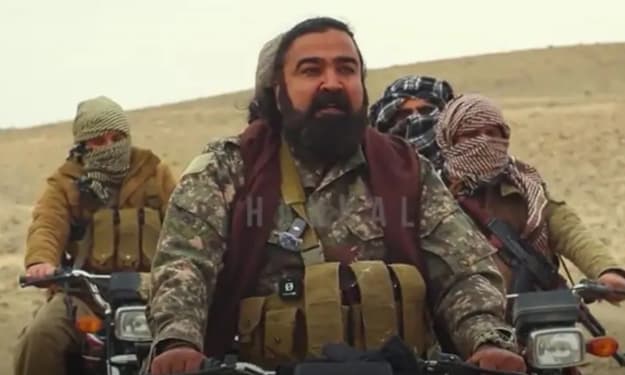
Before the attacks carried out on several cities including Quetta, the capital of Balochistan, the banned separatist organization Baloch Liberation Army (BLA) had released a video. In this picture , armed men can be seen riding three motorcycles at an unidentified deserted location. Only one of the six individuals’ face is visible. According to the banned organization, this person was the head of the BLA, Bashir Zeb, and it was also claimed that Bashir Zeb personally took part in these attacks. The BLA did not clarify where the video was recorded; however, Balochistan Chief Minister Mir Sarfraz Bugti claimed that the video was filmed in Afghanistan. It should be noted that last Saturday armed militants targeted various installations in Quetta, Mastung, Kalat, Nushki, Kharan, Dalbandin, Turbat, Tump, Gwadar, Pasni and several other areas. According to the provincial chief minister, a total of 31 civilians and 17 security personnel were killed in these attacks, while the government claimed that 145 militants were also killed. The banned BLA has been active in Balochistan for more than a decade, but in recent years the scope and intensity of attacks by the organization and its subsidiary group Majeed Brigade have increased. The BLA has been declared a banned organization by both Pakistan and the United States. It is worth recalling that since the attack on the Chinese Consulate in Karachi in November 2018, Bashir Zeb has been wanted by the Government of Pakistan in numerous cases involving attacks carried out by the BLA. These include the planning of the 2020 attack on the Karachi Stock Exchange, the planning of the female suicide bombing targeting Chinese teachers at Karachi University, and the attack on a convoy of Chinese engineers near Karachi Airport. In the airport attack case, a court has already declared him an absconder. However, there was a time when Bashir Zeb was active in student politics on the streets of Quetta. We spoke to journalists and former and current security officials, and also reviewed Bashir Zeb’s own writings and interviews given as chairman of BSO Azad, in order to understand who Bashir Zeb is and how he became part of this organization.
By Hashim Khan 8 days ago in History
Evolution Of Human
Human Evolution: The Long Journey from Primate Ancestors to Modern Humans Human evolution is one of the most fascinating and complex stories in the history of life on Earth. It explains how modern humans, Homo sapiens, emerged through millions of years of biological, environmental, and cultural change. This journey is not a straight line of progress but a branching tree filled with experiments, adaptations, extinctions, and remarkable survival strategies. By studying fossils, genetics, archaeology, and comparative anatomy, scientists have pieced together a detailed narrative of how humans evolved physically, cognitively, and socially.
By Ibrahim Shah 5 days ago in History
📢 Raise Your Voice Thread: 02/05/2026
Our “Raise Your Voice Threads” are hosted most alternating Thursdays at 12PM ET to offer creators more avenues to uncover exceptional stories on Vocal. As we are continuously searching for fresh creators and inspiring stories, this thread provides an opportunity to exchange and discuss the stories that have moved and motivated us on Vocal.
By Raise Your Voice by Vocal6 days ago in Resources



Comments
There are no comments for this story
Be the first to respond and start the conversation.