
Imran Khan
From Cricket Legend to Political Firebrand

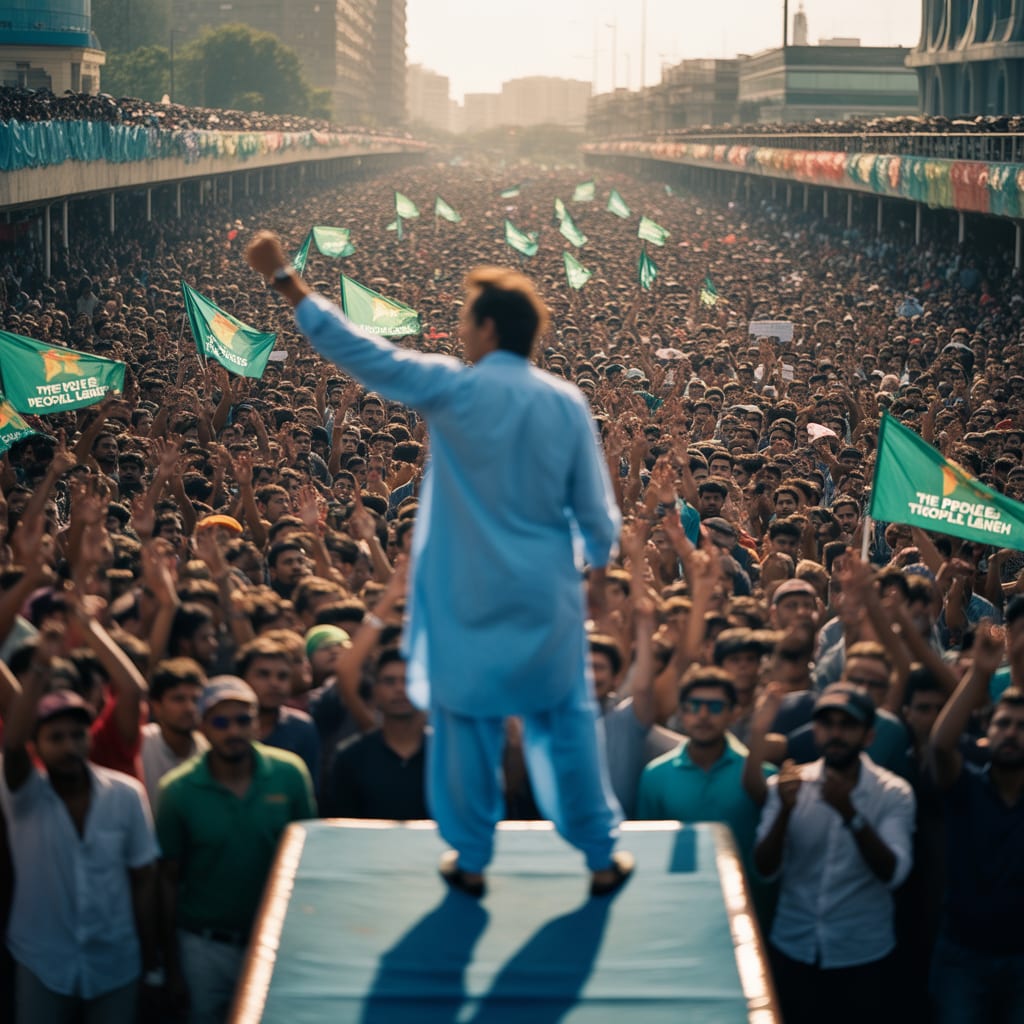
A Hero’s Dual Legacy
Imran Khan is one of the most transformative figures in Pakistan’s history—a man who first captured the nation’s heart as a charismatic cricket captain and later reshaped its political landscape as a fiery reformist leader. His journey from the cricket pitch to the corridors of power is a tale of ambition, defiance, and an unyielding belief in his destiny.
This is the story of how a sports icon became a political insurgent, challenging entrenched powers, surviving assassination attempts, enduring imprisonment, and still emerging as the most influential—and polarizing—leader in modern Pakistan.
Part 1: The Making of a Cricket Legend
Early Days: Privilege and Pressure
Born in 1952 into an affluent Pashtun family in Lahore, Imran Ahmed Khan Niazi was educated at Aitchison College and later at Oxford University. Though his upbringing was privileged, his early cricketing career was far from smooth. Critics dismissed him as a playboy—more interested in London’s nightlife than the game.
The Rise of "Kaptaan"
Everything changed in the 1980s. Imran transformed from a talented but inconsistent player into one of the world’s finest all-rounders. His lethal reverse swing, aggressive captaincy, and unshakable confidence made Pakistan a formidable force.
But his defining moment came in 1992, when he led an underdog Pakistani team to its first Cricket World Cup victory. Injured and aging, he inspired his squad with the now-legendary phrase: "Fight like cornered tigers." That win didn’t just make him a national hero—it cemented his image as a leader who thrived against impossible odds.
Post-Cricket: Philanthropy and a Growing Political Consciousness
After retiring, Imran could have settled into a life of celebrity. Instead, he built Shaukat Khanum Memorial Cancer Hospital in memory of his mother, proving his ability to mobilize resources for a cause.
But Pakistan’s rampant corruption and political decay troubled him. The same man who once partied with Mick Jagger and dated British socialites began speaking like a revolutionary.
Part 2: The Reluctant Politician
Entering the Arena: The Birth of PTI
In 1996, Imran founded Pakistan Tehreek-e-Insaf (PTI), or "Movement for Justice." At first, he was mocked—a political novice with no machinery, no allies, and no chance. For years, PTI remained marginal, winning no seats in 1997 and just one in 2002.
But Imran’s persistence was underestimated. He tapped into the fury of Pakistan’s youth, who were disillusioned with the dynastic rule of the Sharifs and Bhuttos. His message? "Corruption is Pakistan’s biggest enemy."
The Game-Changer: 2011-2013
Two events supercharged PTI’s rise:
The 2011 Taliban attack on Malala Yousafzai—Imran positioned himself as a voice for peace, advocating dialogue with militants (a stance that later drew criticism).
The 2013 elections—PTI surged, becoming the second-largest party in Punjab. Though he alleged vote-rigging, his momentum was undeniable.
2018: Prime Minister at Last
After years of struggle, Imran Khan became Pakistan’s 22nd Prime Minister in 2018. Supporters saw it as destiny—the cricket hero now leading the nation. Critics called it a "military-backed" victory, accusing the establishment of sidelining Nawaz Sharif to install Imran.
Part 3: The Firebrand in Power
Reforms and Controversies
Imran promised a "Naya Pakistan"—a corruption-free welfare state. His government launched:
Ehsaas Program (poverty relief)
Health cards for free medical treatment
Anti-corruption drives (though opponents called them politically motivated)
But his tenure was rocky:
Economic struggles: Inflation soared, the rupee plummeted, and IMF bailouts deepened public frustration.
Foreign policy shifts: He clashed with the U.S., praised China’s Belt and Road, and positioned Pakistan as a mediator in Afghanistan.
Media crackdowns: Journalists critical of PTI faced pressure, raising concerns over press freedom.
The Fall: No-Confidence Motion & Aftermath
In April 2022, after losing military support, Imran was ousted in a no-confidence vote. He refused to accept defeat, claiming a "U.S.-backed conspiracy"—a narrative that electrified his base.
What followed was unprecedented resistance:
Mass protests (Azadi March)
Assassination attempt (November 2022)
Arrests and legal battles (Toshakhana case, cipher case)
Yet, even from jail, Imran dominated headlines. His party won the most seats in 2024’s elections (though denied power)—proving his movement was far from over.
Part 4: The Legacy—Hero or Demagogue?
Why Imran Khan Still Matters
He broke the two-party system, proving a third force could rise.
He mobilized Pakistan’s youth like no leader before.
He exposed the military’s political role, even as he once benefited from it.
The Polarizing Figure
To supporters, he’s a savior fighting a corrupt elite. To critics, he’s a populist who failed governance and used divisive rhetoric.
But one thing is undeniable: Imran Khan is Pakistan’s most resilient political force—a man who treats politics like cricket, always believing he can stage a comeback.
Conclusion: The Unfinished Innings
Imran Khan’s story isn’t over. Whether he returns to power or remains a jailed opposition leader, his impact is irreversible. He redefined Pakistani politics, proving that legends aren’t just born on the field—they’re forged in the fires of revolution.
From the cricket pitch to the political battlefield, Imran Khan remains—Pakistan’s ultimate fighter.
About the Creator
Ainullah sazo
Ainullah, an MSC graduate in Geography and Regional Planning, researches Earth’s systems, land behavior, and environmental risks. Passionate about science, he creates clear, informative content to raise awareness about geological changes.,,
Keep reading
More stories from Ainullah sazo and writers in History and other communities.
The Last Lynx of Sindh
the silent deserts of Sindh, where the evening sun melts into golden dunes and the wind carries stories older than time, there lived a mysterious wild cat — the red lynx of Sindh. Locals whispered its name with respect, fear, and fascination. Some called it “Sindhi Lainks,” others knew it as the “Red Ghost of the Desert.” Sightings were rare… so rare that people began to believe it no longer existed.
By Ainullah sazo3 months ago in History
World on Edge: Rising Conflicts and the Fear of a Wider War
World on Edge: Rising Conflicts and the Fear of a Wider War The current global situation has become increasingly tense as several conflicts and political crises continue to develop at the same time. Many analysts believe the world is entering one of the most unstable periods since the end of the Cold War. Wars, military buildups, economic pressure, and political rivalries are creating a fragile global environment where even a small incident could trigger a much larger confrontation.
By Wings of Time 4 days ago in History



Comments
There are no comments for this story
Be the first to respond and start the conversation.