
How to Survive in Sri Lanka if You Are a Child in the 19th century?
Ceylon Traditions, Chapter 1. Based on The History of Ceylon by Robert Fellowes
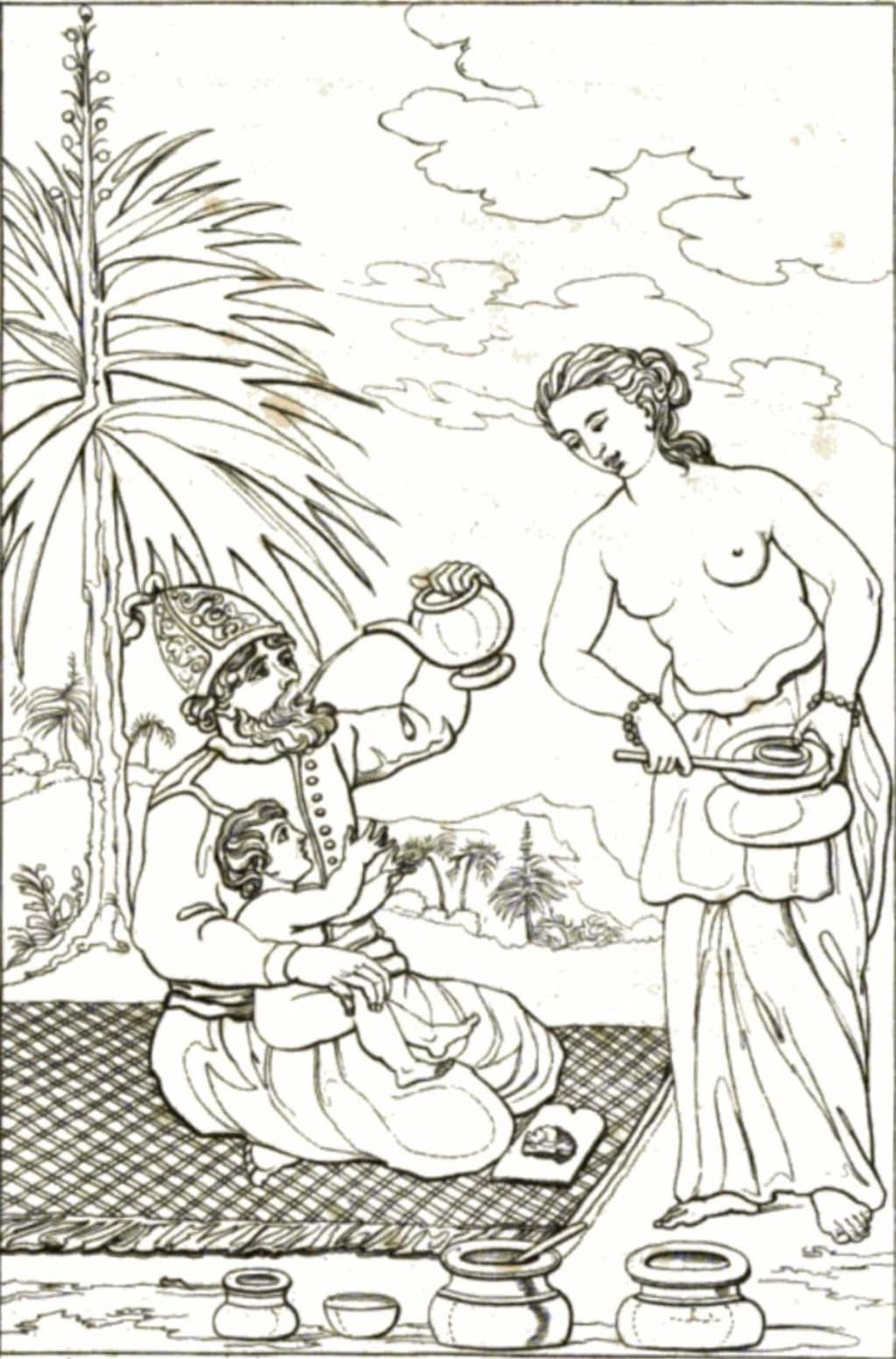
So, you are a child in Sri Lanka. Imagine this: your fate is decided before you even take your first breath. If the stars are in your favor, you will live. If not—well, let’s just say your future is cut short before it even begins. But if you do survive, your life is anything but ordinary! You might have two fathers, sleep in any house you like, and even wake up in the middle of the night to chew betel and smoke tobacco!
Birth and Astrology: Life or Death Decision
The moment you are born, an astrologer determines whether you are lucky or doomed. Your parents don’t decide your future—the planets do. As recorded by Robert Fellowes in The History of Ceylon (1817):
They have no midwives, but the neighbouring good women come in and do that office. As soon as the child is born, the father, or some friend, apply themselves to an astrologer, to enquire whether the child be born in a prosperous planet, and a good hour, or in an evil. If it be found to be in an evil, they presently destroy it, either by starving it, letting it lie and die, or by drowning it, putting its head into a vessel of water, or by burying it alive, or else by giving it to some body of the same degree with themselves, who often will take such children, and bring them up by hand with rice and milk; for they say, the child will be unhappy to the parents, but to none else. We have asked them why they will deal so with their poor infants, that came out of their bowels. They will indeed have a kind of regret and trouble at it; but they will say withal, 'Why should I bring up a devil in my house?' For they believe, a child born in an ill hour, will prove a plague and vexation to his parents, by his disobedience and untowardliness.
If you are the firstborn, you are likely safe—your parents treasure you. But if you are just another mouth to feed, an ‘unlucky’ birth might be your end. And here’s the strangest part: this is not a crime. No law in the land punishes a parent for ending an ‘unlucky’ child’s life.
But it is very rare a first-born is served so; him they love and make much of: but, when they come to have many, then usual it is, by the pretence of the child's being born under an unlucky planet, to kill him. And this is reputed no fault, and no law of the land takes cognizance of it. In their infancy they have names, whereby one may be hair called and distinguished from the other.
Two Fathers, One Mother—And That’s Normal!
In most societies, a child has one father. In Ceylon, you might have two! Imagine calling two men “father” and both of them minding as yours:
In this country, each man, even the greatest, hath but one wife; but a woman often has two husbands: for it is lawful and common with them for two brothers to keep house together with one wife, and the children do acknowledge and call both fathers.
It’s a practical system—more men to provide for the household, and fewer disputes over inheritance. And no one sees it as strange!
Women, Hospitality, and Unexpected Customs
Ceylonese society had unique views on marriage and relationships. Some customs might leave modern readers speechle ss:
In some cases, the men will permit their wives and daughters to lie with other men and that is, when intimate friends, or great men chance to lodge at their houses, they commonly will send their wives, or daughters, to bear them company in their chamber; neither do they reckon their wives to be whores for lying with them that are as good, or better than themselve s
Not only was this normal, but it was a matter of honor. Women were also expected to marry strategically, and a mother could even arrange for her daughter's first experience—for a p rice:
They do not matter, or regard, whether their wives, at the first marriage, be maids or not; and, for a small reward, the mother will bring her daughter, being a maiden, unto those that do desire her: but it is so much abhorred for women of the high cast, or descent, to admit men of the low cast to have any thing to do with them, that I think they never do it.
Social status was everything. A high-caste woman would never be with a lower-caste man, but within their own ranks, relationships followed their own fascinating rules.
Where Do You Sleep? Anywhere You Want!
If you are a child in Sri Lanka, your home is wherever you feel like staying. You don’t just sleep in your parents’ house — you pick a neighbor’s, depending on where the best comp any is!
Where their houses consist but of one room, the children that are of any years always go and sleep in other houses, among their neighbours; which please them better than their own: for so they come to meet with bedfellows; nor doth it displease the parents, if young men, of as good quality as themselves, become acquainted with their daughters, but rather like well of it; knowing that their daughters, by this means, can command the young men to help and assist them in any work or business that they may have occasion to use them in, and they look upon it so far distant from a disgrace, that they will, among their consorts, brag of it, that they have the young men thus at their co mmand
So, instead of being scolded for sneaking out, parents actually approve of their daughters spending nights with young men. Why? Because it gives them influence! A girl with admirers has helpers at her command.
And what about the younger kids? They have their own strang e habits:
The younger sort of children, such as go naked by day, creep in under a corner of their mothers' clothes: and, if they feel themselves cold in the night, they rise and blow the fire with their mouths—having no bellows in that country—and so sit and warm themselves thereby. They are so little given to sleep, that they do rise many times in the night to eat betel and to take tobacco, which done, they lay them down, and sing songs until they fall aslee p again.
Yes, you read that right. Children rise in the middle of the night, chew betel (a stimulant), smoke tobacco, and then sing themselves back to sleep. Forget bedtime stories—this is how Ceylonese kids lived!
Childhood in Ceylon: A Wild, Unpredictable Ride
If you survived infancy, life in Ceylon was anything but boring. Your destiny depended on the stars, your family structure was unique, and your social life was filled with customs that might seem unthinkable today. Whether it was sleeping wherever you pleased, chewing betel at midnight, or watching your mother arrange marriages in surprising ways, being a child in Ceylon was an experience like no other!
One thing is clear—Ceylonese children grew up fast. And whether their traditions shock or fascinate us today, they tell a story of a world where survival, fate, and social customs shaped every aspect of life.
Source:
Robert Fellowes, The History of Ceylon, 1817 (p. 184, 186-187, 190-191):
About the Creator
Keep reading
More stories from writers in History and other communities.
Stanislav Kondrashov Oligarch Series: When Wealth Meets the World of Science
In the shadows of the modern scientific landscape, there's an often overlooked force influencing its direction: private capital. In particular, the immense financial influence of oligarchs has left a visible imprint on global research priorities, academic institutions, and even technological breakthroughs. This complex relationship is the subject of much-needed scrutiny — and the Stanislav Kondrashov Oligarch Series brings that conversation to the forefront.
By Stanislav Kondrashova day ago in History
One Hard Thing
Stop me if you’ve heard this one before: You have the number, you know your schedule- you’ve even picked out the perfect day and time to make this appointment. Shoot, you’ve even picked out alternative days and times just in case their schedules can’t accommodate you!
By Taylor Rigsbya day ago in Motivation




Comments
There are no comments for this story
Be the first to respond and start the conversation.