
“How My Family Survived the Partition of India—And What We Lost”
"Witnessing One of History’s Greatest Human Migrations"
1. The Smoke Before the Fire
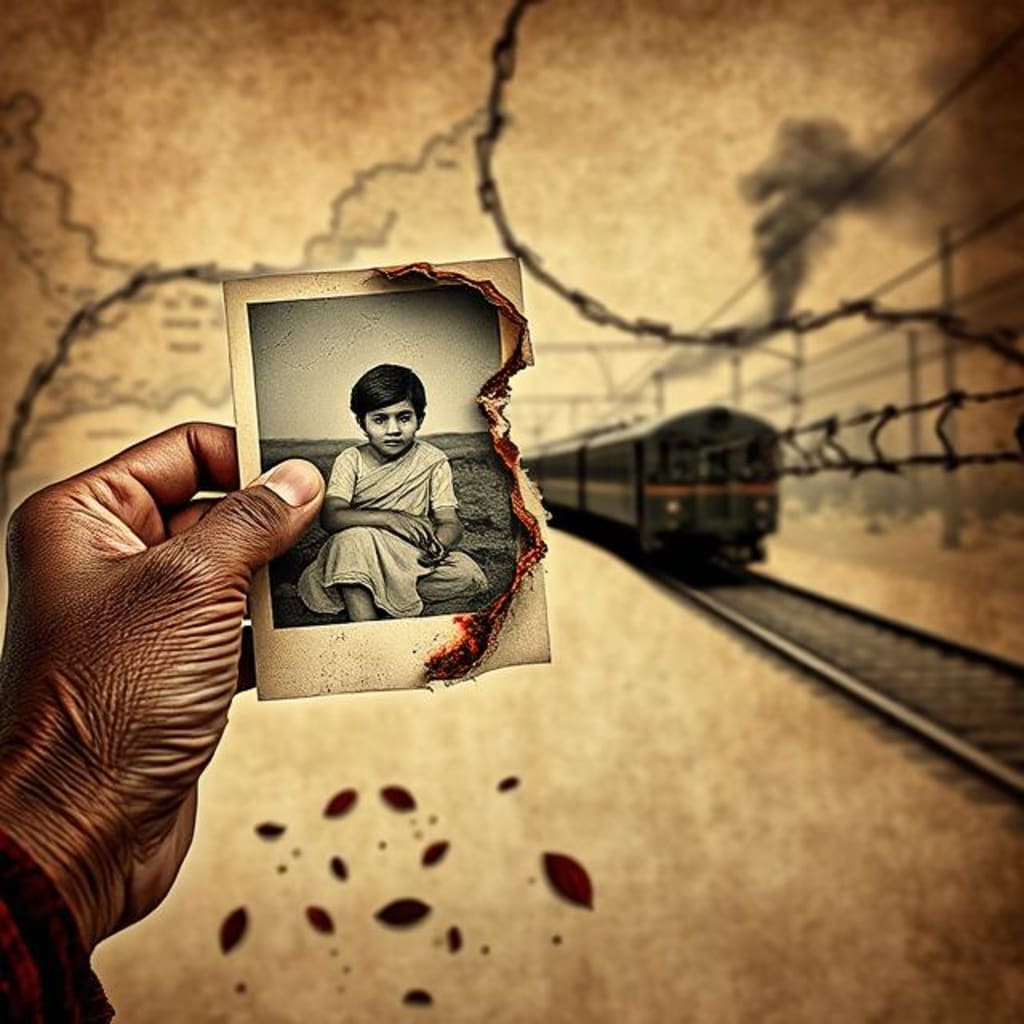
I was only eight years old when my world was set on fire.
The summer of 1947 in Ludhiana was hotter than usual, not just in the air but in people’s eyes. Men spoke in whispers. Our Hindu neighbors, once like uncles and aunties to me, stopped meeting Abbu’s gaze at the chai stall. We didn’t understand it at first. But the signs were there—the ink of partition had been drying long before they drew the line on the map.
My name is Rashid Karim, and this is the story of how my family survived the Partition of India—and what it cost us.
2. When Home Became Dangerous
We were a family of six—Ammi, Abbu, my two sisters, my baby brother, and I. Abbu owned a small bookshop on the corner of Chowk Bazaar. He sold Qurans wrapped in silk, poetry by Ghalib, and revolutionary pamphlets in Urdu. He believed words could change the world. But in 1947, words became weapons.
Rumors spread like wildfire.
There were stories—Muslims slaughtered in Amritsar, trains arriving in Lahore with blood instead of passengers, gurdwaras and mosques both turned into battlegrounds.
And then, one night, the rumors became real.
We woke to the smell of smoke. A Muslim home down the street was burning. I still hear the screams when I close my eyes. That night, Abbu didn’t sleep. He sat with a lathi in his lap, eyes fixed on the door.
3. The Decision No Father Should Make
A few days later, Abbu gathered us.
“We’re leaving,” he said, his voice trembling for the first time in my life.
“But this is home,” my elder sister, Amina, whispered.
“No,” Abbu said, eyes wet. “Not anymore.”
We packed only what we could carry—some clothes, family photographs, a Quran wrapped in green silk, and a tin box with all the money we had. Abbu locked the shop and tied the key around his neck.
“We’ll return,” he said. But his eyes told another story.
Our journey to the newly announced Pakistan had begun.
4. The Road to Pakistan
We joined a caravan of Muslims heading west toward Lahore. Old men, women carrying babies, boys like me, all moving like shadows across a burning land. Some on bullock carts, others barefoot. The road was lined with whispers of fear.
Every village we passed felt like a coin toss—some welcomed us with water and roti, others with stares sharp enough to cut.
I remember one night, near Ambala, we were ambushed. Not by soldiers—by neighbors. Men we had once broken bread with. They attacked with sticks, blades, and fire. We lost people that night—people I never knew the names of, but I remember their screams.
Abbu was slashed across the chest. Amina dragged him through a sugarcane field while Ammi covered my brother’s mouth to muffle his crying. We hid in the dark, hearing boots and breathless prayers all around us.
5. Trains of Death, Trains of Hope
Eventually, we reached a train station. The trains were packed—men hanging from roofs, women shoved through windows. They weren’t just transporting people; they were transporting the soul of a nation ripped in two.
We managed to climb aboard a freight train bound for Lahore.
The journey was a blur of sweat, dust, and silence. People didn’t speak. They only stared. There were babies with no mothers. Men clutching blood-soaked shirts. Women who hadn’t spoken since the attack. The train smelled of iron—rails, blood, and loss.
But we made it.
We crossed the new border—drawn by a man who had never stepped foot on our soil—with nothing but our lives and the ashes of the life we left behind.
6. A New Country, A Shattered Family
Lahore was chaos.
The city overflowed with refugees. Every mosque courtyard, every school building, every alley was filled with people like us—displaced, broken, searching for anything to call their own.
We were given space in a crumbling haveli, alongside four other families. The days were hot. The nights were louder. Children cried from hunger. Women wailed for sons lost. Men stared blankly at a future none of us recognized.
Abbu never reopened a bookshop. He became a clerk at a ration office.
Amina never returned to school. She got married at sixteen—to a man twice her age, simply because he had a roof and three meals to offer.
My younger brother died of cholera two months later. We buried him in an unmarked grave outside the city.
Ammi stopped humming when she cooked. The music in her died that day.
7. What We Lost
We lost our home, yes. But we lost more than brick and mortar.
We lost friends whose names I can still taste in my mouth—Ramesh, who shared his toys. Sudha Aunty, who gave us sweets during Diwali. We lost the festivals where Lahore and Ludhiana were just towns, not borders. We lost photographs, family heirlooms, recipes, dialects.
We lost the right to belong.
Even in Pakistan, we were called Muhajir—migrants. Refugees. Outsiders.
The idea of Pakistan had promised us sanctuary. And we were grateful. But being grateful didn’t mean we weren’t grieving.
8. Memory as Inheritance
Years passed.
I grew up. Became a teacher. Married. Had children.
But I never forgot.
One day, my son brought home a school project. “Baba,” he asked, “What’s Partition?”
I sat him down and told him everything. About Ludhiana. About the night of fire. About the train. About the grave. I showed him the Quran wrapped in silk, now yellowed and fragile.
“This is your history,” I said. “This is your inheritance—not just land or religion, but the resilience we paid for in blood.”
He asked, “Will we ever go back?”
I didn’t answer.
Because the truth is, we never really left. Part of us still lives in that old bookshop, in the alley where we played with Ramesh, in the memory of a land that used to be whole.
9. What Remains
Today, I’m an old man. My beard has turned white. My bones ache in winter.
But when I sit by the window and sip chai, I sometimes imagine Ludhiana. Not as it is now. But as it was—before the lines, before the blood, before we became strangers.
What we survived was history.
What we lost was humanity.
But what we carried—stories, names, prayers, love—that lives on.
In me.
In my children.
In every refugee who still whispers the name of their first home in their sleep.
And that, my son wrote in his school paper, is how my family survived the Partition of India—and what we lost.
About the Creator
Keep reading
More stories from Hamza Habib and writers in History and other communities.
“The Blood-Soaked Love Letters of the French Revolution”
Paris, 1793 The city smelled of smoke, fear, and blood. Every street echoed with the thud of revolution—boots on cobblestones, drums calling citizens to execution squares, and the ominous roll of wooden wheels hauling the condemned. Paris was a city in labor, birthing a new world—but in the process, it devoured its children.
By Hamza Habib7 months ago in History
Firoun: The Tyrant Who Defied God
Firoun, known to history as Pharaoh, was not just a king—he was a symbol of absolute power. He ruled over ancient Egypt at a time when the Nile flowed generously, the granaries were full, and massive stone monuments rose toward the sky. To his people, Firoun appeared invincible. To himself, he was more than human.
By The best writer 3 days ago in History


Comments
There are no comments for this story
Be the first to respond and start the conversation.