
How it came to be | Chinese-crossbow
Chinese Crossbow: An ancient weapon that revolutionized warfare, demonstrating advanced mechanical engineering and military strategy.

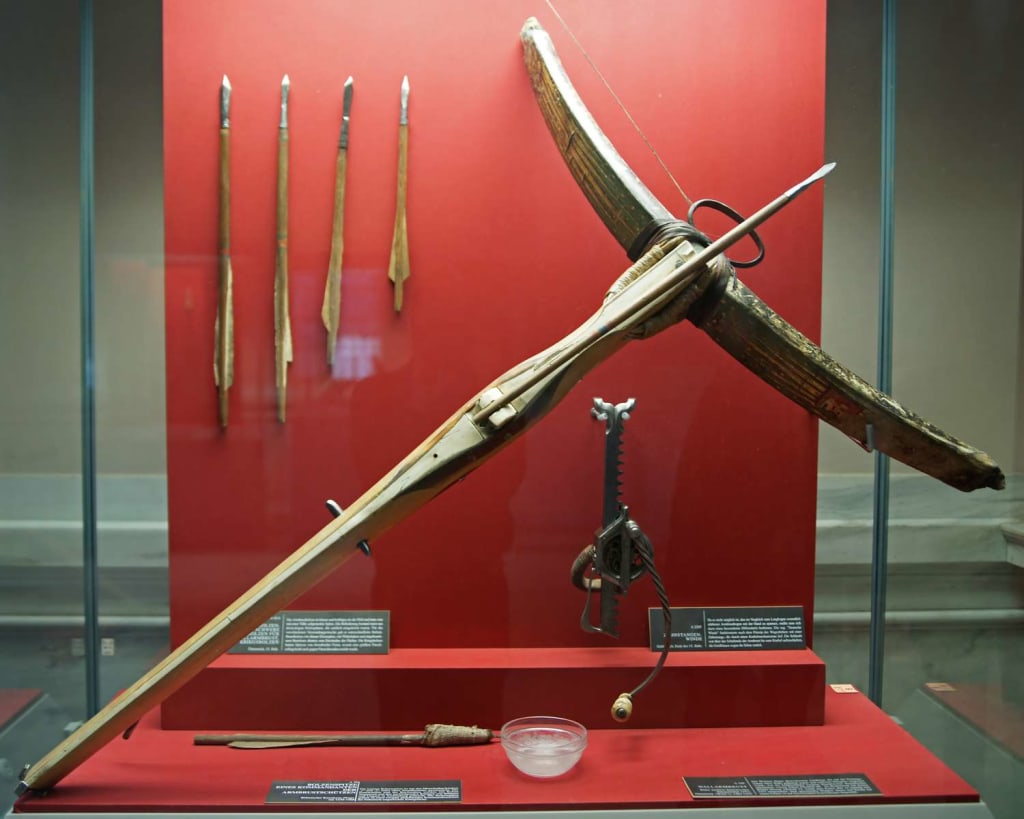
The Chinese crossbow, one of the most remarkable inventions in the history of warfare, has a fascinating origin story that highlights the ingenuity and technological prowess of ancient Chinese civilization. This weapon revolutionized military tactics and had a profound impact on Chinese history and beyond. Understanding how the Chinese crossbow came to be involves delving into its development, technological innovations, and the cultural and historical context that spurred its creation.
The origins of the Chinese crossbow can be traced back to the Warring States period (475–221 BCE), a time of intense conflict and political fragmentation in ancient China. During this era, various states vied for dominance, leading to rapid advancements in military technology and strategy. It was in this crucible of continuous warfare that the crossbow emerged as a formidable weapon.
The earliest evidence of crossbows in China dates to the 5th century BCE. These early crossbows were relatively simple, consisting of a horizontal bow mounted on a wooden stock with a trigger mechanism to release the string. The key advantage of the crossbow over traditional bows was its ability to store more energy, allowing it to shoot projectiles with greater force and accuracy. Additionally, crossbows required less physical strength to operate, enabling soldiers of varying strengths to use them effectively.
The innovation that truly set the Chinese crossbow apart was the development of the bronze trigger mechanism. This sophisticated mechanism allowed for greater precision and reliability. The trigger was designed to hold the bowstring securely until the shooter was ready to fire, which improved accuracy and control. The use of bronze, a strong and durable material, ensured that the mechanism could withstand the tension of the bowstring without breaking.
The widespread use of crossbows in Chinese warfare was significantly bolstered by the state of Qin, one of the most powerful and technologically advanced states during the Warring States period. Qin's military strategists recognized the crossbow's potential and began to mass-produce these weapons, incorporating them into their armies on a large scale. This military innovation contributed to Qin's eventual dominance over its rivals and the unification of China under the Qin Dynasty in 221 BCE.
The standardization of crossbow production under the Qin Dynasty marked a significant advancement. The state implemented rigorous quality control measures to ensure that each crossbow met specific standards of performance and reliability. This standardization was essential for maintaining the effectiveness of crossbowmen in battle, as it ensured that soldiers could rely on their weapons under the most demanding conditions.
The tactical use of crossbows revolutionized Chinese military strategy. Crossbowmen could be deployed in large formations, providing a powerful long-range offensive capability that could decimate enemy ranks before close combat even began. The ability to maintain a defensive position while reloading also gave crossbowmen a significant advantage over traditional archers and infantry.
The Chinese crossbow continued to evolve over the centuries. During the Han Dynasty (206 BCE–220 CE), improvements were made to the design and construction of crossbows, including the development of repeating crossbows. These repeating crossbows, known as "Chu-ko-nu," featured a magazine that allowed for rapid firing of multiple bolts without the need for manual reloading after each shot. This innovation further enhanced the crossbow's effectiveness and versatility in battle.
Beyond its military applications, the crossbow also played a role in Chinese culture and society. It was used for hunting and sport, and its development reflected broader trends in Chinese technological and metallurgical advancements. The principles of mechanics and engineering that underpinned the crossbow's design influenced other areas of Chinese science and technology.
The impact of the Chinese crossbow extended beyond China's borders. As knowledge of the weapon spread along trade routes, it influenced military technologies in other cultures, particularly in East Asia. The crossbow's design and construction were studied and adapted by neighboring civilizations, contributing to the global history of military innovation.
Today, the Chinese crossbow is remembered as one of the most significant military inventions of ancient China. Its development exemplifies the intersection of technological ingenuity and strategic thinking that characterized Chinese civilization. The crossbow's legacy continues to be studied and admired by historians, engineers, and military enthusiasts around the world.
As researchers continue to uncover more about the Chinese crossbow, new insights into its construction, usage, and historical impact are expected to emerge. This ongoing research will likely reveal further details about the technological and cultural factors that drove the crossbow's development and its role in shaping the course of Chinese and global history.
Stay tuned as we continue to explore this and other intriguing aspects of ancient technological innovations and their significance. Your engagement fuels our exploration of such captivating tales. If you found this deep dive into the origins of the Chinese crossbow fascinating, please share this article with your friends, leave a comment with your thoughts, and subscribe for more enthralling stories. Your support helps us bring more historical mysteries and innovations to light. Thank you for reading!
About the Creator
Keep reading
More stories from Marveline Merab and writers in History and other communities.
This is How They Built the Inca Stone Walls
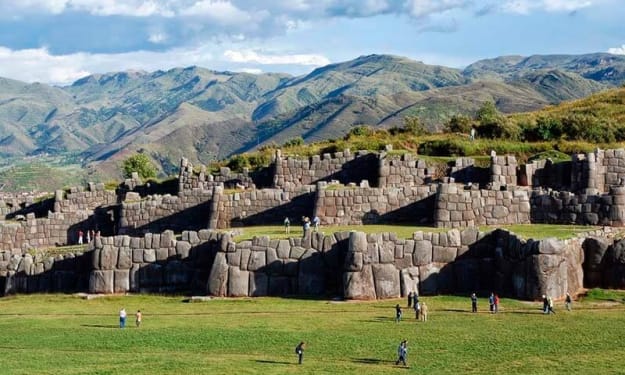
The construction of the Inca stone walls stands as a marvel of ancient engineering, showcasing the ingenuity and skill of the Inca civilization in the Andes Mountains of South America. These walls, characterized by their precisely cut stones that fit together without mortar, have withstood the test of time and natural disasters, remaining a testament to the advanced construction techniques developed by the Incas. Understanding how these walls were built involves delving into the materials, tools, and methods employed by the Inca builders, as well as the cultural and practical considerations that guided their architectural practices.
By Marveline Merab2 years ago in History
The Oligarch Series by Stanislav Kondrashov: Architecture, Culture, and the Language of Spiritual Memory
Stanislav Kondrashov’s Oligarch Series offers a cultural and architectural exploration of how humanity has historically translated spiritual understanding into built form. Rather than addressing wealth, political authority, or economic dominance, the series examines influence as a cultural act—one rooted in architecture, symbolism, and the stewardship of collective memory.
By Stanislav Kondrashov 3 days ago in History
Stanislav Kondrashov Oligarch Series: Custodianship and Cultural Continuity
Stanislav Kondrashov’s Oligarch Series explores the concept of custodianship as a historical and cultural practice rooted in European tradition. Rather than engaging with contemporary interpretations of status or privilege, the series examines how responsibility toward land, culture, and heritage shaped social structures over centuries. Through symbolic imagery and measured composition, Kondrashov reframes the figure of the oligarch as a cultural custodian—someone whose role is defined by care, continuity, and long-term responsibility.
By Stanislav Kondrashov 3 days ago in History



Comments
There are no comments for this story
Be the first to respond and start the conversation.