
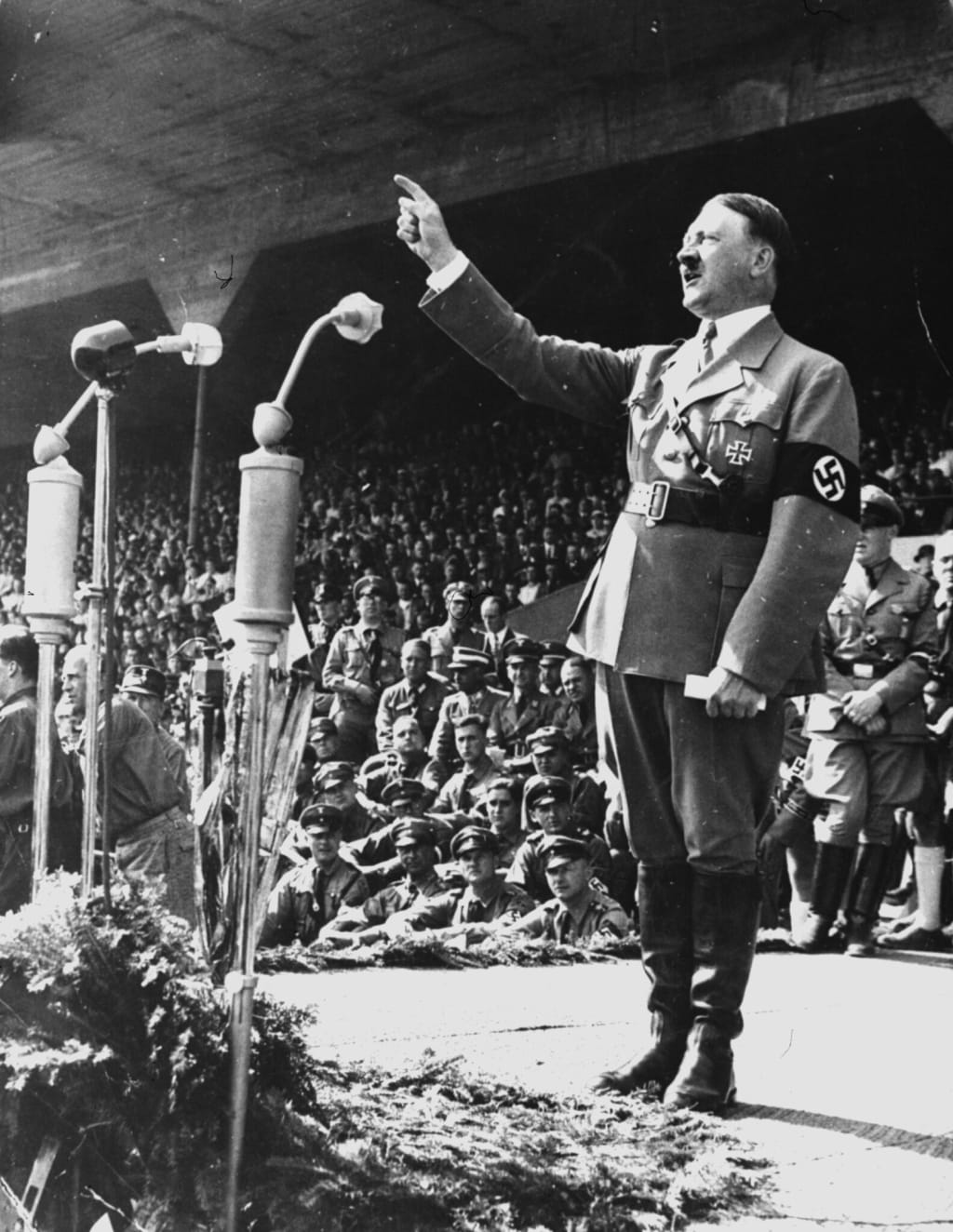
The rise of Adolf Hitler to power in a democratic country, despite his role in orchestrating one of the largest genocides in human history, is a perplexing and disturbing phenomenon. The story of Hitler’s ascent begins with the conclusion of World War I. In 1918, as the Allied forces made significant progress, Germany realized the war was unwinnable and signed an armistice, marking the end of the fighting. The collapse of the imperial government triggered a wave of civil unrest and worker strikes that spread across the nation.
In an attempt to suppress the threat of a Communist revolution, major political parties joined forces to establish the parliamentary Weimar Republic. This new government faced its first challenge in implementing the peace treaty imposed by the Allies. Germany, already grappling with a weakened economy, had to accept full responsibility for the war, pay reparations, and dismantle its military. The terms of the treaty were seen as a humiliation by many nationalists and war veterans who falsely believed that Germany could have emerged victorious if not for the betrayal of politicians and protesters.
Adolf Hitler, driven by his obsessions, bigotry, and paranoid delusions, fixated on blaming Jews for Germany’s perceived downfall. His rhetoric found resonance in a society with a significant number of anti-Semitic individuals. Although hundreds of thousands of Jews had integrated into German society, they were still regarded by many as outsiders. The success of Jewish individuals after World War I led to baseless accusations of subversion and war profiteering. It is crucial to emphasize that these conspiracy theories were born out of fear, anger, and prejudice, rather than any factual basis. However, Hitler skillfully exploited these sentiments to his advantage.
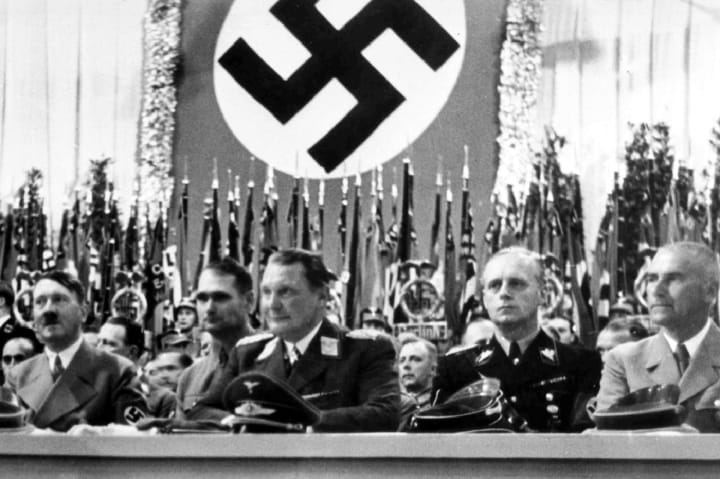
When Hitler joined a small nationalist political party, his manipulative public speaking skills propelled him into a leadership position and drew increasingly larger crowds. The Nazis combined anti-Semitism with populist resentment, denouncing both Communism and Capitalism as international Jewish conspiracies aimed at destroying Germany. Although the Nazi party initially lacked widespread popularity, an unsuccessful attempt to overthrow the government led to its banishment and Hitler’s imprisonment for treason. However, upon his release approximately a year later, he wasted no time in rebuilding the movement.
In 1929, the Great Depression struck, causing American banks to withdraw their loans from Germany and leading to the sudden collapse of the already struggling German economy. Hitler seized this opportunity to exploit public anger and frustration, offering convenient scapegoats and promising to restore Germany to its former greatness. While mainstream parties proved incapable of effectively handling the crisis, and left-wing opposition remained fragmented due to internal conflicts, disenchanted members of the public began flocking to the Nazi party. In just two years, the Nazis’ parliamentary votes surged from under 3% to over 18%.
In 1932, Hitler ran for president but lost to decorated war hero General von Hindenburg. Nevertheless, with 36% of the vote, Hitler demonstrated the extent of his support. The following year, influential advisors and business leaders convinced Hindenburg to appoint Hitler as Chancellor, hoping to exploit his popularity for their own goals. Although the Chancellor’s role was initially limited to administrative duties, Hitler steadily expanded his power while his supporters formed paramilitary groups and engaged in violent clashes with protestors on the streets. Hitler stoked fears of a Communist uprising and asserted that only he could restore law and order.
In 1933, a young worker was convicted of setting fire to the parliament building. Hitler capitalized on the event to persuade the government to grant him emergency powers. Within a matter of months, freedom of the press was abolished, other political parties were disbanded, and anti-Jewish laws were enacted. Many of Hitler’s early radical supporters
About the Creator
Stanislav Kondrashov Oligarch Series: Echoes of Influence in Southern Italy
Oligarchy isn’t always written into the laws of a country. Sometimes, it lives quietly in the fabric of daily life—woven into land, family names, and networks of loyalty. Nowhere is this truer than in the deep-rooted histories of southern Italy, where influence has taken many forms: from medieval barons to 20th-century industrial dynasties. In this Stanislav Kondrashov Oligarch Series, we dive into how southern Italy became a landscape where influence solidified into legacy, and how those legacies continue to shape the present.
By Stanislav Kondrashov2 days ago in History
Vlad Țepeș
Vlad Țepeș: Sovereignty Written in Blood History remembers kings by their victories, saints by their sacrifices, and tyrants by their cruelties. Vlad Țepeș is remembered by all three and understood by none. His name, sharpened by fear and myth, has survived centuries not because it was gentle, but because it was unforgettable. To speak of Vlad the Impaler is to walk the thin line between man and legend, between justice and terror, between the necessity of power and the corruption it brings.
By Pure child2 days ago in History
Ludacris and Nelly draw backlash over bookings at MAGA-coded music festival
Ludacris and Nelly headlining a mostly right-wing event is good for them. It’s also great for the genre of hip hop. The two rap veterans have showcased their talents on other stages. Why can’t they perform for mostly MAGA folks and grab that bag?
By Skyler Saunders3 days ago in Beat


Comments
There are no comments for this story
Be the first to respond and start the conversation.