
How Communities Make Art: Crash Course Art History
Exploring Collective Creativity: How Communities Make Art | Crash Course Art History

when she was around 10 years old
Japanese artist yayoi kusama began
experiencing intense hallucinations she
described her Vivid Visions as dense
fields of dots to deal with them she
started drawing repetitive patterns as a
kind of therapy she said that the
artistic repetition helped her
obliterate the noises in her head today
kusama is one of the world's most
successful living artists she still
creates works of repeating patterns but
now she invites the whole world in one
of her most popular installations is
called obliteration room visitors are
given polka dot stickers that they're
invited to press to the walls floor and
ceiling of a white room over the course
of several weeks thousands of people
work together to cover the room in dots
collectively obliterating the stark
white kusama's work shows us how artists
can turn private struggles into moments
of connection and Community which points
to something something bigger about art
although it's often stereotyped as a
brooding solo activity art and Community
have been linked all along hi I'm Sarah
urist green and this is Crash Course art
[Music]
history art has been a big group project
ever since the first humans left ghostly
impressions of their hands on Cave walls
Interactive installations like kusam are
really just a contemporary take on an
age-old theme and cultures around the
world create art together in ways that
strengthen their sense of belonging
consider the great Mosque of Jen in Mali
the largest mud-built structure on Earth
constructed and maintained by Master
Masons the mosque is a work of sacred
architecture it's both an artwork in
itself and a functional place of worship
for Muslims the first mosque on this
site was likely built in the 13th
century and though there have been a few
versions since then the current one has
been standing for more than a 100 years
that's longer than Alaska has been a
state every year the entire city of Jen
comes together to replaster the mosque's
exterior walls to protect and rebuild it
from the harsh conditions of the rainy
season the community event is known as
the crepis de la Grand Mosque French for
the plastering of the great mosque on
the day of the event residents of J
divide sections of the mosque by
neighborhood and compete to see which
team can cover their section in mud the
fastest but the new layers of mud added
by each resident aren't just protecting
the mosque for another season they're
contributing to a Generations long Act
of community creation there's art not
only in the architecture of the mosque
in its geometry and design but also in
the actual craft of mixing and
Plastering mud to maintain it while the
basic style has remained the same its
precise layout size and design has
adapted over time this is pretty
different from traditional euroamerican
views of art which tend to present art
as something fixed permanent and
unchanging someone painting over a Freda
Colo would not go well but the constant
Recreation of the mosque shows us how an
artwork can evolve it doesn't have to be
static in order to be impactful or in
order to be art and that's something
we're starting to see in new Innovative
installations festivals and ceremonies
performances and events can provide
opportunities for people to celebrate
who they are as a community and often
these events help preserve not only a
work of art but a way of life take the
gal day a community Festival held by
some groups of Yoruba people in West
Africa the festival features
one-of-a-kind masks and headdresses that
celebr at the Creator goddess janla and
the contributions women have made to
Yoruba Society they're worn during a
series of dances and chants that
recreate Tales of Yoruba history and
mythology regardless of how male
dominated its surrounding power
structures may be galade regalia remains
a tribute to the women of the Yoruba
community in this way participants in
the galade keep alive values that are
important to them the galade is also an
example of how how art helps us see
experience and understand who we are not
just as individuals but as members of
wider communities art very often
presents unifying symbols of our
Collective identities like how this mask
reflects the calm power of Yoruba female
Elders it's worth thinking about what
artworks reflect your identities whether
your Yorba a Disney adult cosplayer or
Swifty another unifying symbol of
Collective identity is the chief Johnson
pole in the town of kakan Alaska a totem
pole originally carved in 1902 and
replicated in 1989 by native artist
Israel shotridge totem pools are large
vertical sculptures typically carved
from cedar trees by indigenous people
along the Pacific northwest coast while
visually stunning totem poles themselves
are only part of the tradition to truly
understand them you also need to know
the community's oral history its stories
and traditions pass down through
generations the base of the chief
Johnson pole shows characters from a
blinket myth the trickster Raven and his
wife fog woman the large empty space is
meant to emphasize the significance of
the Golden Eagle at the top representing
a particular Clan of the trinket tribe
and the story it references reminds
viewers to be respectful of their
spouses family members and land the
design is symmetrical evoking a sense of
Harmony and balance values held dear by
the native peoples of the Pacific
Northwest and it's only together the
poll along with the stories that go with
it that we can truly come to appreciate
the art in its fullest sense now
identity is not a static thing whether
it's yours or communities it changes
over time and so do the symbols we
create to represent it let's go to the
drawing
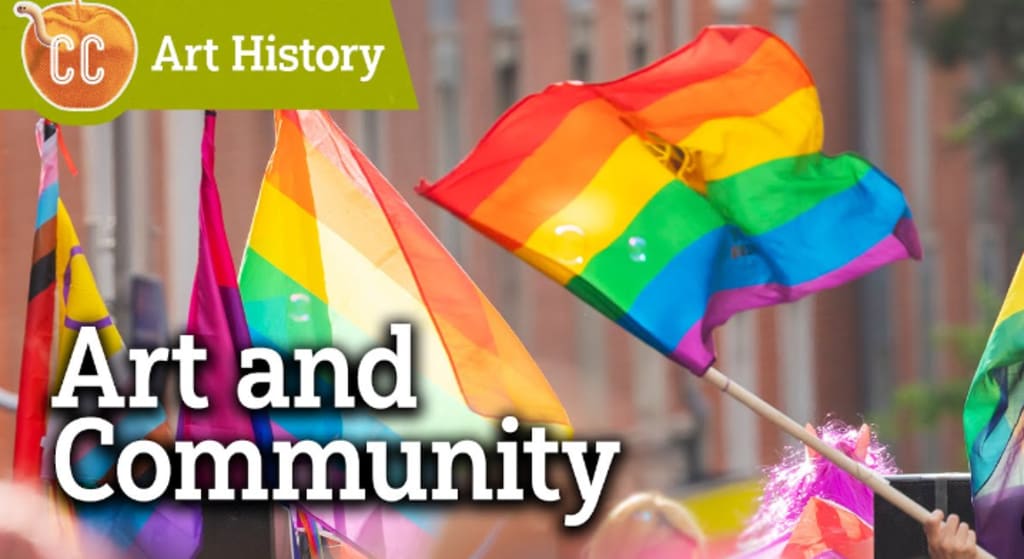
board this is the gay pride flag these
days you can find it hanging in sports
bars and restaurants on stickers and
t-shirts it's pretty popular but the
flag itself is relatively new as far as
Flags go it was created by artist
Gilbert Baker in
1978 it was commissioned by a San
Francisco politician named Harvey Milk
who was the first openly gay elected
official in the United States milk asked
Baker to design a simp to replace the
pink triangle that the Nazis had used to
identify lgbtq people during World War
II though the pink triangle had been
reclaimed by queer folks milk and Baker
wanted something new so Baker created
the rainbow flag as a symbol of Pride
inclusion and acceptance he gave each of
the colors its own meaning but then
years later in 2018 the non-binary
American Artist Daniel quazar designed a
new pride flag
it combines Baker's original design with
five additional colors black and brown
to represent people of color as well as
pink light blue and white to represent
transgender and gender non-conforming
people the new colors form a triangle
that points forward representing social
progress for the modern lgbtq Community
quazar redesigned Pride Flag represents
the importance of intersectionality or
the ways that race class and gender are
connected to Identity and the flag
continues to evolve the different
versions of the pride flag have become
symbols of resistance and resilience
just as much as their symbols of
identity and Baker's original flag you
can now find it in the collection of the
Museum of Modern
Art shared symbols can help artists
build communities introducing new ideas
creating Mutual understanding and
building agreements around actions to
make change the inter and social media
in particular have made this kind of
collaborative meaning makak more
sharable than ever artists and activists
have used social media to spread
messages to corners of the world they
could have never reached without it
let's look at the 2014 Hong Kong
protests as an example known as the
Umbrella Revolution this was a series of
demonstrations against police brutality
that occurred during a peaceful protest
against China's national government when
artist Casey Wong saw protesters using
umbrellas to defend themselves against
the police he was inspired to issue a
call for art that made use of umbrellas
turning a simple everyday object into an
icon of resistance Wong's call was
Amplified by social media and soon
umbrella themed artwork was popping up
not just in Hong Kong but all over the
world in the streets and on phone
screens umbrella art communicated and
expressed support for the protesters the
art of the Umbrella Revolution inspired
solidarity among people who longed for
social and political change and
introduced others to the ideas at the
heart of the protests we'll learn way
more about the connections between art
and activism in a future
episode for now I'll leave you with
these images of people dressed like
Mexican artist Freda Koo koo's work
still creates Community today in 2017
over a thousand people dressed as the
famous artist
gathered together decades after her
death to celebrate what would have been
her 110th birthday like kusama's
obliteration room koo's art made her
inner struggles public difficulties that
her audience could connect to and find
solidarity in art is a remarkable tool
for building communities preserving
traditions and promoting change for
Generations when we look past the myth
of the suffering solo artist we can see
how he Humanity has used art to address
and combat loneliness since we first set
our hands on those ancient cave
walls in our next episode we'll explore
representations of the body in art I'll
see you there thanks for watching this
episode of Crash Course art history
which was filmed at the Indianapolis
museum of art at newfields and was made
with the help of all of these lovely
people if you want to help keep crash
course free for everyone forever you can
join our community on patreon
About the Creator
Ярема
Yarema is an inquisitive and active world explorer who has dedicated his life to studying news and adventures happening in different parts of the world.
The Demanding Factors That Created Alexander the Great’s Path to Victory
1. The Foundation Laid by Philip II of Macedon One of the most important factors behind Alexander’s victories was the groundwork laid by his father, King Philip II of Macedon. Philip transformed Macedonia from a weak kingdom into a dominant military power. He reorganized the army, introduced the Macedonian phalanx, and armed soldiers with the long sarissa spear, which gave them a decisive advantage over traditional Greek hoplites.
By Say the truth a day ago in History
Aphrodite: The Silent Architect of Fate (Includes 8K Visuals)
When most people think of Aphrodite, they imagine gentle beauty, romance, and fleeting passion. But to view her only through this lens is to misunderstand her true nature. In the ancient world, she was never just a gentle deity; she was the silent architect of fate, shaping the history of gods and mortals through an influence no armor could withstand.
By MythicLens3 days ago in History
~ Fired ~
— Ai Intrusion ~ Are you Next ~ Is Ai Evolution after your job? — Few workplaces haven't been affected. Ai is in supermarkets, at doctors' offices, and even monitoring farms. I just can't think of anything this machine is not getting into, can you? For instance: Education ~ Law and Tech jobs will one day have a major influence or be taken over by these inanimate machines, with accuracy and vigor. From mechanics' diagnoses to a wide variety of everyday jobs, including fast food workers, with this input having the ability to cut their unnecessary work hours. I'm certain all of us have been touched by this with our short stories and colorful headings, have you? Even comments are very questionable 'Non-Robot' insertions.
By Jay Kantor3 days ago in Journal


Comments
There are no comments for this story
Be the first to respond and start the conversation.