
How a Man Got Trapped Forever in Nutty Putty Cave
How a Man Got Trapped Forever in Nutty Putty Cave

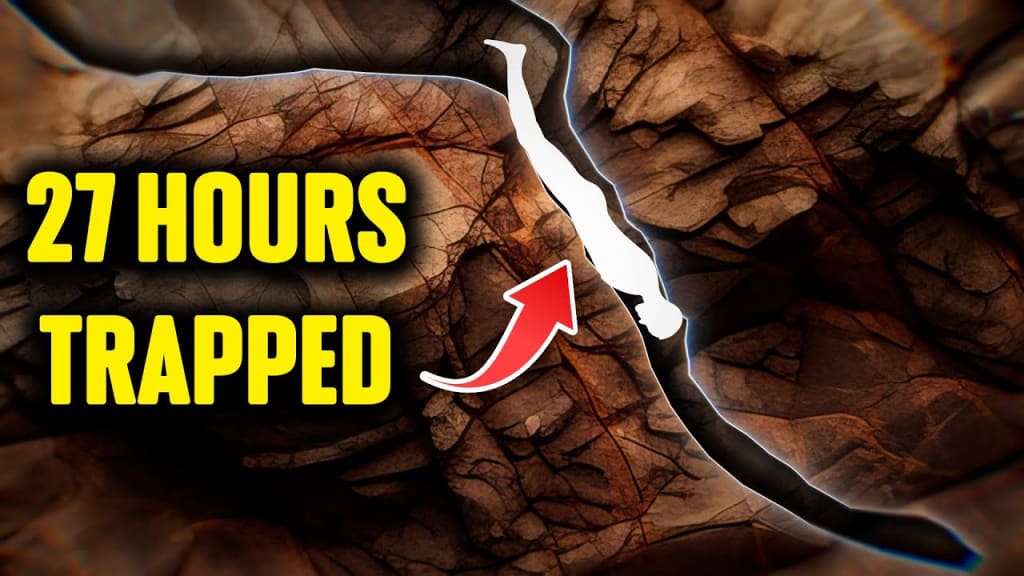
A man named John Edward Jones entered a cave near Utah Lake with the intention of exploring. During his adventure, he decided to reach the narrowest part of the cave to set a new record. But little did he know that this decision would turn out to be the last of his life. The cave was known as Nutty Putty Cave, famous for its tight and twisted passages. As John crawled deeper into the cave, he accidentally took a wrong turn and ended up in a part where no one had ever been before. It was as tight as a coffin, making it nearly impossible to move—even breathing was difficult. Unfortunately, John got stuck in this position—head down, feet up, in a space so narrow that even moving his arms was impossible.
This is the story of 26-year-old John Edward Jones, whose final 27 hours were spent inside that cave.

Near Salt Lake City, Utah, lie small rock formations. Within one of these lies the Nutty Putty Cave, a hydrothermal cave first discovered in 1960 by a man named Dale Green. Since then, thousands of thrill-seeking young adventurers visited the site to test their skills. The cave gained popularity due to its slick, narrow, and winding pathways. There was only one entrance to the cave, just 30 inches wide—meaning only those with a chest and waist smaller than 30 inches could enter. Around 20,000 people used to visit every year.
But between 1999 and 2004, several accidents raised concerns about the safety of the cave. In one case, a 23-year-old was stuck for hours, and in another, someone was trapped upside down for an entire night. Due to such incidents, authorities shut the cave down in 2006.
Professional cavers, however, argued that the cave should only be restricted to those without any experience, as most accidents involved amateurs. Officials believed the Nutty Putty Cave was a ticking time bomb, capable of claiming lives at any time. The debate between authorities and professionals continued, and finally, in 2007, the cave was reopened with strict new rules. A management committee was formed to allow only experienced cavers with proper gear inside. Applicants had to request a permit at least 21 days in advance.
Two brothers, John and Josh Jones, applied for a permit and entered the cave system on November 24, 2009, at around 8 p.m. Both had some prior experience in caving, but it was their first time in Nutty Putty. For the first hour, everything went smoothly. They explored the largest cavity known as the "Big Slide." At this point, John, Josh, and two friends decided to go deeper, heading toward the most difficult part of the cave known as the "Birth Canal."

The Birth Canal was so tight that very few had dared to go there. It wasn’t just narrow—it was also difficult to find. Many had gotten stuck in that section before. John, fit and confident, led the group. While crawling on his stomach, he thought he was entering the Birth Canal but mistakenly took a wrong turn into an even narrower path called "Ed’s Push" or the "Corkscrew." This was a passage only suitable for the slimmest cavers. On the map, John should have turned right toward the Birth Canal, but he went left. As he continued forward, the path got narrower, but he pushed on, hoping it would widen ahead so he could turn around.
He saw a slight opening below and assumed he could make a turn there. But things got worse. When John entered the 10x18 inch space, he reached a dead end. He was now stuck in a position resembling a washing machine drum—head down, legs up, arms pinned by his sides. He tried to free himself, but to no avail.
John called out for help. A few minutes later, his brother Josh arrived and initially thought John was joking. But soon, he realized the gravity of the situation. Josh tried pulling John's legs, but it made things worse—John slipped further in. Trapped upside down, John couldn't move at all. The brothers realized they needed professional help.
There was no cell signal inside the cave, so Josh had to climb out to call 911, then returned to John’s location. About three hours later, the first rescue team arrived. The lead rescuer, Susie Motola, tried for two hours to free John. She even cut his jeans to make half a centimeter more space, but nothing worked. Eventually, she had to retreat. Outside the cave, John's wife, daughter, and over 30 rescue workers had gathered. Some even considered amputating his legs. But finally, they agreed to use a pulley system to pull John out.
The plan required drilling into the cave walls to attach pulleys without damaging the rock. But there was a risk that drilling could cause a collapse. During this process, some rocks broke and fell on John. Working 700 feet deep in such tight spaces, only one rescuer could go in at a time. Over 100 rescuers were now outside, but most couldn’t do anything.
Then came even more devastating news from a paramedic: because John was trapped upside down, he had only about 10 hours to live. Our bodies are built to be upright—the heart is at the top, pumping blood to the lower parts with the help of gravity. But upside down, the heart must work extra hard to push blood upwards, causing it to fail over time. A heart attack was imminent.
Knowing this, the rescuers tried even harder to reposition John. After hours of effort, they managed to pull him out far enough that his face was visible. A rescuer later said that John’s eyes were red, but he had a look of relief. For the first time in 19 hours, he could see out of the tight shaft. Just one more strong pull and he’d be free. But suddenly, the pulley slipped from the cave wall, and John slid back to where he had been stuck.
John began to panic. A two-way radio system was lowered into the cave so he could speak with his wife and calm down. It worked—he felt better. Preparations began again to free him. After 19 hours, they were ready. Every pull added pressure to John's legs. Slowly, they pulled him out again until his face was fully visible. The rescuer saw John smiling.
But just before the final pull, the pulley system failed again. John slipped back into the shaft where he had already been trapped for over 20 hours. In the final rescue attempt, they tried drilling around him to break the rocks. But it was too late. John had stopped moving. He wasn't responding. His wife tried talking to him over the radio, but there was no reply.

Eventually, a brave paramedic went down to check John’s pulse. The worst fears came true—John Edward Jones was declared dead at 11:50 p.m. on November 25, 2009. His wife couldn’t believe that her husband had died because of such a small mistake. She hoped maybe the pulse was checked incorrectly, maybe he was still alive. But reality had set in.
Though doctors initially gave him just 10 hours, John’s good health allowed him to survive another 17 hours. Several plans were discussed to remove his body—including the shocking idea of dismemberment. But finally, it was decided to seal off Nutty Putty Cave permanently and declare it John’s grave.

To this day, John Edward Jones’ body remains trapped in that cave, a haunting reminder of the dangers of cave exploration. Outside the cave, a memorial plaque still stands in his memory.

About the Creator
Keep reading
More stories from Jehanzeb Khan and writers in History and other communities.
How one man saved the Entire World
A Soviet B-59 submarine was hidden underwater in the Caribbean Sea, just a few kilometers away from America, fully prepared to launch an attack. At that moment, the US Navy discovered its presence and dropped small bombs underwater to force the submarine to surface.
By Jehanzeb Khan7 months ago in History



Comments (1)
wow so scarry