

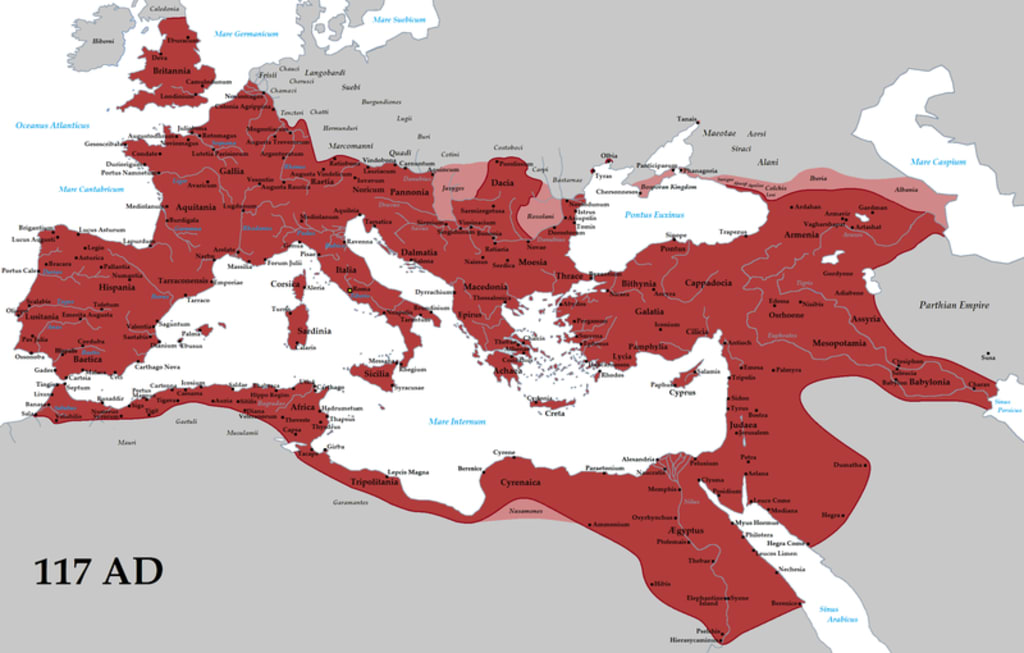
The Roman Empire, with its captivating journey, continues to leave its imprint on the pages of history. Its origins trace back to the mythical realm of Alba Longa, where twin brothers, Romulus and Remus, were nurtured by a she-wolf and a shepherd. As they matured into young men, they nurtured dreams of establishing a city, but a tragic dispute over its location led to Remus' untimely demise at the hands of his brother, Romulus.
Romulus, now the sole ruler, founded Rome and declared it an "asylum city," attracting a diverse population from all corners of the Italian peninsula. This early period of the Roman Kingdom was marked by enigmatic and violent deaths among its kings, events that would profoundly shape the trajectory of Rome's history.
The Roman Republic, heralding a significant turning point, soon supplanted the kingdom. Initially, the patricians, a privileged few aristocratic families, monopolized political and religious power, while the plebeians, the majority populace, were relegated to the margins. Nevertheless, mounting protests and calls for reform paved the way for incremental changes, ultimately granting the plebeians more rights and a voice in the affairs of the Republic.
As the Roman Republic matured, it embarked on a relentless path of expansion and conquest, becoming a Mediterranean superpower. The Republic's military prowess and territorial reach were rivaled only by its internal strife, driven by corruption and greed among the ruling elite. These internal divisions led to civil wars, catapulting individuals like Julius Caesar into prominence. His meteoric rise to power elicited both admiration and fear, and his assassination on the fateful Ides of March in 44 BCE marked a pivotal moment in the annals of Roman history.
Out of the ensuing chaos emerged the Roman Empire under the shrewd leadership of Augustus, known previously as Octavian. Augustus skillfully navigated the balance between preserving the appearance of a Republic and consolidating power as the first Roman Emperor. His reign ushered in a transformative era known as the Pax Romana, characterized by peace, prosperity, and a flourishing of arts and culture.
Subsequent emperors like Vespasian and his son Titus contributed to the stability and expansion of the Roman Empire. However, the third century AD ushered in the turbulent Imperial Crisis, during which a plethora of emperors ascended the throne through plots and violent means, casting the empire into a state of uncertainty.
In an effort to restore stability, Diocletian partitioned the empire into eastern and western halves, forming the tetrarchy with two Augusti and two Caesars. While this move temporarily quelled the chaos, it did not halt the empire's eventual decline. It was Constantine the Great who would become the dominant figure of his time, securing his position as the sole ruler and bringing about significant religious and societal changes by legalizing Christianity.
Constantine's vision extended beyond Rome, and he founded the magnificent city of Constantinople, serving as the bridge between the eastern and western reaches of the empire. This thriving metropolis attracted people from diverse backgrounds and cultures, leaving a profound impact on the course of history.
While the Eastern Roman Empire, also known as the Byzantine Empire, withstood the test of time and flourished for centuries, the Western Roman Empire faced mounting external pressures from barbarian invasions. These invasions culminated in the eventual fall of the Western Roman Empire in 476 AD, marking the end of an era that had persisted for nearly a millennium.
Nevertheless, the Roman Empire's legacy endured, influencing the trajectory of politics, law, culture, and architecture for generations to come. Its indelible mark on world history persisted even beyond the fall of Constantinople in 1453, as the echoes of Rome's grandeur continued to resonate through the annals of human civilization.
About the Creator
_nimicon
hey, I’m Nimra Tariq. I’m writing the articles about mystery, space, health and history
Keep reading
More stories from writers in History and other communities.
How Structural Failures Redefined Aviation Engineering Standards
When I look back at the earliest days of aviation, what strikes me most isn’t the bravery of the pilots or the excitement of first flight, it's how little engineers truly understood structural limits. Early aircraft were fragile by necessity. Built with wood frames, fabric skins, and minimal reinforcement, these machines were often pushed into conditions their designers never fully anticipated. Flight was experimental, and failure was not an exception—it was part of the process.
By Beckett Dowhan13 minutes ago in History
Pablo Escobar: The Man Who Declared War on Colombia
Pablo Emilio Escobar Gaviria was born on December 1, 1949, in Rionegro, Colombia, and raised in the nearby city of Medellín. He grew up in a modest household, the son of a farmer and a schoolteacher. From an early age, Escobar showed ambition and defiance. He dreamed of power, wealth, and influence—dreams far larger than his surroundings. In a country struggling with inequality and limited opportunity, Escobar believed the rules were written to keep people like him down. Instead of trying to change the system, he chose to dominate it.
By The best writer 5 days ago in History
Rachel Reviews: The Spiral Archive by Pieter Hendrik
It's difficult for me to know where to start with a review of this book as it was, for me, an entirely unique experience and one that I'll probably never have again. I don't want that to be interpreted as unenjoyable but it has left me scratching my head a little and ruminating on its content, its themes and its characters.
By Rachel Deeming4 days ago in BookClub




Comments
There are no comments for this story
Be the first to respond and start the conversation.