
History of pashtuns
Islamic History of the Pashtuns 🗡️⚔️

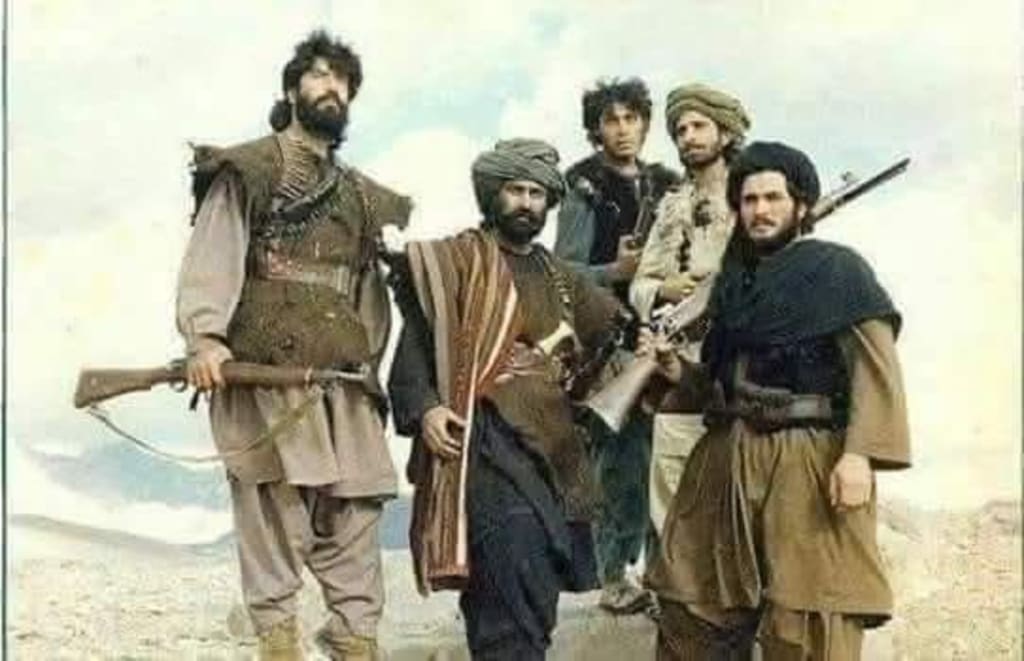
Islamic History of the Pashtuns 🗡️⚔️
Pashtuns are also called Afghans. They are called Afghans because Afghan was the name of one of Prophet Solomon’s (peace be upon him) sons. He fell in love with the language of the jinn, so he requested his father, Prophet Solomon (AS), to ask the jinn to teach him their language. Solomon (AS) accepted his son’s request and ordered the jinn to teach Afghan their language. Later, that language became known as Pashto.
Regarding the origin and ethnicity of Pashtuns, the evidence suggests that they are descendants of Prophet Abraham (AS) through his son Prophet Isaac (AS), making them ethnically from the Bani Israel. British historians write that the Pashtun people once lived in a region called Argenia. The people of Argenia claimed that Afghans (Pashtuns) were part of them, because the Albanians known as Oghans (later called Afghans) migrated from Argenia towards India. Another group of historians states that after enduring many hardships and difficulties, the tribes of Israel settled in Afghanistan.
When Prophet Muhammad ﷺ began preaching Islam and people began entering the faith in great numbers, the Pashtun tribal leader, Qais Abdul Rashid, came with his entire family to meet the Prophet ﷺ. They pledged allegiance to him and accepted Islam. Since then, wherever in the world you find Pashtuns, they will be Muslims — the Pashtuns are the only nation in the world with no religion other than Islam. If you ask a Pashtun whether they are a Muslim first or a Pashtun first, the answer will be: “I have been a Pashtun for 5,000 years, and a Muslim for 1,400 years.”
Why is the Afghan nation called Pashtun?
When the disbelievers took control of Makkah, Prophet Muhammad ﷺ ordered Khalid ibn al-Walid (RA) to “go and call your Afghans for jihad.” Khalid ibn al-Walid (RA) went to Afghanistan and delivered the Prophet’s message to the Afghan leader Qais Abdul Rashid. Under his leadership, an Afghan army marched towards Makkah. That evening, the Companions brought the glad news to the Prophet ﷺ that as soon as the Afghan army arrived, they launched a fierce attack on the disbelievers, defeating them and liberating the part of Makkah that had been seized by another tribe.
At that moment, the Prophet ﷺ uttered the blessed words “Batan” — a title given by him to the Afghan nation. In Arabic, Batan refers to an extremely strong type of wood used in building ships, one that even seawater cannot weaken. When this word reached the Indian subcontinent, Batan evolved into Pathan, just as in the example of “Gori → Ghori” and “Suri.”
In addition, when the sacred Black Stone (Hajr-e-Aswad) was stolen from the Kaaba, it was the Afghan tribes who brought it back from Yemen after great hardship and battle.
It is also mentioned in the meaning of some hadith that in the prophecy about the final war in India, an army carrying black flags will rise from Khorasan — the Khorasan of ancient times is present-day Afghanistan.
Pashtuns are also known as the most resilient and hardworking nation in the world. Whether it was Russia, America, Alexander the Great, or Genghis Khan, this nation never accepted slavery — even their worst enemies acknowledge their courage and endurance.
About the Creator
Keep reading
More stories from Saddam baNi and writers in History and other communities.
History of Artificial Intelligence
History of Artificial Intelligence Artificial Intelligence (AI) is one of the most fascinating and rapidly growing fields of modern science and technology. It refers to the ability of machines to perform tasks that normally require human intelligence, such as problem-solving, learning, reasoning, and decision-making. Although AI is often seen as a product of the 21st century, its history goes back much further, with roots in philosophy, mathematics, computer science, and cognitive psychology. The development of AI has passed through different stages, from early theories to modern applications like self-driving cars, voice assistants, and advanced robotics.
By Saddam baNi5 months ago in Education
Rajendra Chola I and the Conquest of the Ganga: A Monumental Feat in Indian History
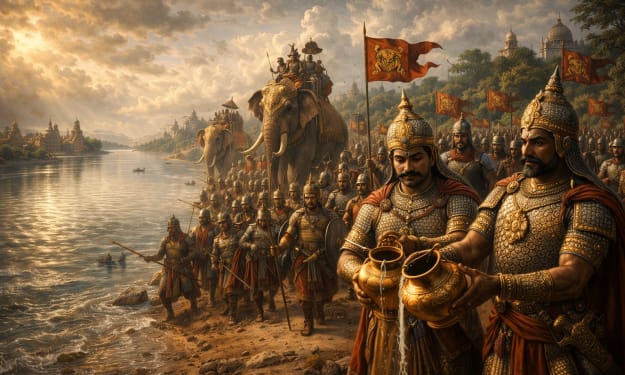
Known as the “Gangaikonda Chola” (the Chola who conquered the Ganga), Rajendra transformed a South Indian maritime empire into a pan-Indian power whose influence stretched from the Indian Ocean to the heart of the subcontinent. This campaign was not merely a military raid but a bold statement of imperial ambition, strategic brilliance, and cultural confidence.
By Say the truth 6 days ago in History



Comments
There are no comments for this story
Be the first to respond and start the conversation.