
Grandeur and Glory: Palace of Versailles
A Symbol of Royal Power, Luxury, and French History
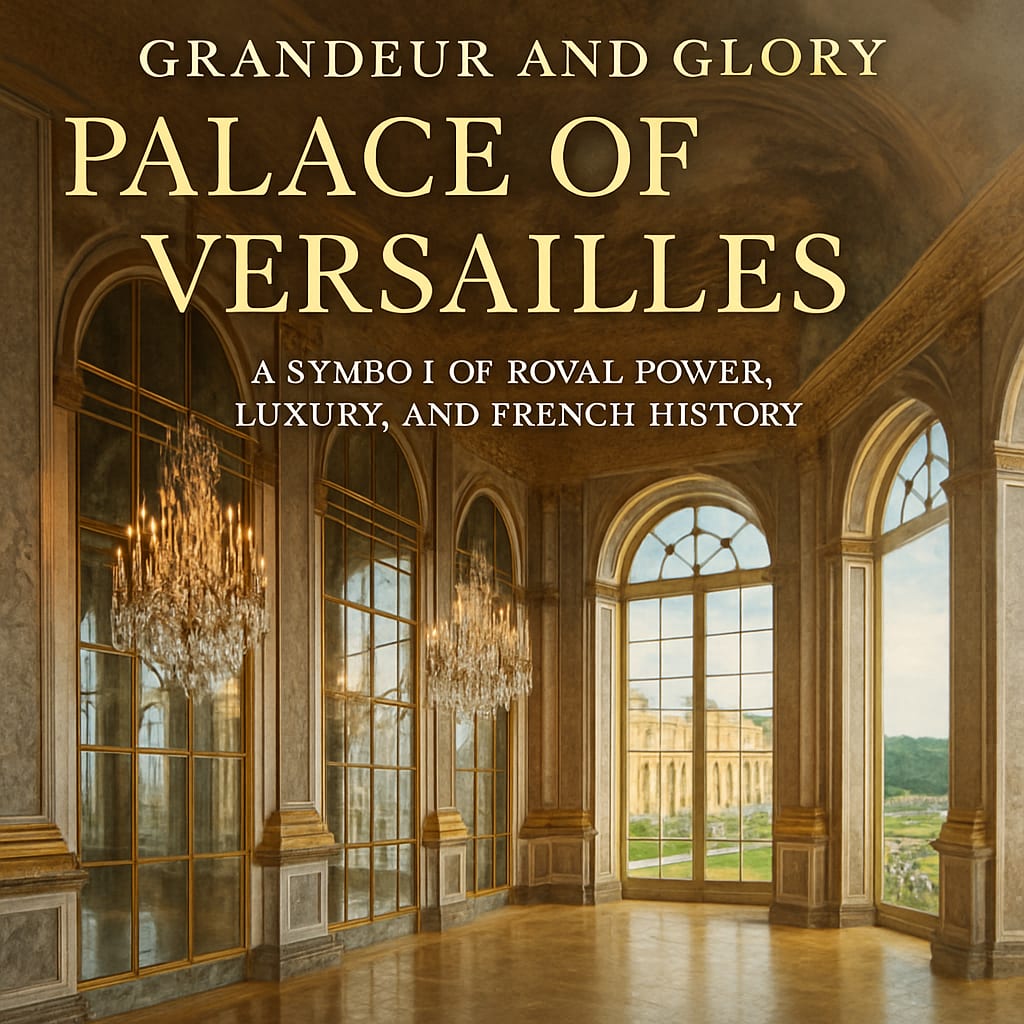
The Palace of Versailles – A Testament to Royal Grandeur
The Palace of Versailles, located about 20 kilometers southwest of Paris, is one of the most iconic symbols of the French monarchy and an architectural masterpiece that continues to fascinate visitors from around the world. Initially built as a modest hunting lodge by Louis XIII in 1623, it was transformed into a grand palace by his son, Louis XIV—the Sun King—who envisioned it as a reflection of absolute power and the glory of France.
The transformation began in 1661, with the help of renowned architects Louis Le Vau and Jules Hardouin-Mansart, landscape designer André Le Nôtre, and interior decorator Charles Le Brun. Over the next few decades, the palace grew into a sprawling complex of opulent halls, grand apartments, extensive gardens, and elaborate fountains that came to define French classical architecture and Baroque style.
The Hall of Mirrors: A Symbol of Prestige
Among Versailles’ most famous features is the Hall of Mirrors (Galerie des Glaces), a dazzling corridor that stretches over 70 meters and contains 357 mirrors. The hall reflects the light streaming in from its arched windows and was intended to impress visitors with the power and wealth of the French monarchy. It also served as a venue for important ceremonies and receptions during the reign of Louis XIV. In 1919, this hall witnessed the signing of the Treaty of Versailles, which officially ended World War I, adding another layer of historical importance to the site.
Royal Apartments and Lavish Interiors
The King’s and Queen’s Apartments are another highlight of the palace, each room a study in luxury and refined artistry. The King's Apartment included the King’s Bedchamber, where courtiers gathered for the ceremonial "lever" (rising) and "coucher" (retiring) rituals. The Queen’s Apartment mirrored that of the king in elegance and was the private domain of queens like Marie Antoinette, whose personal touches and taste are still evident today.
Richly decorated with gilded moldings, exquisite tapestries, marble fireplaces, and painted ceilings, these rooms were designed to both house and glorify the royal family.
The Gardens: An Open-Air Masterpiece
Stretching over 800 hectares, the Gardens of Versailles are just as magnificent as the palace itself. Designed by André Le Nôtre, they feature geometrically aligned walkways, trimmed hedges, reflecting pools, canals, and hundreds of fountains, many of which are still operational. The gardens are dotted with classical sculptures and mythological references, creating a theatrical space meant to awe and inspire.
The Grand Canal, stretching over a mile, offered boating opportunities and vistas that emphasized the immense scale of the estate. During the summer months, visitors can enjoy musical fountain shows that recreate the splendor of Louis XIV’s time.
The Estate of Trianon and Marie Antoinette’s Hamlet
The Palace of Versailles is not confined to the main château alone. Within its estate lies the Grand Trianon, a pink marble palace used by Louis XIV as a retreat from court life, and the Petit Trianon, later associated with Queen Marie Antoinette. In an effort to escape the rigid formalities of royal life, she commissioned the construction of the Hameau de la Reine (The Queen’s Hamlet)—a rustic village where she could enjoy a simpler, pastoral lifestyle.
These private residences offer insight into the personal lives of the royals and stand in stark contrast to the opulence of the main palace.
Versailles in Revolution and Beyond
The Palace of Versailles remained the center of political power in France until the French Revolution. In October 1789, revolutionaries marched to Versailles and forced the royal family to return to Paris, effectively ending its role as a royal residence. Afterward, the palace fell into disuse and suffered damage during various periods of conflict.
In the 19th century, thanks to efforts by figures like Louis-Philippe, King of the French, the palace was transformed into a Museum of French History. Restoration and preservation efforts have continued into the modern era, ensuring that Versailles remains a cultural and historical treasure.
Conclusion: A Living Monument of France
Today, the Palace of Versailles is one of the most visited monuments in France and a UNESCO World Heritage Site. It stands not only as a symbol of the ancien régime but also as a magnificent celebration of art, architecture, and landscape design. Whether you are captivated by royal history, inspired by baroque art, or enchanted by lush gardens, Versailles offers a profound journey into the heart of French heritage.
About the Creator
Keep reading
More stories from Mukhtiar Ahmad and writers in History and other communities.
Pisa’s Tower That Refused to Fall
🏛️ Pisa’s Tower That Refused to Fall The Leaning Tower of Pisa, one of Italy’s most beloved landmarks, is famous not for its grandeur or height, but for a flaw—a dramatic tilt that has made it a global icon. Located in the city of Pisa, in the region of Tuscany, this medieval bell tower has stood, slanted and proud, for over 850 years. What began as a symbol of religious devotion became a monument to human error, perseverance, and the unpredictable marriage of architecture and geology.
By Mukhtiar Ahmad8 months ago in History
What St. Patrick’s Day Really Means: A Story Woven in Green and Shadow
What St. Patrick’s Day Really Means: A Story Woven in Green and Shadow St. Patrick’s Day comes each year like a familiar tune drifting down a long corridor of memory. The world dresses itself in green, the fiddles come out, and laughter rises from places that have forgotten why the day mattered in the first place. For many, it has become a carnival of noise, a blur of beer and novelty hats, a holiday flattened into something loud and careless. But beneath that surface lies a story older than the parades, older than the pubs, older even than the feast day itself. It is the story of a people who carried poetry in their bones and sorrow in their pockets, who crossed oceans with nothing but hope, and who built new lives in places that did not always welcome them. To understand St. Patrick’s Day, one must listen for the heartbeat beneath the noise, the quiet rhythm of endurance that has always defined the Irish spirit.
By Julie O'Hara - Author, Poet and Spiritual Warrior4 days ago in History


Comments (1)
Nice bro !!