
Google: Beyond the Search Bar
From "Backrub" to Global Giant — 14 Fascinating Facts You (Probably) Didn't Know About Google

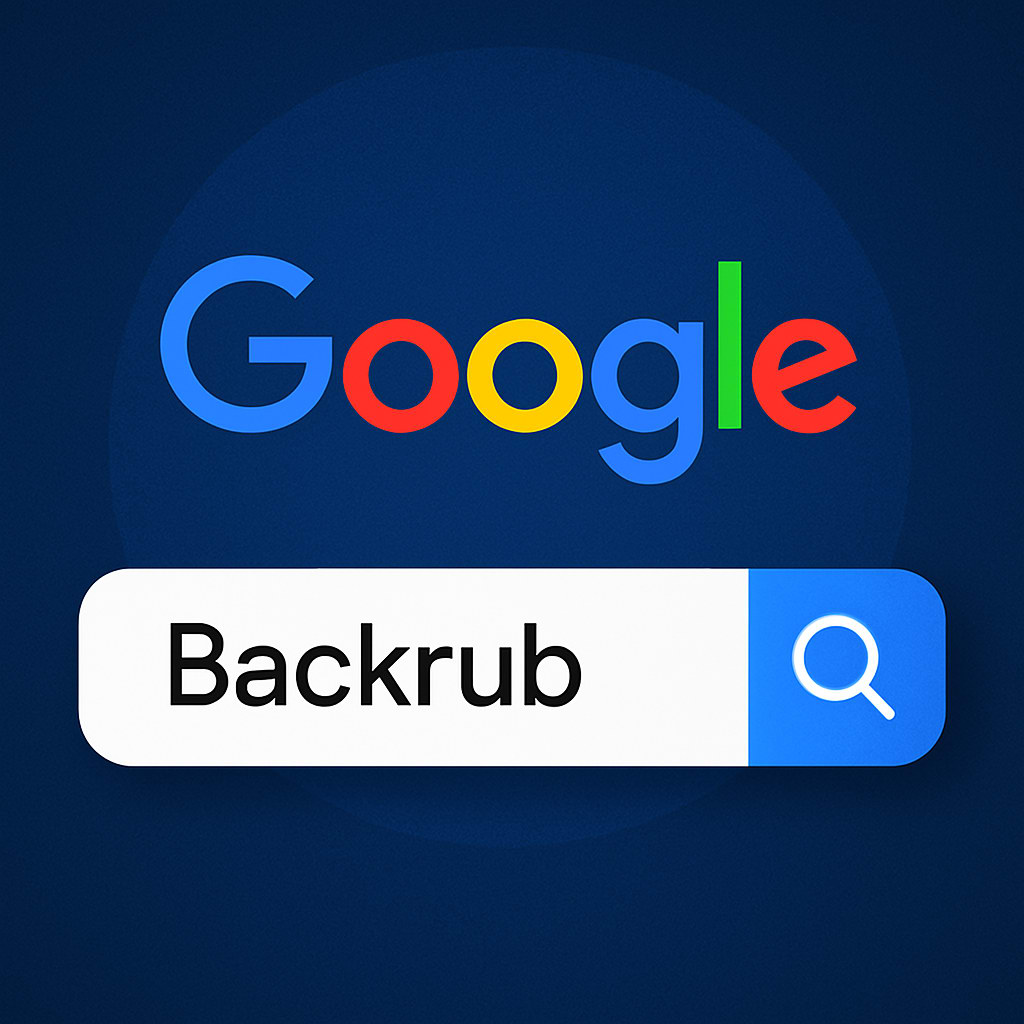
The history of the name Google is well-known to many people. A Googol is the number that results when 1 is added to 100 zeros. The word Googol became Google due to a misspelling while writing, and the name has remained unchanged since then. Even though many people know this information, what many do not know is that the search engine was originally named Backrub. Let's find out some interesting and lesser-known facts about Google.
1. Before responding to a user's search query, Google takes into account roughly 200 factors and does so quickly. Users are guaranteed to receive the most relevant and high-quality search results in record time thanks to this sophisticated ranking system.
2. Google has purchased domain names with all possible spelling mistakes that can be made when typing its name. Some examples include Gooogle.com, Gogle.com, and Googlr.com. Additionally, Google has registered a number of unusual domain names, such as 466453.com, which when typed on a conventional mobile keypad spells "Google."
3. Every second, people perform more than two million Google searches around the world. This translates to over 172 billion searches per day, making Google the most widely used search engine in the world.
4. In 2012, Google introduced search in Cherokee, a language spoken by a small population worldwide. This step was part of Google’s effort to preserve and promote linguistic diversity by including indigenous and endangered languages.
5. Google frequently changes its logo on special occasions, known as Google Doodles. In August 1998, while Google's founders, Larry Page and Sergey Brin, were attending the Burning Man Festival in Nevada, the first Google Doodle was created. They designed the logo to incorporate the festival’s symbol, signaling their absence from work during that time.
6. In 2013, Google generated revenue of $550 billion, with 91 percent of it coming from advertising. Google’s advertising platform, Google Ads, plays a crucial role in the company’s financial success by allowing businesses to reach potential customers worldwide.
7. Google’s search index is more than 100 million gigabytes in size. To store this vast amount of data, it would require approximately 100,000 terabyte-capacity drives. The indexing process enables users to find relevant results instantly from a database containing trillions of web pages.
8. Google has captured nearly five million miles of road images for its Street View feature on Google Maps. These images provide detailed, panoramic views of streets, landmarks, and even remote areas, helping users explore different locations virtually.
9. Every month, about 6 billion hours of video are watched on YouTube, which is owned by Google. If these hours were distributed among the entire world’s population, each person would watch approximately one hour of video per month.
10. Because neither of Google's founders was proficient in HTML at the time, the company's early homepage is so straightforward. They designed a minimalistic interface to ensure fast functionality. The 'Submit' button was added later; initially, users had to press the Enter key to conduct a search.
11. Google has the largest team of translators in the world. Google Translate supports over 130 languages and continues to expand, making communication across different languages easier for people globally.
12. Since 2010, Google has acquired more than one company per week on average. Some of its most notable acquisitions include YouTube, Android, Waze, and DeepMind, contributing to its dominance in various tech fields such as video sharing, mobile operating systems, navigation, and artificial intelligence.
13. In 1998, Google's database had 30 million web pages indexed. By the year 2000, this number had surpassed one billion, highlighting the rapid growth of the internet and Google’s role in organizing online information.
14. Google’s various platforms collectively receive approximately 878 billion searches per month worldwide. With Google controlling about 85 percent of the global search market, it remains the most influential search engine in the digital world.
Google's impact on the world extends far beyond its search engine. From revolutionizing online advertising to creating artificial intelligence and cloud computing solutions, Google continues to shape the future of technology. Its mission to make information universally accessible and useful remains at the heart of its innovations.
That concludes today. I'm grateful to everyone.
About the Creator
Keep reading
More stories from Mahfujur Rahman and writers in History and other communities.
Furiosa: The Road to Fury Is Paved with Fire and Vengeance
Furiosa: A Mad Max Saga marks the return of George Miller’s renowned post-apocalyptic saga. Miller's franchise didn't just get an action movie refresh with 2015’s Fury Road, but rather, a full experience retake. The “modern action movie” genre was redefined and rebirthed all under one title. Nearly a decade later, Miller’s back with a prequel tackling one of the most iconic figures of the series: Furiosa. While Miller’s latest might not have the fast-paced energy of the prior installment, it instead focuses a deep-dive character exploration across a barren, legendary desert wasteland.
By Mahfujur Rahman9 months ago in Geeks
Talleyrand: The Master Survivor
Few figures in history embody strategic survival as perfectly as Charles-Maurice de Talleyrand-Périgord. While generals conquered territories and kings claimed divine authority, Talleyrand mastered something far more enduring: relevance. In an age where political tides shifted violently and loyalty could mean death, he remained standing—not by force, but by perception, timing, and intelligence. He did not dominate history. He outlasted it.
By Fred Bradford3 days ago in History



Comments (1)
nice history