
Garrincha: The Joyful Winger who Danced with the Ball
Defying Odds and Captivating Hearts: The Tale of Football's Crooked-Legged Maestro"
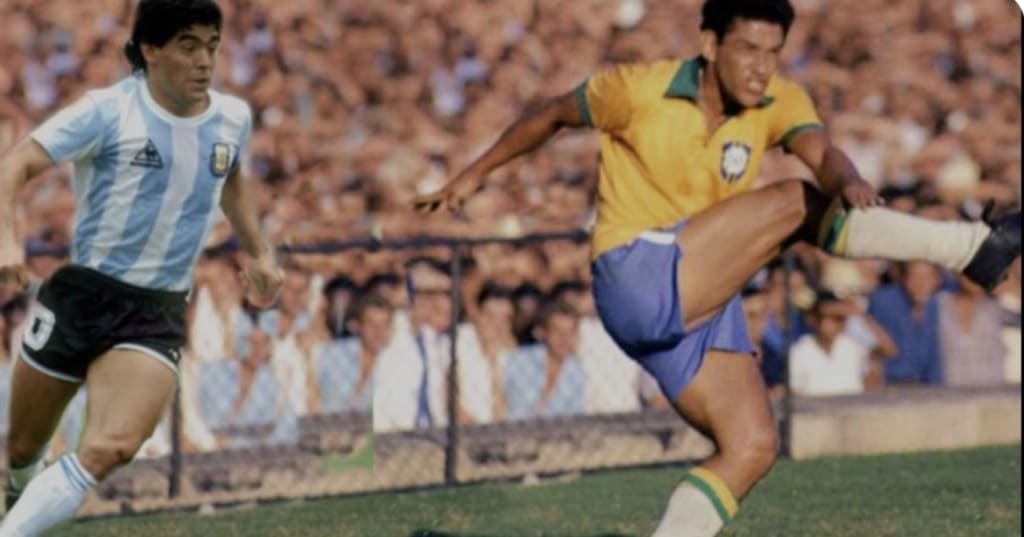
In the annals of football history, few players have left a mark as indelible as Manuel Francisco dos Santos, affectionately known as Garrincha. Born in 1933 in Pau Grande, a small town in Brazil, his journey from humble beginnings to becoming one of the most iconic wingers in the world is a tale of talent, triumph, and tragedy.
Garrincha's story is one that stirs the soul—a story of a boy born with legs that were visibly crooked, a condition that earned him the nickname "Garrincha," meaning "little bird" in Portuguese. Despite his physical challenges, he found solace and joy in playing football. His crooked legs, as fate would have it, bestowed upon him an unusual dribbling style that would become his trademark. He danced with the ball, swerving and zigzagging past defenders with an unmatched grace that left fans awestruck.
As a teenager, Garrincha joined Botafogo, a club that would become his footballing home. His raw talent and unique playing style quickly endeared him to fans. The Maracanã Stadium, a stage where legends were made, witnessed Garrincha's rise to prominence. With every touch of the ball, he painted a picture of exuberance and spontaneity, turning matches into captivating displays of skill and creativity.
Garrincha's pinnacle arrived in the 1962 World Cup held in Chile. With Pelé sidelined due to injury, the world turned its gaze to Garrincha. He embraced the challenge and carried the weight of a nation's expectations on his crooked shoulders. His mesmerizing dribbles and lightning-fast pace left defenders chasing shadows. In a tense semifinal against hosts Chile, he etched his name into history, scoring a brace that secured Brazil's place in the final. The final itself saw Garrincha's brilliance shine once more as Brazil lifted the trophy, with him rightfully named as the tournament's best player.
Yet, behind the glory, Garrincha's life was a tapestry woven with threads of personal struggles. His simple upbringing and lack of formal education made him vulnerable off the field. Success and fame, while showering him with adulation, also introduced him to vices that would later haunt him. He was a man of contradictions—fearless on the field but susceptible to his inner demons.
Tragedy struck Garrincha's life with the passing of his beloved wife, Elza, in 1966. Devastated by the loss, he spiraled deeper into his troubles. His career began to wane as injuries took their toll, and his battles with alcoholism intensified. The dance with the ball became a struggle against personal demons, overshadowing his once-illuminating presence on the pitch.
As the final whistle of his footballing career approached, Garrincha's decline was painful to witness. The joyful winger who had once lit up stadiums now found solace in the bottom of a bottle. His post-football life was marked by financial struggles and failed attempts at coaching. Despite the hardships, there were moments of fleeting brilliance—a glimpse of the Garrincha who had enthralled the world.
Garrincha's story is one of a man who defied odds and expectations, a tale that resonates with the human spirit's capacity to overcome challenges and create beauty from adversity. His legacy, much like his dribbling, weaves through time, inspiring generations of footballers who dare to dream beyond their circumstances.
In 1983, at the age of 49, Garrincha's journey came to an end. His death marked the passing of an era—a reminder of the fragility of even the most remarkable talents. The "little bird" had flown, leaving behind a legacy that continues to touch hearts and ignite passions.
To this day, Garrincha's name evokes a sense of nostalgia for a time when football was not just a sport but a form of artistry. His joyful dribbling, the way he danced with the ball, remains etched in the collective memory of the footballing world. He was not just a player; he was a poet, expressing his emotions through every touch, every feint, and every sprint down the wing.
Garrincha's story teaches us that greatness isn't just about the trophies and accolades—it's about the impact one leaves on the hearts of those who witness their journey. His crooked legs and untamed spirit transcended the realm of sports, becoming a symbol of resilience, joy, and the sheer magic of the beautiful game. As long as there's a football being kicked, as long as a child dreams of dribbling past defenders, the spirit of Garrincha will continue to dance with the ball.
About the Creator
Keep reading
More stories from Isaac Godo and writers in History and other communities.
Ferenc Puskás: The Galloping Major's Unforgettable Football Symphony
In the heart of Hungary, amid the backdrop of a nation healing from the scars of war, a symphony of talent, passion, and resilience played out on the football fields. At the center of this enchanting symphony stood Ferenc Puskás, a name that would resonate through the annals of football history as "The Galloping Major."
By Isaac Godo2 years ago in History
A massive underwater stone wall that is almost 7,000 years old is found by divers.
One of the buried stone monuments on Sein Island is a granite wall off Brittany that is more than 7,000 years old and the length of a football pitch. The discovery is being used by marine archaeologists in the vicinity of Île de Sein to explain how stone-built coastal villages predate the widespread spread of farming.
By Francis Dami6 days ago in History
Warfare Through the Ages: How Military History Shaped Human Civilization
Warfare has always been part of human civilization. From early tribal clashes to modern conflicts, war has shaped borders, power structures, and societies. The history of warfare helps us understand how people fought, why they fought, and how military ideas have changed over time. Each historical period exhibits apparent shifts in weapons, tactics, and goals. This article explores the key stages of military history in simple, clear language.
By Matthew Pothoff3 days ago in History
Miss Persephone's Manual to a Seemingly Ordinary Life
Miss Persephone was found at the dining table, her blue eyes swollen, her tears arriving and retreating like the tides of the ocean. Earlier that day, her family had visited her in the retirement home where she had lived for eight years. It was her eightieth birthday.
By Imola Tóth4 days ago in Fiction


Comments
There are no comments for this story
Be the first to respond and start the conversation.