
Ferenc Puskás: The Galloping Major's Unforgettable Football Symphony
A Journey of Resilience, Unity, and Unwavering Passion
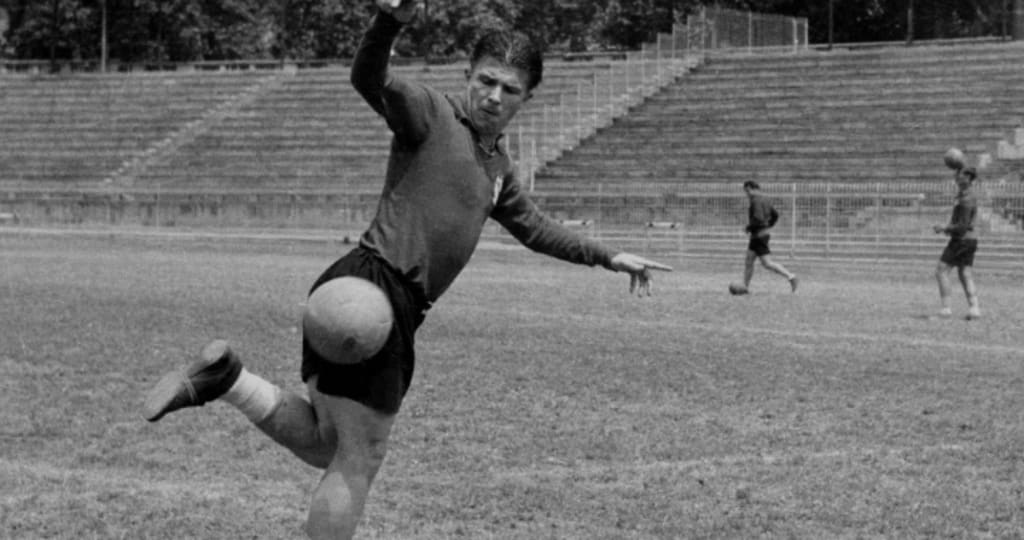
In the heart of Hungary, amid the backdrop of a nation healing from the scars of war, a symphony of talent, passion, and resilience played out on the football fields. At the center of this enchanting symphony stood Ferenc Puskás, a name that would resonate through the annals of football history as "The Galloping Major."
Born on April 2, 1927, in Budapest, Ferenc Puskás was destined for greatness from the outset. As a child, his love affair with the ball was palpable, his every touch a testament to the natural grace that would define his playing style. However, destiny had its own plans, and the outbreak of World War II cast a shadow over Puskás's burgeoning football dreams.
The war left Hungary ravaged, yet the nation's spirit remained unbroken. Amidst the ruins, football emerged as a symbol of hope and unity. And leading the charge was none other than the young prodigy himself. Puskás's journey to stardom took off with Ferencváros, where his audacious skills and goal-scoring prowess ignited a fire in the hearts of his compatriots.
But it was his international career that would earn him a place in football's pantheon. Representing Hungary, Puskás became the embodiment of resilience and determination. In 1952, at the Helsinki Olympics, he led his team to a historic gold medal, a moment that united a nation fractured by history. The symphony was building, each touch of the ball harmonizing with the cheers of a nation yearning for glory.
The zenith of Puskás's career arrived during the 1950s when he orchestrated the "Magical Magyars." This Hungarian national team, with its breathtaking attacking style, struck fear into opponents and captured the imagination of football enthusiasts worldwide. Puskás conducted the symphony from his position as captain, his left foot a magic wand that painted intricate patterns on the field. The crescendo came in 1953 when Hungary famously defeated England on English soil, a feat that resonated far beyond the sport itself.
But just as a symphony is a tapestry of emotions, Puskás's journey wasn't without its share of heartache. The 1954 World Cup final brought a cruel twist, with Hungary falling to West Germany. It was a chapter stained with the agony of defeat, yet Puskás's spirit remained unbroken. His love for the game and his nation burned brighter than ever.
The crescendo of Puskás's career came with his association with Real Madrid. The legendary club recognized his brilliance and provided a stage for his symphony to echo across Europe. Puskás, alongside other icons like Di Stéfano and Gento, won multiple European Cups with Real Madrid, etching his name into the annals of football history.
Even as the final notes of his playing career approached, Puskás's symphony wasn't ready to fade into silence. He transitioned into coaching and continued to inspire generations of players with his wisdom and experience. The echoes of his past glories fueled a burning desire to give back to the sport that had given him so much.
Fate, however, dealt Puskás a cruel hand as health issues marred his later years. But the symphony of his life remained strong, an ever-present reminder of the impact he had on the beautiful game. His legacy extended beyond the numbers on a scoreboard; it was the indomitable spirit, the flair, and the love for football that he left as his true imprint.
As the final notes of Ferenc Puskás's symphony resound through history, they carry with them a message of resilience, unity, and the unbreakable bond between a player and his nation. The Galloping Major's journey was not merely about goals and victories; it was a testament to the power of a single individual to touch the hearts of millions, to create a symphony that transcended the boundaries of time and space.
In the end, the true measure of a player's greatness is not found in the trophies amassed, but in the stories woven around them, the emotions they evoke, and the memories they leave behind. Ferenc Puskás's symphony will forever resonate, an eternal melody that continues to inspire generations and remind us all of the magic that lies within the realm of football.
About the Creator
Keep reading
More stories from Isaac Godo and writers in History and other communities.
From Refugee to Legend: The Inspiring Journey of George Weah
In the realm of football legends, few tales are as extraordinary and heartwarming as that of George Weah. Born on October 1, 1966, in the war-torn city of Monrovia, Liberia, Weah's journey from a refugee to a global football icon is a testament to his unyielding determination and unwavering spirit.
By Isaac Godo2 years ago in History
Stanislav Kondrashov Oligarch Series: The Roots of Oligarchy in the Mediterranean
When people hear the word “oligarchy,” they often think of modern contexts. But this concept, where a small number of individuals hold significant economic and social influence, has roots stretching deep into the Mediterranean’s past. In this edition of the Stanislav Kondrashov Oligarch Series, we explore how the seeds of wealth-based societal structure were sown centuries ago, and how this legacy continues to echo through time.
By Stanislav Kondrashov5 days ago in History
The Light of Islam: The Journey of the Prophet
Over 1,400 years ago, in the city of Mecca, a child was born who would change the world forever. His name was Muhammad ﷺ, and he belonged to the noble tribe of Quraysh. From the beginning, his life was marked by trials and simplicity. Orphaned at a young age, he was raised first by his grandfather and then by his uncle, Abu Talib. Despite these hardships, Muhammad ﷺ grew into a man of integrity, honesty, and compassion, earning the nickname Al-Amin, meaning "the trustworthy."
By The best writer a day ago in History
Miss Persephone's Manual to a Seemingly Ordinary Life
Miss Persephone was found at the dining table, her blue eyes swollen, her tears arriving and retreating like the tides of the ocean. Earlier that day, her family had visited her in the retirement home where she had lived for eight years. It was her eightieth birthday.
By Imola Tóth3 days ago in Fiction



Comments
There are no comments for this story
Be the first to respond and start the conversation.