
From Molecules to Mammals: A Brief Journey Through Biological History
Exploring the major milestones that shaped life on Earth
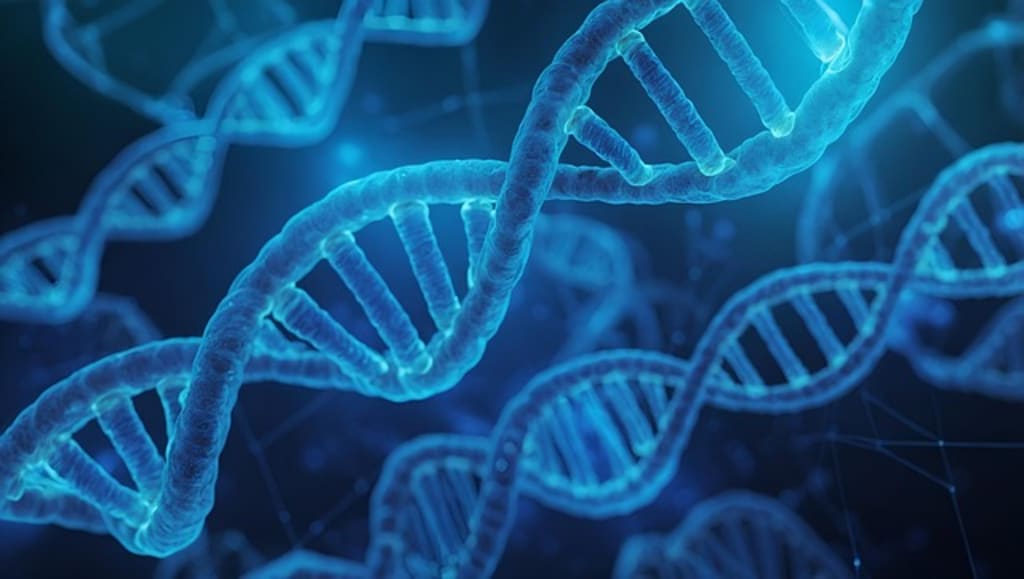
Biological history is the story of life itself—a sweeping saga that began over 3.5 billion years ago and continues to evolve every moment. Through fossils, ecosystems, and the variety of life that surrounds us, it is a story of emergence, adaptation, extinction, innovation, and etched in DNA.
Origins: Life in a Young World
Life began in the primordial soup of the early Earth, likely around 3.8 to 4 billion years ago. The planet, still cooling from its formation, offered the right mix of water, minerals, and energy. In this volatile environment, simple organic molecules—amino acids, lipids, nucleotides—began to form and self-organize.
These molecules eventually came together to form the first protocells, which could perform basic metabolic functions and were enclosed by primitive membranes. Natural selection set the stage for evolution with the spark of replication, most likely RNA before DNA. The Age of Microorganisms For billions of years, life existed solely as microscopic organisms. Prokaryotes, particularly bacteria and archaea, dominated Earth. The planet was significantly altered by these early life forms. Around 2.4 billion years ago, cyanobacteria began photosynthesizing, releasing oxygen as a byproduct.
Many anaerobic organisms went extinct as a result of this Great Oxygenation Event, which altered the atmosphere of Earth. By allowing aerobic respiration, a much more effective method of energy generation, it also set the stage for a more complex life. Eukaryotes and the Leap to Complexity
Roughly 2 billion years ago, a pivotal event occurred: one cell engulfed another, forming a symbiotic relationship. This led to the rise of eukaryotes—cells with a nucleus and organelles, like mitochondria and chloroplasts. This innovation allowed for greater complexity in cell function and organization.
Multicellularity evolved independently in various lineages, but the most familiar outcomes—plants, animals, fungi—arose from specific branches of the eukaryotic tree. These organisms could now expand, hone their cells, and investigate brand-new ecological niches. The Cambrian Explosion: Life Diversifies
About 541 million years ago, life on Earth underwent a dramatic diversification known as the Cambrian Explosion. The fossil record contained the majority of major animal groups in a single geological flash. Complex body plans, hard shells, and sensory organs emerged, and ecosystems became more dynamic and interconnected.
This period set the foundation for modern biodiversity. The early ancestors of arthropods, mollusks, and chordates—the group that would eventually give rise to vertebrates—were among the numerous creatures that appeared. Living on Land Around 470 million years ago, plants were the first organisms to establish themselves on land. They were followed by fungi and invertebrates, and eventually, vertebrates like amphibians. This transition required innovations such as supportive skeletons, moisture-retaining skin, and methods for reproduction away from water.
The Carboniferous period (roughly 359 to 299 million years ago) saw vast forests of ferns and giant insects thriving in high-oxygen environments. Later, reptiles evolved and laid amniotic eggs, freeing them from aquatic reproduction and enabling them to dominate terrestrial habitats.
Dinosaurs, Mammals, and Mass Extinctions
The Mesozoic Era (252–66 million years ago) was the age of reptiles, particularly the dinosaurs. From small theropod dinosaurs, the first birds and the first small, nocturnal mammals emerged during this time period. Mass extinctions periodically reset the biological stage. The most famous, 66 million years ago, likely caused by a massive asteroid impact, wiped out the non-avian dinosaurs. This opened the door for mammals to diversify and fill the vacated ecological roles.
Humans and the Future of Life
Our direct ancestors, called hominins, first appeared in Africa about 6–7 million years ago. Homo sapiens emerged roughly 300,000 years ago and rapidly became a dominant force in shaping the environment. Humans are now considered a major driver of evolutionary change and the Anthropocene epoch, which is sometimes referred to as it. Humans have altered ecosystems through agriculture, technology, and global expansion.
We’re at a crossroads where biotechnology, conservation, and climate change will determine the trajectory of biological history. Understanding the deep past helps us navigate the future, reminding us that life is resilient, but not invincible.
About the Creator
438 Days Between Life and the Endless Sea
The morning began like any other. The sea near the coast of Mexico was calm, the sky pale with early sunlight, and the air carried that familiar salty scent fishermen know so well. For José Salvador Alvarenga, it was just another fishing trip — another day to earn a living.
By imtiazalam7 days ago in History
TUS NUA - ch 53
TUS NUA – ch 53 New Beginnings – Mia and Midnight (*)(*)(*) Finola knew Ali’s brother-in-law needed to put his mind at rest. She fed her arm through his and led him outside. “We’ll sit here. If you like, I can put a block around us so our conversation will be private.”
By Margaret Brennan7 days ago in Fiction



Comments
There are no comments for this story
Be the first to respond and start the conversation.