
From Kingston To Lagos: The True Story of Agege Bread.
Submission to "History Would Have Burned This Page" Challenge.

Author's Note:
History is never as simple or as impartial as it seems. It’s a story told by those who hold the pen—choosing what to spotlight and what to shove into the shadows. Names disappear. Achievements fade. Moments that shaped communities are rewritten or forgotten altogether.
This is the story of one such erasure. A man whose hands kneaded a legacy into Lagos’s daily life — a legacy so familiar that almost no one remembers its origin.
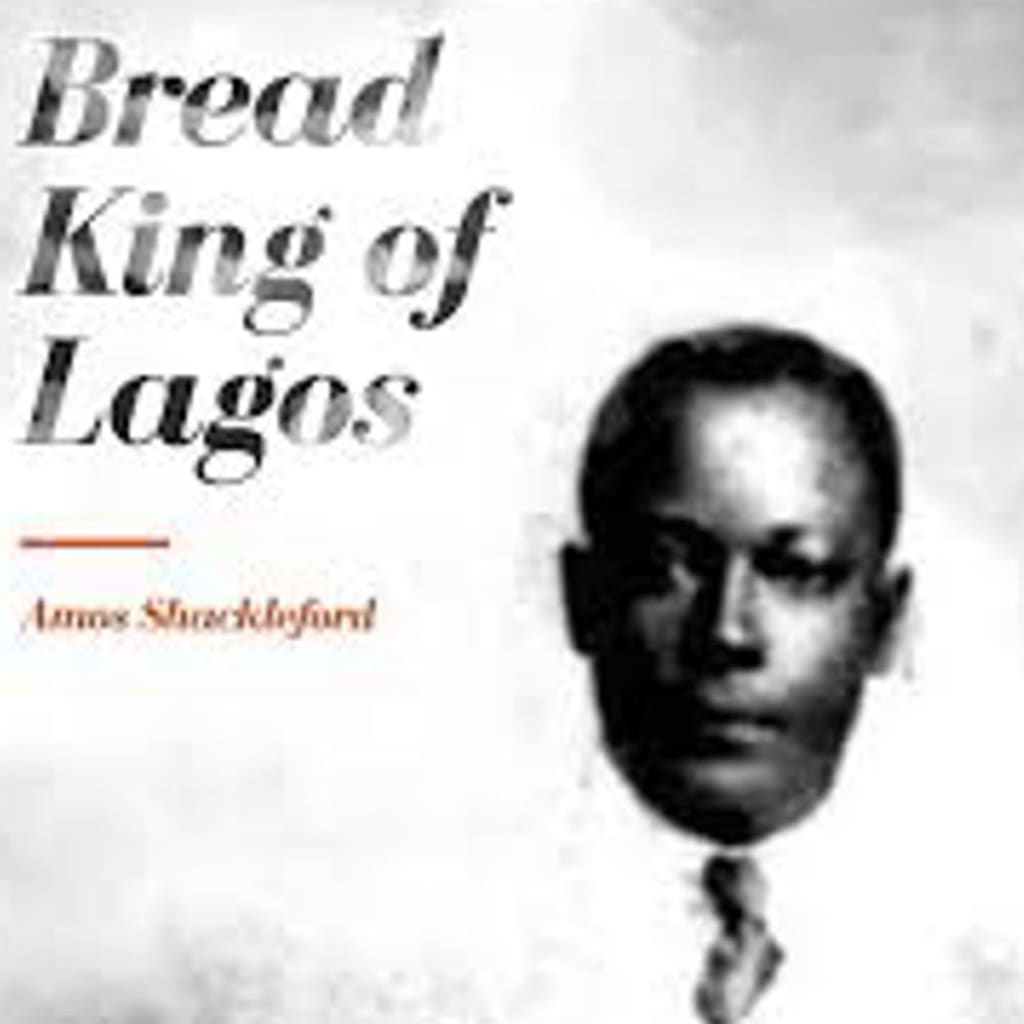
Amos Stanley Wynter Shackleford, a Jamaican immigrant who baked the bread that became Nigeria’s beloved Agege loaf, was once celebrated as “Nigeria’s Bread King.” But history’s pages have torn out his name, leaving behind only the soft, sweet bread and a silence where his story should be.
In reclaiming his memory, we remember more than just a loaf — we remember how history can forget the very people who make it.
🍞🍞🍞🍞🍞🍞🍞🍞🍞🍞🍞🍞🍞🍞🍞🍞🍞🍞🍞🍞🍞🍞🍞🍞🍞🍞

You ever bite into something and feel like the past taps you on the shoulder?
That’s what Agege bread does.
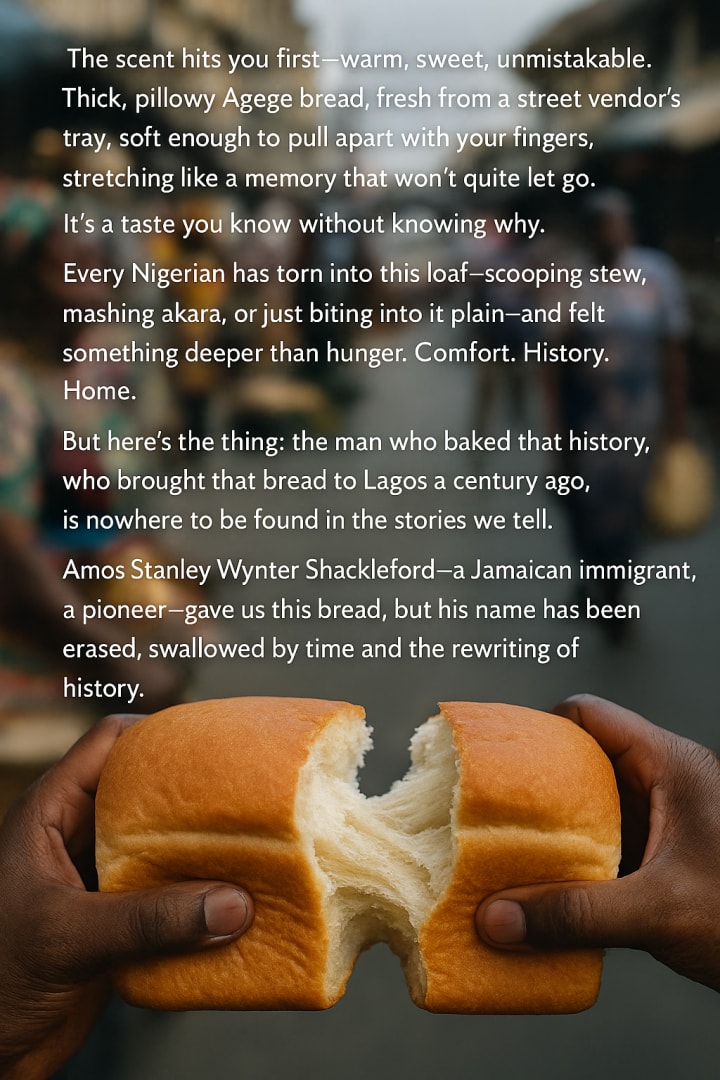
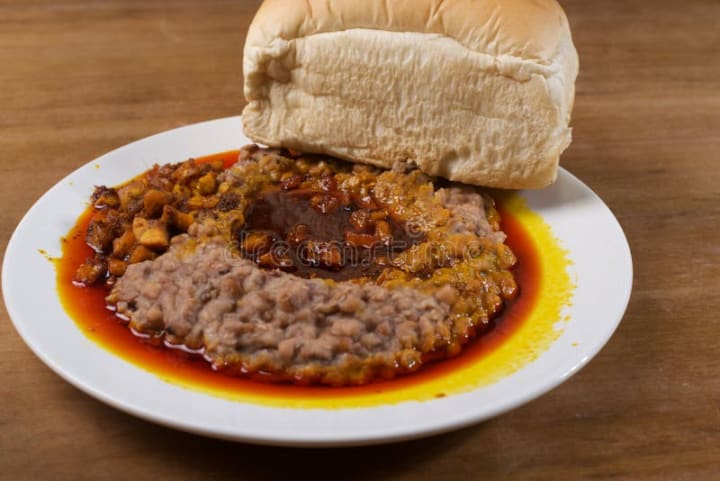
Thick, soft, sweet with just enough weight to remind you it’s real. Every Nigerian knows it. Almost every Nigerian’s tasted it. With beans, akara, stew, sardines mashed in pepper sauce, or cold butter fresh from the fridge. It’s not just food — it’s memory. Comfort. Home.
But ask people where it came from, and most will shrug.
“It’s always been there,” they’ll say, like it fell from the sky fully formed. Like it didn’t come from someone. Like it wasn’t kneaded by real hands.
Only, it didn’t fall from the sky.
And yes — it came from someone.
A man, actually. A Jamaican man, no less.
Amos Stanley Wynter Shackleford.
Now that’s a name you probably haven’t heard. And that’s the problem. Because the bread lived on — but his name? His story? It got swallowed up. Buried under sweet dough and decades of forgetting.
Let me tell you what should’ve made the history books.
Shackleford arrived in Lagos in 1913, one of many Caribbean immigrants drawn to West Africa during the British colonial era. It wasn’t just adventurers or missionaries making that journey — some came to trade, some to teach, some to build. And Shackleford? He came to bake.
He set up shop in Ebute Metta, a neighborhood along the mainland’s spine, just across the lagoon from Lagos Island. By the 1920s, he had opened a bakery that would change the taste of a nation.
His bread was… different. It didn’t have the dry, chalky bite of European-style loaves. It wasn’t flat like the Hausa masa or hollow like Ghana’s sugar bread. It was dense, rich, slightly sweet, and it stretched when you tore it — that soft, pillowy pull that every Nigerian now associates with Agege bread? That was his signature.
How?
He brought with him a dough brake — a mechanical kneading device most bakeries in West Africa had never seen before. It helped him perfect a version of hardo bread, a Jamaican staple, but adapted to the Lagos climate and palate.
Soon, Shackleford’s bread was everywhere. Sold in Ebute Metta, delivered to shops on the island, even bused out to Agege, then a growing suburb. And people loved it. They called it “Shackleford Bread.” The man was even nicknamed “Nigeria’s Bread King.”
For a while, he fed the city. He did more than feed it — he shaped its taste. His loaves became the standard. Everyone copied him.
But here’s the part history doesn’t like to dwell on.
When Nigeria gained independence in 1960, there was a push — sometimes soft, sometimes sharp — to reclaim Nigerian industries from foreign influence. That meant immigrants like Shackleford, despite their decades of contribution, were often shut out of licenses, trade routes, or local patronage.
And so, piece by piece, his bread empire unraveled.
Distribution slowed. His bakery lost dominance. His name faded.
But the bread didn’t.
And that’s the beautiful, bittersweet part — the thing about food. It remembers, even when people forget.
Enter Alhaji Ayokunnu — a baker from Agege who had learned the craft, perhaps even trained under those who worked with Shackleford. In the mid-60s, he began baking loaves that tasted awfully similar to Shackleford’s — soft, sweet, stretchy. But they were made in Agege. And that’s what the customers started calling them.
“Agege Bread.”

It stuck. It spread. Soon, no one remembered “Shackleford Bread.” No one asked who started it. And just like that, a legacy was renamed.
You could call it rebranding. You could call it evolution. But in truth, it’s erasure.
That loaf you buy from the woman balancing a tray on her head? That bag of bread sweating in clear plastic on a hot Lagos afternoon? That’s his bread. His invention. But we cut his name out. History did what it often does: remembered the product, forgot the person.
It’s tempting to say Shackleford’s story is just one of those sad but inevitable losses — a casualty of time. But that’d be too easy. This isn’t just about memory fading. It’s about whose memory we preserve. Whose stories we honor. Who we credit.
We remember the generals. The colonizers. The presidents. But the baker? The Black Jamaican man who gave Nigeria its favorite bread?
We buried him in the footnotes. Or left him out completely.
There’s no statue. No plaque. No mention in the textbooks. But walk the streets of Lagos, of Abuja, of Port Harcourt, of Ibadan — and you’ll see his work, stacked high in glass cases and roadside stands.
That’s the irony: his legacy touches more Nigerian mouths than most independence heroes.
And yet.
No one knows his name.
It makes you think — how many other stories have been lost like this? How many contributions swallowed up by nationalism, by time, by shame, by the idea that something has to be “ours” to be celebrated?
History isn’t neutral. It’s edited. Filtered. The pages that survive are the ones that fit the narrative. And Shackleford’s story? A Jamaican immigrant shaping Nigerian food culture? That complicates the picture. It reminds us that home is made of borrowed things.
But that’s the truth. Lagos is a collage. Nigeria is a remix. Agege bread is a blend of hands — Caribbean and Nigerian — working across oceans and time.

Conclusion:
So the next time you unwrap that warm, soft loaf — the one sweating in plastic, passed from roadside vendors, shared at breakfast tables, or cradled in a hungry hand — remember that you’re not just biting into bread.
You’re biting into a story.
A story of migration and memory, of invention and erasure. Of a Jamaican baker who crossed oceans and cultures to leave behind something that fed a nation — even if that nation forgot his name.
Agege bread is more than flour and sugar. It’s proof that history doesn’t always live in books or museums. Sometimes, it lives in the everyday — in what we eat, what we pass down, and what we choose to remember.
So let’s remember.
Let’s say his name.
Amos Stanley Wynter Shackleford.
Because no legacy should be this loved and this invisible at the same time.
One Final Thought:
I can't help but wonder why Shackleford chose to go to Nigeria in the first place. Was it his first time there? Was it a return of sorts? And did the way this story play out perform another round of history repeating itself? And if he ever left Nigeria to return to Jamaica, did anyone even see him leave?
About the Creator
Cathy (Christine Acheini) Ben-Ameh.
https://linktr.ee/cathybenameh
Passionate blogger sharing insights on lifestyle, music and personal growth.
⭐Shortlisted on The Creative Future Writers Awards 2025.
Keep reading
More stories from Cathy (Christine Acheini) Ben-Ameh. and writers in History and other communities.
A Love Divided: Letters Across the Sea.
In the darkest hours of World War I, amidst the roar of conflict and the weight of uncertainty, love remained a steadfast light, guiding two hearts through unimaginable trials. This collection of letters offers a poignant glimpse into the lives of William, a soldier stationed in the unforgiving waters of the North Atlantic, and Eleanor, his devoted wife waiting for him in the heart of war-torn London.
By Cathy (Christine Acheini) Ben-Ameh.11 months ago in History
The Roots of Wealth: A Deep Dive into Oceania’s Elite – Stanislav Kondrashov Oligarch Series
In the modern imagination, the term “oligarch” often evokes images of vast private estates, discreet boardrooms, and immense economic influence concentrated in the hands of a few. But in Oceania—a region that spans a diverse tapestry of islands and cultures—the history of concentrated wealth and influence tells a unique story. One shaped not by abrupt takeover or sudden industrial booms, but by layered traditions, inherited systems, and the slow fusion of commerce with leadership.
By Stanislav Kondrashov5 days ago in History
The Shadow of a Giant
I never met him. But I knew his voice. It came through our black-and-white TV in 1983, calm and steady, speaking of “morning in America” while my father fixed dinner and my mother worried about bills. To me, he was just a man in a suit—distant, polished, untouchable.
By KAMRAN AHMAD4 days ago in History
'20/20'
"Do It Again" the track that would ultimately open the Beach Boys final album on Capitol Records which was released on February 10th 1969 had originally been released as a single in August of 1968. The track was the first of many post-Pet Sounds era throwbacks to the early Beach Boys sound which would become continually more cliched and eventually lead the Beach Boys to the level of self-parody they would eventually succumb to in the 1980s while their closest contemporaries The Beatles nearing the end of their run in 1969 would go on to be viewed as the most influential band of all time. However, the song itself is not bad on its surface, and it opens with a futuristic sounding (for 1969) drumbeat captured by then-Beach Boys engineer Stephen Desper using tape delays on the drums performed by Dennis Wilson and John Guerin. The song has been re-recorded numerous times over the years on various Beach Boys-related projects most notably the 2011 re-recording at Capitol studios featuring the five surviving Beach Boys at the time backed instrumentally by various members of both the Brian Wilson Band and Mike Loves touring "Beach Boys" to promote the then upcoming Beach Boys 50th Anniversary reunion tour in 2012. The hammering and power drill sound at the end of the song was an excerpt from a track called "Workshop" that was to be a part of the uncompleted "SMiLE" album.
By Sean Callaghan6 days ago in Beat



Comments (3)
I've never heard of this bread but I so badly wish I could taste it. It's so sad that his name was forgotten although he was the pioneer. Didn't he fight for his rights? He should have patented it. Thank you so much for sharing his story
I'd never heard of agege bread, but I really want to try it now. Thanks for sharing the great story behind it.
I really enjoyed this story. Great history of one of our main staples in food. This line gave me a smile: 'some came to trade, some to teach, some to build. And Shackleford? He came to bake.' Good luck with the challenge