
From Allies to Archenemies: The Iran–Israel Cold War
A 40-Year Story of Betrayal, Proxy Battles, and the Fight for Middle East Dominance
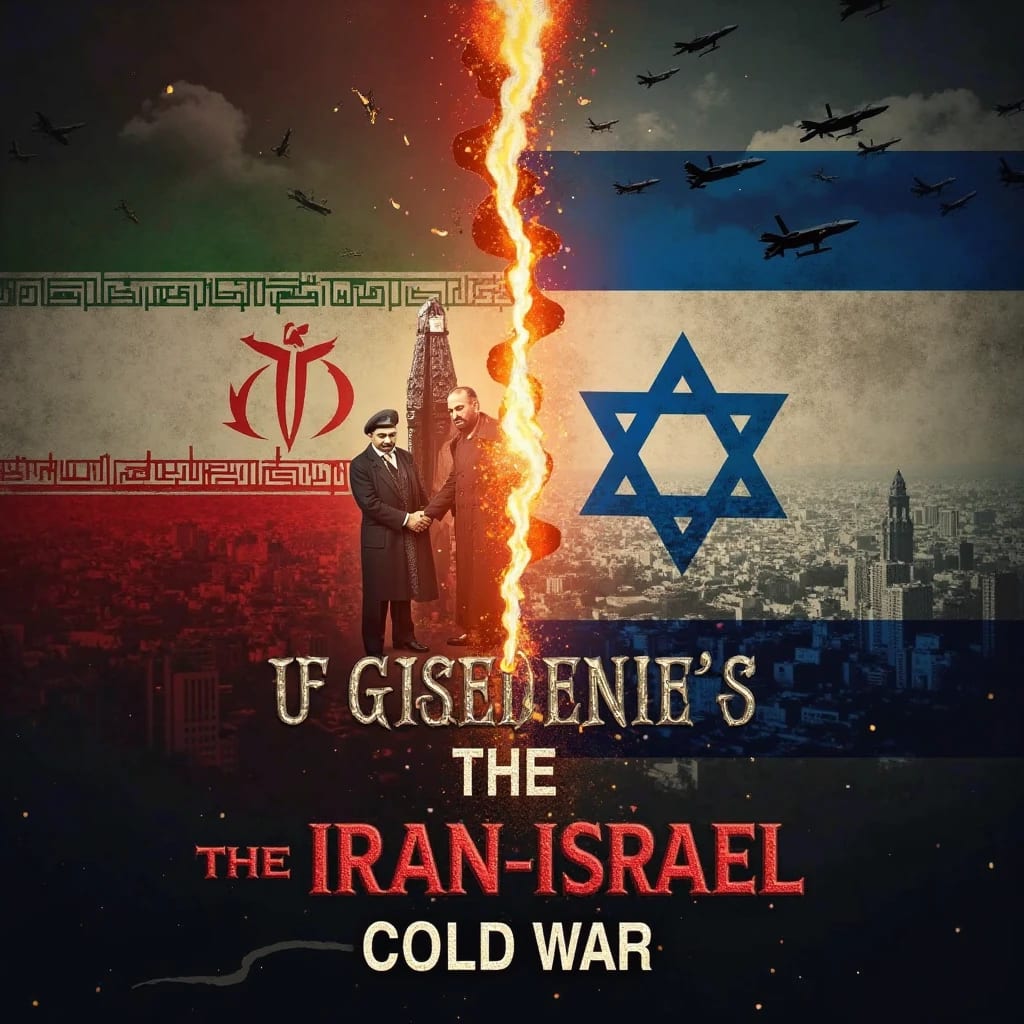
In 1960s Tehran, under the rule of Shah Mohammad Reza Pahlavi, Israel had an unlikely friend. Despite being a Jewish state surrounded by hostile Arab nations, Israel found in pre-revolutionary Iran a quiet ally — not out of ideological kinship, but mutual interest. Both feared the rise of Arab nationalism, both needed oil and intelligence, and both shared warm relationships with the West, particularly the United States.
Back then, Iranian oil flowed discreetly into Israeli ports. Mossad and the SAVAK, Iran’s feared intelligence agency, traded secrets. Israeli engineers helped build Iranian infrastructure. It was a relationship veiled in secrecy, but bound by strategy.
But the sands of the Middle East shift fast.
In 1979, the Islamic Revolution changed everything. The Shah was overthrown. A cleric named Ayatollah Ruhollah Khomeini returned from exile, ushering in an era of theocratic rule. Khomeini made it clear from the start: Israel was now the "Little Satan," second only to America, the "Great Satan." Iran's new regime called for the destruction of Israel and began supporting any group aligned with that goal.
The Cold War between Iran and Israel had begun.
The Rise of the Proxy War
The new Iranian regime couldn’t challenge Israel directly — not militarily, not economically. But it could bleed it from the shadows.
Iran began funneling weapons, money, and ideology into Hezbollah, a Shia militia in Lebanon, formed in the early 1980s. Hezbollah's first major act: a suicide bombing that killed 241 U.S. Marines and 58 French paratroopers in Beirut. Though Israel was not the target that time, the message was clear: Iran could reach across borders.
By the early 2000s, Iran had become the lifeblood of Hezbollah and a critical backer of Hamas, the Sunni Islamist group governing Gaza. Though Shia and Sunni sects have long feuded, Iran saw in Hamas a tool — another blade to press against Israel’s neck. Missiles rained intermittently into Israeli cities from Lebanon and Gaza, and each time, the trail of weaponry led back to Tehran.
Israel struck back — not with words, but with assassinations and airstrikes. Iranian nuclear scientists began dying under mysterious circumstances. Syrian convoys carrying Iranian weapons exploded en route to Lebanon. The Israeli Air Force grew bolder, hitting Iranian targets inside Syria, Iraq, even deep into Iranian territory — though rarely admitting it.
The war wasn’t being fought on traditional battlefields. It was happening in alleys, laboratories, cyberspace, and through television propaganda.
The Nuclear Tipping Point
For Israel, the ultimate red line was Iran’s nuclear program.
In the early 2000s, it became clear that Iran was enriching uranium at an alarming pace. Though Iran insisted it was for peaceful purposes, Israel — and much of the West — saw a future where Tehran held a nuclear bomb over Tel Aviv.
Benjamin Netanyahu, then and now a recurring figure in Israeli politics, made it his mission to stop it. In 2012, he stood before the United Nations, holding a cartoonish diagram of a bomb, warning the world that time was running out.
The world responded with diplomacy: the Joint Comprehensive Plan of Action (JCPOA), known as the Iran nuclear deal, was signed in 2015. But Israel never trusted it. And when the U.S. withdrew from the deal in 2018, tensions soared again.
Iran accelerated its enrichment. Israel resumed covert operations. The Cold War was heating up.
2023–2025: From Shadows to Flames
On October 7, 2023, Hamas launched a massive surprise attack on Israel — the deadliest in decades. Thousands of rockets. Gunmen flooding across the Gaza border. Civilians slaughtered.
Israel responded with overwhelming force.
As Gaza burned, Hezbollah entered the fight from the north. Missiles hit Israeli military sites. Iranian-backed militias in Iraq and Syria launched drones. The Houthis in Yemen declared open war on Israel. The region was igniting.
Then, for the first time in history, Iran launched a direct attack on Israel in April 2024 — a swarm of drones and ballistic missiles. Most were intercepted. But the message had changed: the proxy veil had dropped.
In retaliation, Israel struck deeper into Iranian territory than ever before. Nuclear facilities, military command centers, Revolutionary Guard bases — nothing was off-limits.
By 2025, the situation had reached its most dangerous moment. Israel, sensing a temporary Iranian weakness — internal protests, economic collapse, and stretched military resources — saw an opportunity to end the threat permanently.
What’s at Stake
This is no longer just about two nations. This cold war has entangled the entire Middle East. Saudi Arabia, Egypt, Jordan — all watch nervously. Russia and China posture quietly. The United States balances its support for Israel with fears of a broader war.
But at its core, this is still the same story that began over 40 years ago: two former allies, now locked in an existential rivalry. One sees itself as the last Jewish state, surrounded by enemies. The other sees itself as the defender of Islam, standing against Zionism and Western dominance.
Their war is not yet total — but the world wonders, with every missile fired, with every drone launched:
How long until it is?
About the Creator
Keep reading
More stories from Nauman Khan and writers in History and other communities.
The Silent Thread
Kargil Sector, India–Pakistan Border, 1999 The mountains didn’t care who died beneath them. They loomed, silent and ancient, watching yet unmoved as men with rifles scurried across their frozen ridges, spilling blood over the snow that never asked for it. War had returned to Kargil like an old fever.
By Nauman Khan10 months ago in History
Iran’s Final Warning
Iran’s Final Warning Tensions in the Middle East have reached one of the most dangerous levels in recent years as Iran issued strong warnings to both the United States and Israel during the ongoing conflict. Iranian military leaders and political officials say that if the attacks against Iranian territory continue, the war could expand far beyond its current battlefield.
By Wings of Time 4 days ago in History
Why Didn't Anyone Tell Us
Men, move along. This is not for you. This is for the women. I was forty-five when I began menopause. It is pretty young for that to be going on in a woman’s life, but I had undiagnosed PCOS, my entire life. Thank you to all the gynecologists I had seen my entire life. That in itself should encourage women to keep seeking second opinions, especially when you are not getting correct answers or any at all.
By Alexandra Grant4 days ago in Humans



Comments
There are no comments for this story
Be the first to respond and start the conversation.